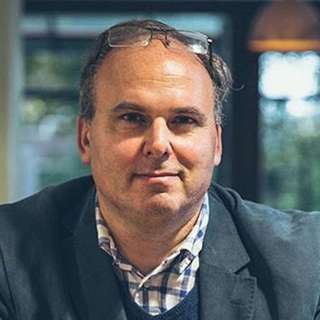

#149 – Tim LeBon on how altruistic perfectionism is self-defeating

#149 – Tim LeBon on how altruistic perfectionism is self-defeating

Being a good and successful person is core to your identity. You place great importance on meeting the high moral, professional, or academic standards you set yourself.

But inevitably, something goes wrong and you fail to meet that high bar. Now you feel terrible about yourself, and worry others are judging you for your failure. Feeling low and reflecting constantly on whether you're doing as much as you think you should makes it hard to focus and get things done. So now you're performing below a normal level, making you feel even more ashamed of yourself. Rinse and repeat.

This is the disastrous cycle today's guest, Tim LeBon — registered psychotherapist, accredited CBT therapist, life coach, and author of 365 Ways to Be More Stoic — has observed in many clients with a perfectionist mindset.

Links to learn more, summary and full transcript.

Tim has provided therapy to a number of 80,000 Hours readers — people who have found that the very high expectations they had set for themselves were holding them back. Because of our focus on “doing the most good you can,” Tim thinks 80,000 Hours both attracts people with this style of thinking and then exacerbates it.

But Tim, having studied and written on moral philosophy, is sympathetic to the idea of helping others as much as possible, and is excited to help clients pursue that — sustainably — if it's their goal.

Tim has treated hundreds of clients with all sorts of mental health challenges. But in today's conversation, he shares the lessons he has learned working with people who take helping others so seriously that it has become burdensome and self-defeating — in particular, how clients can approach this challenge using the treatment he's most enthusiastic about: cognitive behavioural therapy.

Untreated, perfectionism might not cause problems for many years — it might even seem positive providing a source of motivation to work hard. But it's hard to feel truly happy and secure, and free to take risks, when we’re just one failure away from our self-worth falling through the floor. And if someone slips into the positive feedback loop of shame described above, the end result can be depression and anxiety that's hard to shake.

But there's hope. Tim has seen clients make real progress on their perfectionism by using CBT techniques like exposure therapy. By doing things like experimenting with more flexible standards — for example, sending early drafts to your colleagues, even if it terrifies you — you can learn that things will be okay, even when you're not perfect.

In today's extensive conversation, Tim and Rob cover:

• How perfectionism is different from the pursuit of excellence, scrupulosity, or an OCD personality
• What leads people to adopt a perfectionist mindset
• How 80,000 Hours contributes to perfectionism among some readers and listeners, and what it might change about its advice to address this
• What happens in a session of cognitive behavioural therapy for someone struggling with perfectionism, and what factors are key to making progress
• Experiments to test whether one's core beliefs (‘I need to be perfect to be valued’) are true
• Using exposure therapy to treat phobias
• How low-self esteem and imposter syndrome are related to perfectionism
• Stoicism as an approach to life, and why Tim is enthusiastic about it
• What the Stoics do better than utilitarian philosophers and vice versa
• And how to decide which are the best virtues to live by

Get this episode by subscribing to our podcast on the world’s most pressing problems and how to solve them: type ‘80,000 Hours’ into your podcasting app.

Producer: Keiran Harris
Audio mastering: Simon Monsour and Ben Cordell
Transcriptions: Katy Moore

Episoder(326)

#13 - Claire Walsh on testing which policies work & how to get governments to listen to the results

#13 - Claire Walsh on testing which policies work & how to get governments to listen to the results

In both rich and poor countries, government policy is often based on no evidence at all and many programs don’t work. This has particularly harsh effects on the global poor - in some countries governm...

31 Okt 201752min

#12 - Beth Cameron works to stop you dying in a pandemic. Here’s what keeps her up at night.

#12 - Beth Cameron works to stop you dying in a pandemic. Here’s what keeps her up at night.

“When you're in the middle of a crisis and you have to ask for money, you're already too late.” That’s Dr Beth Cameron, who leads Global Biological Policy and Programs at the Nuclear Threat Initiative...

25 Okt 20171h 45min

#11 - Spencer Greenberg on speeding up social science 10-fold & why plenty of startups cause harm

#11 - Spencer Greenberg on speeding up social science 10-fold & why plenty of startups cause harm

Do most meat eaters think it’s wrong to hurt animals? Do Americans think climate change is likely to cause human extinction? What is the best, state-of-the-art therapy for depression? How can we make ...

17 Okt 20171h 29min

#10 - Nick Beckstead on how to spend billions of dollars preventing human extinction

#10 - Nick Beckstead on how to spend billions of dollars preventing human extinction

What if you were in a position to give away billions of dollars to improve the world? What would you do with it? This is the problem facing Program Officers at the Open Philanthropy Project - people l...

11 Okt 20171h 51min
#9 - Christine Peterson on how insecure computers could lead to global disaster, and how to fix it

#9 - Christine Peterson on how insecure computers could lead to global disaster, and how to fix it

Take a trip to Silicon Valley in the 70s and 80s, when going to space sounded like a good way to get around environmental limits, people started cryogenically freezing themselves, and nanotechnology l...

4 Okt 20171h 45min
#8 - Lewis Bollard on how to end factory farming in our lifetimes

#8 - Lewis Bollard on how to end factory farming in our lifetimes

Every year tens of billions of animals are raised in terrible conditions in factory farms before being killed for human consumption. Over the last two years Lewis Bollard – Project Officer for Farm An...

27 Sep 20173h 16min

#7 - Julia Galef on making humanity more rational, what EA does wrong, and why Twitter isn’t all bad

#7 - Julia Galef on making humanity more rational, what EA does wrong, and why Twitter isn’t all bad

The scientific revolution in the 16th century was one of the biggest societal shifts in human history, driven by the discovery of new and better methods of figuring out who was right and who was wrong...

13 Sep 20171h 14min
#6 - Toby Ord on why the long-term future matters more than anything else & what to do about it

#6 - Toby Ord on why the long-term future matters more than anything else & what to do about it

Of all the people whose well-being we should care about, only a small fraction are alive today. The rest are members of future generations who are yet to exist. Whether they’ll be born into a world th...

6 Sep 20172h 8min

Populært innen Fakta

fastlegen
dine-penger-pengeradet
relasjonspodden-med-dora-thorhallsdottir-kjersti-idem
rss-strid-de-norske-borgerkrigene
foreldreradet
treningspodden
rss-sunn-okonomi
jakt-og-fiskepodden
takk-og-lov-med-anine-kierulf
sinnsyn
merry-quizmas
gravid-uke-for-uke
rss-kunsten-a-leve
rss-kull
hagespiren-podcast
hverdagspsyken
rss-var-forste-kaffe
fryktlos
rss-mann-i-krise-med-sagen
smart-forklart