
#159 – Jan Leike on OpenAI's massive push to make superintelligence safe in 4 years or less

#159 – Jan Leike on OpenAI's massive push to make superintelligence safe in 4 years or less

In July, OpenAI announced a new team and project: Superalignment. The goal is to figure out how to make superintelligent AI systems aligned and safe to use within four years, and the lab is putting a massive 20% of its computational resources behind the effort.

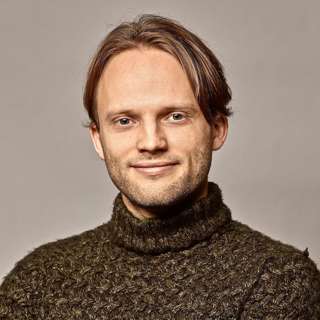
Today's guest, Jan Leike, is Head of Alignment at OpenAI and will be co-leading the project. As OpenAI puts it, "...the vast power of superintelligence could be very dangerous, and lead to the disempowerment of humanity or even human extinction. ... Currently, we don't have a solution for steering or controlling a potentially superintelligent AI, and preventing it from going rogue."

Links to learn more, summary and full transcript.

Given that OpenAI is in the business of developing superintelligent AI, it sees that as a scary problem that urgently has to be fixed. So it’s not just throwing compute at the problem -- it’s also hiring dozens of scientists and engineers to build out the Superalignment team.

Plenty of people are pessimistic that this can be done at all, let alone in four years. But Jan is guardedly optimistic. As he explains:

Honestly, it really feels like we have a real angle of attack on the problem that we can actually iterate on... and I think it's pretty likely going to work, actually. And that's really, really wild, and it's really exciting. It's like we have this hard problem that we've been talking about for years and years and years, and now we have a real shot at actually solving it. And that'd be so good if we did.


Jan thinks that this work is actually the most scientifically interesting part of machine learning. Rather than just throwing more chips and more data at a training run, this work requires actually understanding how these models work and how they think. The answers are likely to be breakthroughs on the level of solving the mysteries of the human brain.

The plan, in a nutshell, is to get AI to help us solve alignment. That might sound a bit crazy -- as one person described it, “like using one fire to put out another fire.”

But Jan’s thinking is this: the core problem is that AI capabilities will keep getting better and the challenge of monitoring cutting-edge models will keep getting harder, while human intelligence stays more or less the same. To have any hope of ensuring safety, we need our ability to monitor, understand, and design ML models to advance at the same pace as the complexity of the models themselves.

And there's an obvious way to do that: get AI to do most of the work, such that the sophistication of the AIs that need aligning, and the sophistication of the AIs doing the aligning, advance in lockstep.

Jan doesn't want to produce machine learning models capable of doing ML research. But such models are coming, whether we like it or not. And at that point Jan wants to make sure we turn them towards useful alignment and safety work, as much or more than we use them to advance AI capabilities.

Jan thinks it's so crazy it just might work. But some critics think it's simply crazy. They ask a wide range of difficult questions, including:

  • If you don't know how to solve alignment, how can you tell that your alignment assistant AIs are actually acting in your interest rather than working against you? Especially as they could just be pretending to care about what you care about.
  • How do you know that these technical problems can be solved at all, even in principle?
  • At the point that models are able to help with alignment, won't they also be so good at improving capabilities that we're in the middle of an explosion in what AI can do?


In today's interview host Rob Wiblin puts these doubts to Jan to hear how he responds to each, and they also cover:

  • OpenAI's current plans to achieve 'superalignment' and the reasoning behind them
  • Why alignment work is the most fundamental and scientifically interesting research in ML
  • The kinds of people he’s excited to hire to join his team and maybe save the world
  • What most readers misunderstood about the OpenAI announcement
  • The three ways Jan expects AI to help solve alignment: mechanistic interpretability, generalization, and scalable oversight
  • What the standard should be for confirming whether Jan's team has succeeded
  • Whether OpenAI should (or will) commit to stop training more powerful general models if they don't think the alignment problem has been solved
  • Whether Jan thinks OpenAI has deployed models too quickly or too slowly
  • The many other actors who also have to do their jobs really well if we're going to have a good AI future
  • Plenty more


Get this episode by subscribing to our podcast on the world’s most pressing problems and how to solve them: type ‘80,000 Hours’ into your podcasting app. Or read the transcript.

Producer and editor: Keiran Harris
Audio Engineering Lead: Ben Cordell
Technical editing: Simon Monsour and Milo McGuire
Additional content editing: Katy Moore and Luisa Rodriguez
Transcriptions: Katy Moore

Episoder(318)

#179 Classic episode – Randy Nesse on why evolution left us so vulnerable to depression and anxiety

#179 Classic episode – Randy Nesse on why evolution left us so vulnerable to depression and anxiety

Mental health problems like depression and anxiety affect enormous numbers of people and severely interfere with their lives. By contrast, we don’t see similar levels of physical ill health in young p...

3 Feb 2h 51min

Why 'Aligned AI' Would Still Kill Democracy | David Duvenaud, ex-Anthropic team lead

Why 'Aligned AI' Would Still Kill Democracy | David Duvenaud, ex-Anthropic team lead

Democracy might be a brief historical blip. That’s the unsettling thesis of a recent paper, which argues AI that can do all the work a human can do inevitably leads to the “gradual disempowerment” of ...

27 Jan 2h 31min

#145 Classic episode – Christopher Brown on why slavery abolition wasn't inevitable

#145 Classic episode – Christopher Brown on why slavery abolition wasn't inevitable

In many ways, humanity seems to have become more humane and inclusive over time. While there’s still a lot of progress to be made, campaigns to give people of different genders, races, sexualities, et...

20 Jan 2h 56min

#233 – James Smith on how to prevent a mirror life catastrophe

#233 – James Smith on how to prevent a mirror life catastrophe

When James Smith first heard about mirror bacteria, he was sceptical. But within two weeks, he’d dropped everything to work on it full time, considering it the worst biothreat that he’d seen described...

13 Jan 2h 9min

#144 Classic episode – Athena Aktipis on why cancer is a fundamental universal phenomena

#144 Classic episode – Athena Aktipis on why cancer is a fundamental universal phenomena

What’s the opposite of cancer? If you answered “cure,” “antidote,” or “antivenom” — you’ve obviously been reading the antonym section at www.merriam-webster.com/thesaurus/cancer.But today’s guest Athe...

9 Jan 3h 30min

#142 Classic episode – John McWhorter on why the optimal number of languages might be one, and other provocative claims about language

#142 Classic episode – John McWhorter on why the optimal number of languages might be one, and other provocative claims about language

John McWhorter is a linguistics professor at Columbia University specialising in research on creole languages. He's also a content-producing machine, never afraid to give his frank opinion on anything...

6 Jan 1h 35min

2025 Highlight-o-thon: Oops! All Bests

2025 Highlight-o-thon: Oops! All Bests

It’s that magical time of year once again — highlightapalooza! Stick around for one top bit from each episode we recorded this year, including:Kyle Fish explaining how Anthropic’s AI Claude descends i...

29 Des 20251h 40min

#232 – Andreas Mogensen on what we owe 'philosophical Vulcans' and unconscious beings

#232 – Andreas Mogensen on what we owe 'philosophical Vulcans' and unconscious beings

Most debates about the moral status of AI systems circle the same question: is there something that it feels like to be them? But what if that’s the wrong question to ask? Andreas Mogensen — a senior ...

19 Des 20252h 37min

Populært innen Fakta

fastlegen
dine-penger-pengeradet
relasjonspodden-med-dora-thorhallsdottir-kjersti-idem
treningspodden
foreldreradet
jakt-og-fiskepodden
dopet
merry-quizmas
podme-bio-3
rss-strid-de-norske-borgerkrigene
sinnsyn
rss-kull
sovnlos
gravid-uke-for-uke
rss-var-forste-kaffe
hverdagspsyken
fryktlos
rss-kunsten-a-leve
tomprat-med-gunnar-tjomlid
dypdykk