
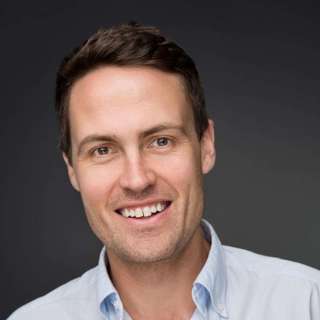
#199 – Nathan Calvin on California’s AI bill SB 1047 and its potential to shape US AI policy

#199 – Nathan Calvin on California’s AI bill SB 1047 and its potential to shape US AI policy

"I do think that there is a really significant sentiment among parts of the opposition that it’s not really just that this bill itself is that bad or extreme — when you really drill into it, it feels like one of those things where you read it and it’s like, 'This is the thing that everyone is screaming about?' I think it’s a pretty modest bill in a lot of ways, but I think part of what they are thinking is that this is the first step to shutting down AI development. Or that if California does this, then lots of other states are going to do it, and we need to really slam the door shut on model-level regulation or else they’re just going to keep going.

"I think that is like a lot of what the sentiment here is: it’s less about, in some ways, the details of this specific bill, and more about the sense that they want this to stop here, and they’re worried that if they give an inch that there will continue to be other things in the future. And I don’t think that is going to be tolerable to the public in the long run. I think it’s a bad choice, but I think that is the calculus that they are making." —Nathan Calvin

In today’s episode, host Luisa Rodriguez speaks to Nathan Calvin — senior policy counsel at the Center for AI Safety Action Fund — about the new AI safety bill in California, SB 1047, which he’s helped shape as it’s moved through the state legislature.

Links to learn more, highlights, and full transcript.

They cover:

  • What’s actually in SB 1047, and which AI models it would apply to.
  • The most common objections to the bill — including how it could affect competition, startups, open source models, and US national security — and which of these objections Nathan thinks hold water.
  • What Nathan sees as the biggest misunderstandings about the bill that get in the way of good public discourse about it.
  • Why some AI companies are opposed to SB 1047, despite claiming that they want the industry to be regulated.
  • How the bill is different from Biden’s executive order on AI and voluntary commitments made by AI companies.
  • Why California is taking state-level action rather than waiting for federal regulation.
  • How state-level regulations can be hugely impactful at national and global scales, and how listeners could get involved in state-level work to make a real difference on lots of pressing problems.
  • And plenty more.

Chapters:

  • Cold open (00:00:00)
  • Luisa's intro (00:00:57)
  • The interview begins (00:02:30)
  • What risks from AI does SB 1047 try to address? (00:03:10)
  • Supporters and critics of the bill (00:11:03)
  • Misunderstandings about the bill (00:24:07)
  • Competition, open source, and liability concerns (00:30:56)
  • Model size thresholds (00:46:24)
  • How is SB 1047 different from the executive order? (00:55:36)
  • Objections Nathan is sympathetic to (00:58:31)
  • Current status of the bill (01:02:57)
  • How can listeners get involved in work like this? (01:05:00)
  • Luisa's outro (01:11:52)

Producer and editor: Keiran Harris
Audio engineering by Ben Cordell, Milo McGuire, Simon Monsour, and Dominic Armstrong
Additional content editing: Katy Moore and Luisa Rodriguez
Transcriptions: Katy Moore

Episoder(325)

#91 – Lewis Bollard on big wins against factory farming and how they happened

#91 – Lewis Bollard on big wins against factory farming and how they happened

I suspect today's guest, Lewis Bollard, might be the single best person in the world to interview to get an overview of all the methods that might be effective for putting an end to factory farming an...

15 Feb 20212h 33min

Rob Wiblin on how he ended up the way he is

Rob Wiblin on how he ended up the way he is

This is a crosspost of an episode of the Eureka Podcast. The interviewer is Misha Saul, a childhood friend of Rob's, who he has known for over 20 years. While it's not an episode of our own show, we...

3 Feb 20211h 57min

#90 – Ajeya Cotra on worldview diversification and how big the future could be

#90 – Ajeya Cotra on worldview diversification and how big the future could be

You wake up in a mysterious box, and hear the booming voice of God: “I just flipped a coin. If it came up heads, I made ten boxes, labeled 1 through 10 — each of which has a human in it. If it ca...

21 Jan 20212h 59min

Rob Wiblin on self-improvement and research ethics

Rob Wiblin on self-improvement and research ethics

This is a crosspost of an episode of the Clearer Thinking Podcast: 022: Self-Improvement and Research Ethics with Rob Wiblin. Rob chats with Spencer Greenberg, who has been an audience favourite in...

13 Jan 20212h 30min

#73 - Phil Trammell on patient philanthropy and waiting to do good [re-release]

#73 - Phil Trammell on patient philanthropy and waiting to do good [re-release]

Rebroadcast: this episode was originally released in March 2020. To do good, most of us look to use our time and money to affect the world around us today. But perhaps that's all wrong. If you too...

7 Jan 20212h 41min

#75 – Michelle Hutchinson on what people most often ask 80,000 Hours [re-release]

#75 – Michelle Hutchinson on what people most often ask 80,000 Hours [re-release]

Rebroadcast: this episode was originally released in April 2020. Since it was founded, 80,000 Hours has done one-on-one calls to supplement our online content and offer more personalised advice. We ...

30 Des 20202h 14min
#89 – Owen Cotton-Barratt on epistemic systems and layers of defense against potential global catastrophes

#89 – Owen Cotton-Barratt on epistemic systems and layers of defense against potential global catastrophes

From one point of view academia forms one big 'epistemic' system — a process which directs attention, generates ideas, and judges which are good. Traditional print media is another such system, and we...

17 Des 20202h 38min
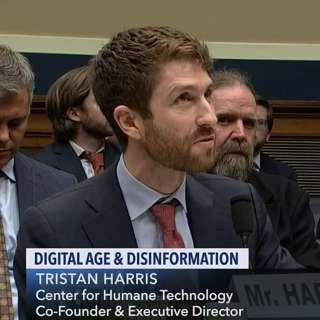
#88 – Tristan Harris on the need to change the incentives of social media companies

#88 – Tristan Harris on the need to change the incentives of social media companies

In its first 28 days on Netflix, the documentary The Social Dilemma — about the possible harms being caused by social media and other technology products — was seen by 38 million households in about 1...

3 Des 20202h 35min

Populært innen Fakta

fastlegen
dine-penger-pengeradet
relasjonspodden-med-dora-thorhallsdottir-kjersti-idem
treningspodden
rss-strid-de-norske-borgerkrigene
foreldreradet
rss-sunn-okonomi
jakt-og-fiskepodden
takk-og-lov-med-anine-kierulf
sinnsyn
rss-kunsten-a-leve
merry-quizmas
gravid-uke-for-uke
hverdagspsyken
smart-forklart
hagespiren-podcast
rss-kull
lederskap-nhhs-podkast-om-ledelse
fryktlos
uroskolen