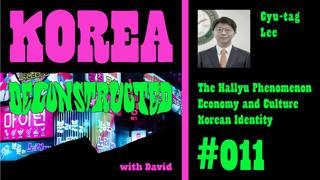
#011 The Hallyu Phenomeon, Economy and Culture, and Korean Identity with Dr. Gyu-tag Lee

#011 The Hallyu Phenomeon, Economy and Culture, and Korean Identity with Dr. Gyu-tag Lee

Hallyu is not a sudden phenomenon, Dr. Lee says. It's been an international culture since the 1990s. But from about the 2010s, enjoying Korean popular culture for non-Asians has become a new trend in cyberspace. This means Korean popularity is closely connected to technological changes in the media environment and industry. The two are interdependent. Despite the earlier popularity of Japanese cultural products, the promotion strategies used then were not very effective and there was not a concerted effort at spreading it to the rest of Asia. Locally, Dr. Lee talks of how one of his friends at high school was punished for playing a Japanese song at lunchtime.

Eventually, economic difficulties domestically pushed Korean cultural products outside of the country and seeking new markets. China's change from communism to capitalism provided a very fortuitous suitable landing pad for many of these products. In Korea, Dr. Lee suggests K-pop is normally considered music for teenagers. There is a social consensus that it is not really appropriate as a genre for people in their 20s. Thus, many people stop listening to it (or perhaps hide their interest) due to cultural conventions. However, international fans are not affected by such attitudes. Conversely, for them, the more knowledge and depth of understanding they show of K-pop, the trendier they are seen. K-pop can also serve as a gateway into other genres. For international fans, K-pop is not mainstream. Instead it speaks to minority and alternative cultures.

For Dr. Lee, K-pop should not just be understood as music: it is related to fashion, fan relationships, videos, and choreography. The fans now believe they are responsible for the artists' success. Thus they expect the idols and entertainment agencies to listen to their requests and desires. However, that democratic culture of fan-led artists is slowly being consumed by capitalism and the entertainment industry like punk and hip-hop were in the past. Moreover, despite K-pop being apolitical in nature, it's been used by the Democratic Party in the United States. Musicians and entertainment companies are aware of this politicization and it has become necessary for them to follow the trend and remain loyal to their fans.

Dr. Lee finishes by questioning what will happen to Hallyu going forward if it continues to internationalize. If the only thing remaining is the Korean ethnicity of the performers, then what will this mean for the culture industry and, more importantly, Korean identity in general. Can a balance be found?

Denne episoden er hentet fra en åpen RSS-feed og er ikke publisert av Podme. Den kan derfor inneholde annonser.

Episoder(130)

Korean Architecture and the Weight of Han

Korean Architecture and the Weight of Han

Born in Taegu with roots in Jeju, Juhee then immigrated to the U.S. at age eight. As a 16-year-old Korean American girl, she ran away from home in Queens, New York, to become an architect. Having fulf...

11 Okt 20251h 4min
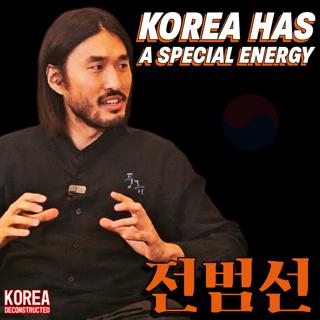
The Spirit of Korea: Pungryu Explained by Jun Bum Sun

The Spirit of Korea: Pungryu Explained by Jun Bum Sun

Jun Bum Sun joins me to talk about Korea's unique energy, pungryu, its history, and the healing power of music. We cover Choi Chi Won, Tangun, the Hwarang, Shamanism, Choe Je-u, Tongdo Sogi, AI, K-pop...

28 Sep 20251h 51min
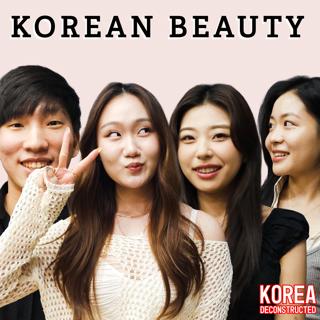
Korean Beauty, Fashion, and Lookism

Korean Beauty, Fashion, and Lookism

While much of the world focuses on the beauty standards of Korea's rich and famous, its K-Pop stars, actors, and influencers, we are left wondering how much of this actually applies to real life. Do r...

14 Sep 20251h 44min
Korean Buddhism, Meditation, and Stories of Enlightenment

Korean Buddhism, Meditation, and Stories of Enlightenment

Joseph Bengivenni is an artist and photographer who has spend most of the past twenty years living in and exploring South Korea. The Korean mountains and temples have captured his heart and mind, as h...

27 Aug 20251h 42min
Trump, Xi Jinping and Lee Jae Myung

Trump, Xi Jinping and Lee Jae Myung

Rob York is director for regional affairs at Pacific Forum in Honolulu, working on Korean Peninsular security and Indo-Pacific information warfare. He previously worked as production editor at the Sou...

16 Aug 20251h 23min
Ra Jong-yil on Korea: History, Memory, and Presidents

Ra Jong-yil on Korea: History, Memory, and Presidents

In this episode of Korea Deconstructed, I sit down with Ra Jong-yil, a scholar, diplomat, and influential figure in modern Korean politics. We recorded this conversation in his house in Seoul. Born in...

3 Aug 20251h 40min

Parasocial Love & The Global K-pop Explosion

Parasocial Love & The Global K-pop Explosion

Italian journalist Marianna Baroli joins me to discuss K-pop, fan culture, parasocial love, and how Korean music is reshaping global identity, especially in Italy. But at what cost? And where do we go...

14 Jul 20251h 18min
Crash Landing on Meaning: Life, Class, and Rediscovery through Korea

Crash Landing on Meaning: Life, Class, and Rediscovery through Korea

Lebanese scholar Rania Hafez joins Korea Deconstructed for a wide-ranging conversation on class, culture, and the search for meaning. Rania reflects on how media pushes culture wars over class solidar...

29 Jun 20251h 55min

Populært innen Vitenskap

fastlegen
tingenes-tilstand
jss
dekodet-2
rekommandert
forskningno
sinnsyn
villmarksliv
liberal-halvtime
rss-paradigmepodden
rss-nysgjerrige-norge
rss-zahid-ali-hjelper-deg
tidlose-historier
rss-inn-til-kjernen-med-sunniva-rose
kvinnehelsepodden
rss-rekommandert
nordnorsk-historie
fjellsportpodden
rss-lundqvist-podden
vett-og-vitenskap-med-gaute-einevoll