
Podcast 552: PE Management and Risk Stratification

Podcast 552: PE Management and Risk Stratification

Contributor: Dylan Luyten, MD

Educational Pearls:

  • After you diagnose a pulmonary embolism (PE) via CT or VQ scan, we need to categorize the PE as massive, sub-massive, or just PE to dictate treatment.
  • Massive PE: shock with hypotension due to an embolism, and the treatment of choice is thrombolysis with IV tPA with anticoagulation after lysis. Catheter thrombolysis is not used in the hemodynamically unstable patient but can be done after they are stable.
  • Sub-massive: signs of right heart strain/failure but hemodynamically stable. This can be EKG changes, positive biomarkers, or imaging findings. These patients can be treated with IV heparin as there may benefit from catheter directed thrombolysis which has been shown to lead to better functional outcomes.
  • Everything else can be stratified to determine whether inpatient even outpatient treatment is necessary
  • Pulmonary Embolism Severity Index (PESI) or Hestia criteria and can help determine if the patient is better suited for in or outpatient management.
  • Non massive or sub-massive PEs are treated with heparin/Lovenox bridged to Warfarin, a factor Xa inhibitor (ex. Xarelto), or direct oral anticoagulants (DOAC).

Editor's note: intravenous heparin is preferable to other anticoagulants when considering interventional radiology as it can be shut off and/or reversed if necessary prior to procedure

References

1. Sista, A. et al. Stratification, Imaging, and Management of Acute Massive and Submassive Pulmonary Embolism. 2017 Jul;284(1):5-24

2. Aujesky D, Obrosky DS, Stone RA, Auble TE, Perrier A, Cornuz J, Roy PM, Fine MJ. Derivation and validation of a prognostic model for pulmonary embolism. Am J Respir Crit Care Med. 2005 Oct 15;172(8):1041-6

3. Jimenez, D. et al. Risk stratification of patients with acute symptomatic pulmonary embolism. Intern Emerg Med. 2016 Feb;11(1):11-8.

Summarized by Jackson Roos, MS3 | Edited by Erik Verzemnieks, MD


Episoder(1146)

Opioid Miniseries Part II: Limiting Opioids in the Emergency Department

Opioid Miniseries Part II: Limiting Opioids in the Emergency Department

RACTICE RECOMMENDATIONS 1. Opioids are inherently dangerous, highly addictive drugs with significant abuse potential, numerous side effects, lethality in overdose, rapid development of tolerance, and ...

8 Jun 20171h 8min
Opioid Miniseries Part I: Medicine's Greatest Folly

Opioid Miniseries Part I: Medicine's Greatest Folly

The Emergency Medical Minute proudly presents an educational podcast series sponsored by the Colorado Hospital Association addressing our the United States' opioid epidemic.

7 Jun 201749min
Podcast #215: Ankle Pain

Podcast #215: Ankle Pain

Author: Donald Stader, M.D. Educational Pearls: The most common ankle injury mechanism is an inversion. Most common broken bone in the ankle is the fibula. During exam, it is important to palpate ove...

7 Jun 20174min

Podcast #214: Dizziness

Podcast #214: Dizziness

Author: Aaron Lessen, M.D. Educational Pearls: We can differentiate verto into benign problems such as vestibular problem (peripheral problem), or something more worrisome that originates in the brai...

5 Jun 20171min
Podcast #213: Oats and Potatoes

Podcast #213: Oats and Potatoes

Author: Michael Hunt, M.D. Educational Pearls: Oats have been shown to lower LDL. Oat bran is the most effective way to consume oats to lower LDL. A Swedish study of 69,000 people who ate at least 3 ...

3 Jun 20172min

Podcast #212: Knights Who Say Pessary

Podcast #212: Knights Who Say Pessary

Author: Jared Scott, M.D. Educational Pearls: A pessary is a device inserted into the vagina for medical purposes. Examples include birth control and mechanical support of the pelvic structures. In o...

1 Jun 20173min
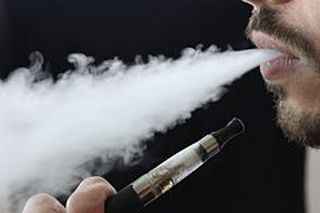
Podcast #211: E-cigarettes

Podcast #211: E-cigarettes

Author: Michael Hunt, M.D. Educational Pearls: Children under age of 6 are at greatest risk of accidental nicotine overdose from ingestion. Biphasic presentation: Hyperadrenergic = nausea, vomiting...

31 Mai 20173min

Podcast #210: Bear Mauling

Podcast #210: Bear Mauling

Author: Jared Scott M.D. Educational Pearls: Bear mauling is not a common issue in the ED. The Ursus americanus (black bear) is the most common in Colorado, but Ursus arctos horribilis (grizzly bear)...

28 Mai 20174min

Populært innen Vitenskap

fastlegen
tingenes-tilstand
rekommandert
jss
rss-rekommandert
villmarksliv
forskningno
sinnsyn
rss-paradigmepodden
fjellsportpodden
rss-nysgjerrige-norge
vett-og-vitenskap-med-gaute-einevoll
nevropodden
diagnose
smart-forklart
nordnorsk-historie
abid-nadia-skyld-og-skam
rss-overskuddsliv
dekodet-2
tidlose-historier