

Podcast 552: PE Management and Risk Stratification

Podcast 552: PE Management and Risk Stratification

Contributor: Dylan Luyten, MD

Educational Pearls:

  • After you diagnose a pulmonary embolism (PE) via CT or VQ scan, we need to categorize the PE as massive, sub-massive, or just PE to dictate treatment.
  • Massive PE: shock with hypotension due to an embolism, and the treatment of choice is thrombolysis with IV tPA with anticoagulation after lysis. Catheter thrombolysis is not used in the hemodynamically unstable patient but can be done after they are stable.
  • Sub-massive: signs of right heart strain/failure but hemodynamically stable. This can be EKG changes, positive biomarkers, or imaging findings. These patients can be treated with IV heparin as there may benefit from catheter directed thrombolysis which has been shown to lead to better functional outcomes.
  • Everything else can be stratified to determine whether inpatient even outpatient treatment is necessary
  • Pulmonary Embolism Severity Index (PESI) or Hestia criteria and can help determine if the patient is better suited for in or outpatient management.
  • Non massive or sub-massive PEs are treated with heparin/Lovenox bridged to Warfarin, a factor Xa inhibitor (ex. Xarelto), or direct oral anticoagulants (DOAC).

Editor's note: intravenous heparin is preferable to other anticoagulants when considering interventional radiology as it can be shut off and/or reversed if necessary prior to procedure

References

1. Sista, A. et al. Stratification, Imaging, and Management of Acute Massive and Submassive Pulmonary Embolism. 2017 Jul;284(1):5-24

2. Aujesky D, Obrosky DS, Stone RA, Auble TE, Perrier A, Cornuz J, Roy PM, Fine MJ. Derivation and validation of a prognostic model for pulmonary embolism. Am J Respir Crit Care Med. 2005 Oct 15;172(8):1041-6

3. Jimenez, D. et al. Risk stratification of patients with acute symptomatic pulmonary embolism. Intern Emerg Med. 2016 Feb;11(1):11-8.

Summarized by Jackson Roos, MS3 | Edited by Erik Verzemnieks, MD


Episoder(1146)

Podcast 811: Ketamine for Pain

Podcast 811: Ketamine for Pain

Contributor: Lessen, Aaron MD Educational Pearls: Ketamine can be given at 0.2-0.3 mg/kg as subdissociative doses for pain control in the ED Ketamine coadministered with Haldol may reduce agitation...

7 Sep 20223min

Podcast 810: Tooth Replantation

Podcast 810: Tooth Replantation

Contributor: Jarod Scott, MD Educational Pearls: There is a 1-hour window for tooth replantation in ED Cold milk is often best transport media unless there is access to specialized solutions (Hank's ...

5 Sep 20224min
Podcast 809: Achilles Tendon Rupture

Podcast 809: Achilles Tendon Rupture

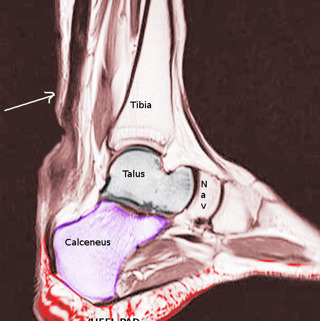
Contributor: Aaron Lessen, MD Educational Pearls: Achilles tendon rupture usually presents in younger, healthy patients after a sports injury Patients typically present complaining of an abrupt onset...

30 Aug 20224min

Podcast 808: BVM and PEEP Valve

Podcast 808: BVM and PEEP Valve

Contributor: Dylan Luyten, MD Educational Pearls: Positive End Expiratory Pressure (PEEP) is positive pressure within the lungs and maintained throughout the entire respiratory cycle. It is the press...

29 Aug 20224min

Podcast 807: Ring Removal Tricks

Podcast 807: Ring Removal Tricks

Contributor: Jared Scott, MD Educational Pearls: If a patient is in significant pain, a digital block can be helpful. Pain management alone may allow for manual ring removal.  Ring cutters and trauma...

23 Aug 20224min
Podcast 806: Normal ECGs

Podcast 806: Normal ECGs

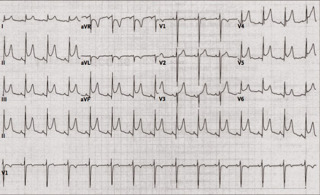
Contributor: Jared Scott, MD Educational Pearls: Physicians are typically advised not to trust computer interpretation of ECGs Retrospective study was done of computer interpreted normal ECGs to eva...

22 Aug 20223min

Podcast 805: Tunneled Peritoneal Catheter

Podcast 805: Tunneled Peritoneal Catheter

Contributor: Aaron Lessen, MD Educational Pearls: Patients with recurrent ascites may need frequent outpatient or emergency department paracentesis which can be time consuming and uncomfortable for p...

16 Aug 20223min

Podcast 804: Brugada Criteria for V Tach

Podcast 804: Brugada Criteria for V Tach

Contributor: Peter Bakes, MD Educational Pearls: Tachycardia describes a heart rate of >120 beats per minute Wide Complex describes a QRS duration of >120 ms or 3 small boxes on a standard EKG The ma...

9 Aug 20226min

Populært innen Vitenskap

fastlegen
tingenes-tilstand
rekommandert
jss
rss-rekommandert
villmarksliv
forskningno
sinnsyn
rss-paradigmepodden
fjellsportpodden
rss-nysgjerrige-norge
vett-og-vitenskap-med-gaute-einevoll
nevropodden
diagnose
smart-forklart
nordnorsk-historie
abid-nadia-skyld-og-skam
rss-overskuddsliv
dekodet-2
tidlose-historier