Podcast 552: PE Management and Risk Stratification

Podcast 552: PE Management and Risk Stratification

Contributor: Dylan Luyten, MD

Educational Pearls:

  • After you diagnose a pulmonary embolism (PE) via CT or VQ scan, we need to categorize the PE as massive, sub-massive, or just PE to dictate treatment.
  • Massive PE: shock with hypotension due to an embolism, and the treatment of choice is thrombolysis with IV tPA with anticoagulation after lysis. Catheter thrombolysis is not used in the hemodynamically unstable patient but can be done after they are stable.
  • Sub-massive: signs of right heart strain/failure but hemodynamically stable. This can be EKG changes, positive biomarkers, or imaging findings. These patients can be treated with IV heparin as there may benefit from catheter directed thrombolysis which has been shown to lead to better functional outcomes.
  • Everything else can be stratified to determine whether inpatient even outpatient treatment is necessary
  • Pulmonary Embolism Severity Index (PESI) or Hestia criteria and can help determine if the patient is better suited for in or outpatient management.
  • Non massive or sub-massive PEs are treated with heparin/Lovenox bridged to Warfarin, a factor Xa inhibitor (ex. Xarelto), or direct oral anticoagulants (DOAC).

Editor's note: intravenous heparin is preferable to other anticoagulants when considering interventional radiology as it can be shut off and/or reversed if necessary prior to procedure

References

1. Sista, A. et al. Stratification, Imaging, and Management of Acute Massive and Submassive Pulmonary Embolism. 2017 Jul;284(1):5-24

2. Aujesky D, Obrosky DS, Stone RA, Auble TE, Perrier A, Cornuz J, Roy PM, Fine MJ. Derivation and validation of a prognostic model for pulmonary embolism. Am J Respir Crit Care Med. 2005 Oct 15;172(8):1041-6

3. Jimenez, D. et al. Risk stratification of patients with acute symptomatic pulmonary embolism. Intern Emerg Med. 2016 Feb;11(1):11-8.

Summarized by Jackson Roos, MS3 | Edited by Erik Verzemnieks, MD


Episoder(1146)

Podcast #375: Retrograde Urethrogram

Podcast #375: Retrograde Urethrogram

Author: Jared Scott, MD Educational Pearls: Blood at urethral meatus in trauma can be a sign of bladder/urethral injury Blind placement of a Foley catheter can make an undiagnosed urethral injur...

6 Sep 20185min

Podcast #374:  Iliac Artery Endofibrosis

Podcast #374: Iliac Artery Endofibrosis

Author:  Sue Chilton, MD Educational Pearls:   An unusual cause of leg pain that can mimic sciatica/claudication Predominantly occurring in high endurance athletes, particularly cyclists and runner...

4 Sep 20183min

Podcast # 373: Legionnaires Disease

Podcast # 373: Legionnaires Disease

Author: Gretchen Hinson, MD Educational Pearls: Legionnaires disease refers to a severe pneumonia caused by Legionella pneumophilia and occurs typically at the extremes of age Associated gastroi...

1 Sep 20183min
Podcast # 372:  The Latest on Epinephrine in Cardiac Arrest

Podcast # 372: The Latest on Epinephrine in Cardiac Arrest

Author: Don Stader, MD Educational Pearls: 8014 patients with out-of-hospital cardiac arrest randomized to epinephrine vs placebo 30-day survival was not dramatically better between groups (3.2%...

30 Aug 20183min
Podcast # 371: EKG changes of Hyperkalemia

Podcast # 371: EKG changes of Hyperkalemia

Author: Jared Scott, MD Educational Pearls: EKG changes do not necessarily correlate to degree of hyperkalemia Traditional progression through peaked T-waves, flattened p-waves, QRS widening, an...

28 Aug 20183min
Podcast # 370:  Rapid Fire Neonatal Resuscitation

Podcast # 370: Rapid Fire Neonatal Resuscitation

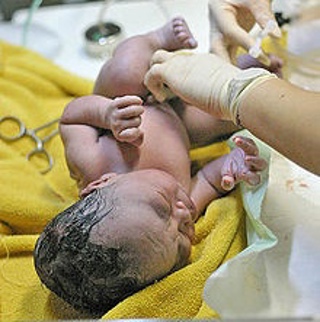
Author:  Erik Verzemnieks, MD Educational Pearls:   In the panic of a precipitous ED delivery, remember: Warm. Dry. Stim.  It will solve most of your problems in most scenarios Start compressions i...

24 Aug 20181min

Podcast # 369:  Five powerful toxins - the definitive list?

Podcast # 369: Five powerful toxins - the definitive list?

Author: Michael Hunt, MD Educational Pearls: Here is a list of some very toxic natural substances:     #5: Tetrodotoxin: Found in pufferfish and other aquatic species #4: Ricin: made from castor beans...

22 Aug 20183min
Podcast # 368: Prehospital Plasma

Podcast # 368: Prehospital Plasma

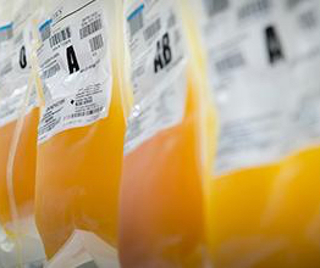
Author: Aaron Lessen, MD Educational Pearls: Non-blinded randomized study assessing 30-day mortality benefit from plasma-first resuscitation in patients at risk hemorrhagic shock Study involved a...

20 Aug 20182min

Populært innen Vitenskap

fastlegen
rekommandert
jss
tingenes-tilstand
rss-rekommandert
villmarksliv
liberal-halvtime
sinnsyn
forskningno
rss-paradigmepodden
fjellsportpodden
nevropodden
rss-nysgjerrige-norge
diagnose
vett-og-vitenskap-med-gaute-einevoll
abid-nadia-skyld-og-skam
tidlose-historier
dekodet-2
smart-forklart
hva-er-greia-med