Podcast 557:  COVID-19 Lab Trends

Podcast 557: COVID-19 Lab Trends

Contributor: Don Stader, MD

Educational Pearls:

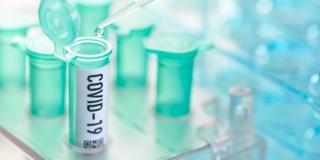
  • COVID-19 is diagnosed with a nasopharyngeal swab (q-tip). This unfortunately can be painful, but if the swab doesn't go deep into the nasal cavity the sample can be inadequate leading to false negatives (missed infections).
  • The sensitivity of the COVID-19 RT PCR test is low, ranging from 66-80% in various studies. Another study has shown 23% of patients who initially tested negative but had COVID-19 symptoms will test positive when re-tested. So test highly suspicious patients twice.

  • COVID has shown to have an effect on CBC. White blood cell counts are often normal (no leukocytosis), but there is often lymphopenia, or low lymphocytes, and thrombocytopenia. Interestingly, low platelets have appeared to have prognostic value in that lower platelets often indicate worse patient outcomes.
  • Coagulation studies are showing very elevated D-Dimers which has sparked the debate as to whether COVID-19 causes a hypercoagulable state. The increased incidence of MI/heart attacks and strokes in COVID patients supports this argument.
  • While D-Dimers can help point towards a diagnosis of pulmonary embolism, in the setting of highly likely COVID-19 infections, getting a CTA looking for a PE is probably unnecessary unless there's also suspicion for PE.
  • C-reactive protein (CRP) and procalcitonin are two common inflammatory markers. A CRP can help indicate how sick a patient is and procalcitonin can help determine if the infection is bacterial or viral in nature.
  • CRP levels are often elevated in COVID patients, and studies are showing a high CRP is linked to worse patient outcomes.
  • Elevations in procalcitonin can be used to see if there's a concomitant bacterial infection, meaning patients need antibiotics in addition to supportive care for the COVID-19.
  • Flu season is coming to a close, but data has shown a 5-10% co-infection rate of COVID-19 with influenza. As expected patient outcomes have been worse in those with both infections.

References

1) Farkas, Josh. "COVID-19." EMCrit Project, 21 Apr. 2020, emcrit.org/ibcc/covid19/#labs.

2) Guan W. et al. Clinical Characteristics of Coronavirus Disease 2019 in China. February 28, 2020, updated on March 6, 2020, at NEJM.org. DOI: 10.1056/NEJMoa2002032

3)Young BE, Ong SWX, Kalimuddin S, et al. Epidemiologic Features and Clinical Course of Patients Infected With SARS-CoV-2 in Singapore. JAMA. 2020;323(15):1488–1494. doi:10.1001/jama.2020.3204

4) Wang M. et al. Clinical diagnosis of 8274 samples with 2019-novel coronavirus in Wuhan. medRxiv 2020.02.12.20022327; doi: https://doi.org/10.1101/2020.02.12.20022327

Summarized by Jackson Roos, MS4 | Edited by Erik Verzemnieks, MD

Episoder(1149)

Podcast #297: Truvada

Podcast #297: Truvada

Educational Pearls Truvada (Emtricitabine/tenofovir) is a combination nucleotide reverse transcriptase inhibitor that can be used as pre-exposure prophylaxis (PrEP) for HIV. It has been shown to dram...

31 Jan 20184min
Podcast #296: Synthetic Cannabinoids

Podcast #296: Synthetic Cannabinoids

Author: Rachael Duncan, PharmD Educational Pearls A NEJM study report in July 2016 discussed a situation in New York during which 30 people became "zombie-like" after ingesting synthetic cannabinoids...

29 Jan 20185min
Podcast #295: UTI

Podcast #295: UTI

Author: Sam Killian, M.D. Educational Pearls Traditionally, UTI diagnosis has been dependent on urine culture, urinalysis and clinical symptoms. But a recent study casts some doubt on the utility of ...

26 Jan 20184min
Podcast #294: Rhabdomyolysis

Podcast #294: Rhabdomyolysis

Author: Michael Hunt, M.D. Educational Pearls Rhabdomyolysis is caused by the destruction of skeletal muscle that leads to the release of myoglobin, which causes renal failure. It presents with pain ...

22 Jan 20183min

Podcast #293: Transient Global Amnesia

Podcast #293: Transient Global Amnesia

Author: Sam Killian, M.D. Educational Pearls Transient global amnesia is a paroxysmal, transient memory issue. Remote and immediate memory is preserved, but new memories cannot be made. Patients will...

19 Jan 20184min

Podcast #292: Hypercalcemia

Podcast #292: Hypercalcemia

Author: John Winkler, M.D. Educational Pearls Normally, the parathyroid is the master regulator of serum Ca levels. It secretes PTH, which stimulates calcium uptake from the bone and gut. Causes of ...

17 Jan 20182min
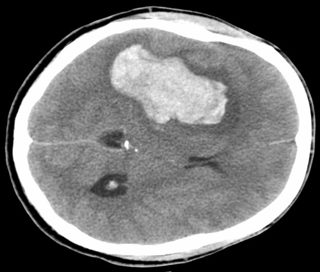
Podcast #291: Cincinnati Stroke Scale

Podcast #291: Cincinnati Stroke Scale

Author: Nick Hatch, M.D. Educational Pearls The Cincinnati Stroke Scale uses 3 measures to screen for ischemic stroke. The measures are: facial asymmetry, speech quality and arm drift. This scale is ...

15 Jan 20182min
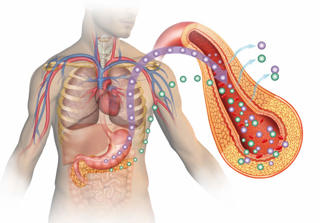
Podcast #290: The Biochemistry of DKA

Podcast #290: The Biochemistry of DKA

Author: Dave Rosenberg, M.D. Educational Pearls DKA commonly causes hyperkalemia, leading to peaked T-waves on ECG. However, DKA causes hypokalemia at the same time. In DKA, glucose cannot be taken i...

12 Jan 20186min

Populært innen Vitenskap

fastlegen
tingenes-tilstand
rekommandert
liberal-halvtime
sinnsyn
rss-nysgjerrige-norge
forskningno
rss-rekommandert
fjellsportpodden
smart-forklart
vett-og-vitenskap-med-gaute-einevoll
jss
villmarksliv
rss-overskuddsliv
kvinnehelsepodden
rss-radium
rss-inn-til-kjernen-med-sunniva-rose
nordnorsk-historie
nevropodden
hva-er-greia-med