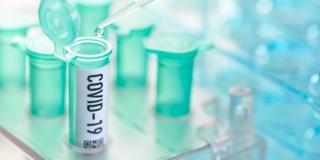

Podcast 557:  COVID-19 Lab Trends

Podcast 557: COVID-19 Lab Trends

Contributor: Don Stader, MD

Educational Pearls:

  • COVID-19 is diagnosed with a nasopharyngeal swab (q-tip). This unfortunately can be painful, but if the swab doesn't go deep into the nasal cavity the sample can be inadequate leading to false negatives (missed infections).
  • The sensitivity of the COVID-19 RT PCR test is low, ranging from 66-80% in various studies. Another study has shown 23% of patients who initially tested negative but had COVID-19 symptoms will test positive when re-tested. So test highly suspicious patients twice.

  • COVID has shown to have an effect on CBC. White blood cell counts are often normal (no leukocytosis), but there is often lymphopenia, or low lymphocytes, and thrombocytopenia. Interestingly, low platelets have appeared to have prognostic value in that lower platelets often indicate worse patient outcomes.
  • Coagulation studies are showing very elevated D-Dimers which has sparked the debate as to whether COVID-19 causes a hypercoagulable state. The increased incidence of MI/heart attacks and strokes in COVID patients supports this argument.
  • While D-Dimers can help point towards a diagnosis of pulmonary embolism, in the setting of highly likely COVID-19 infections, getting a CTA looking for a PE is probably unnecessary unless there's also suspicion for PE.
  • C-reactive protein (CRP) and procalcitonin are two common inflammatory markers. A CRP can help indicate how sick a patient is and procalcitonin can help determine if the infection is bacterial or viral in nature.
  • CRP levels are often elevated in COVID patients, and studies are showing a high CRP is linked to worse patient outcomes.
  • Elevations in procalcitonin can be used to see if there's a concomitant bacterial infection, meaning patients need antibiotics in addition to supportive care for the COVID-19.
  • Flu season is coming to a close, but data has shown a 5-10% co-infection rate of COVID-19 with influenza. As expected patient outcomes have been worse in those with both infections.

References

1) Farkas, Josh. "COVID-19." EMCrit Project, 21 Apr. 2020, emcrit.org/ibcc/covid19/#labs.

2) Guan W. et al. Clinical Characteristics of Coronavirus Disease 2019 in China. February 28, 2020, updated on March 6, 2020, at NEJM.org. DOI: 10.1056/NEJMoa2002032

3)Young BE, Ong SWX, Kalimuddin S, et al. Epidemiologic Features and Clinical Course of Patients Infected With SARS-CoV-2 in Singapore. JAMA. 2020;323(15):1488–1494. doi:10.1001/jama.2020.3204

4) Wang M. et al. Clinical diagnosis of 8274 samples with 2019-novel coronavirus in Wuhan. medRxiv 2020.02.12.20022327; doi: https://doi.org/10.1101/2020.02.12.20022327

Summarized by Jackson Roos, MS4 | Edited by Erik Verzemnieks, MD

Episoder(1146)

Podcast 811: Ketamine for Pain

Podcast 811: Ketamine for Pain

Contributor: Lessen, Aaron MD Educational Pearls: Ketamine can be given at 0.2-0.3 mg/kg as subdissociative doses for pain control in the ED Ketamine coadministered with Haldol may reduce agitation...

7 Sep 20223min
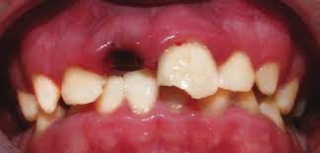
Podcast 810: Tooth Replantation

Podcast 810: Tooth Replantation

Contributor: Jarod Scott, MD Educational Pearls: There is a 1-hour window for tooth replantation in ED Cold milk is often best transport media unless there is access to specialized solutions (Hank's ...

5 Sep 20224min
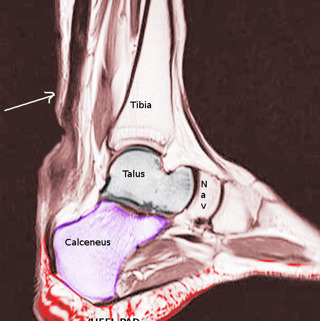
Podcast 809: Achilles Tendon Rupture

Podcast 809: Achilles Tendon Rupture

Contributor: Aaron Lessen, MD Educational Pearls: Achilles tendon rupture usually presents in younger, healthy patients after a sports injury Patients typically present complaining of an abrupt onset...

30 Aug 20224min

Podcast 808: BVM and PEEP Valve

Podcast 808: BVM and PEEP Valve

Contributor: Dylan Luyten, MD Educational Pearls: Positive End Expiratory Pressure (PEEP) is positive pressure within the lungs and maintained throughout the entire respiratory cycle. It is the press...

29 Aug 20224min

Podcast 807: Ring Removal Tricks

Podcast 807: Ring Removal Tricks

Contributor: Jared Scott, MD Educational Pearls: If a patient is in significant pain, a digital block can be helpful. Pain management alone may allow for manual ring removal.  Ring cutters and trauma...

23 Aug 20224min
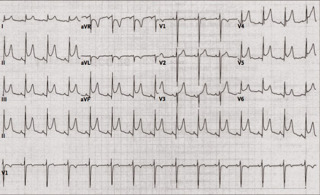
Podcast 806: Normal ECGs

Podcast 806: Normal ECGs

Contributor: Jared Scott, MD Educational Pearls: Physicians are typically advised not to trust computer interpretation of ECGs Retrospective study was done of computer interpreted normal ECGs to eva...

22 Aug 20223min

Podcast 805: Tunneled Peritoneal Catheter

Podcast 805: Tunneled Peritoneal Catheter

Contributor: Aaron Lessen, MD Educational Pearls: Patients with recurrent ascites may need frequent outpatient or emergency department paracentesis which can be time consuming and uncomfortable for p...

16 Aug 20223min

Podcast 804: Brugada Criteria for V Tach

Podcast 804: Brugada Criteria for V Tach

Contributor: Peter Bakes, MD Educational Pearls: Tachycardia describes a heart rate of >120 beats per minute Wide Complex describes a QRS duration of >120 ms or 3 small boxes on a standard EKG The ma...

9 Aug 20226min

Populært innen Vitenskap

fastlegen
tingenes-tilstand
rekommandert
jss
rss-rekommandert
villmarksliv
forskningno
sinnsyn
rss-paradigmepodden
fjellsportpodden
rss-nysgjerrige-norge
vett-og-vitenskap-med-gaute-einevoll
nevropodden
diagnose
smart-forklart
nordnorsk-historie
abid-nadia-skyld-og-skam
rss-overskuddsliv
dekodet-2
tidlose-historier