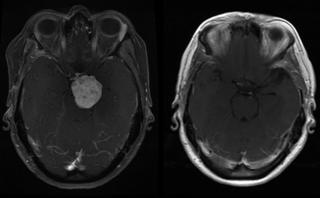
Podcast 582:  Gadolinium - The Contrast of MRI

Podcast 582: Gadolinium - The Contrast of MRI

Contributor: Michael Hunt, MD

Educational Pearls:

  • Contrast agents are commonly used for X-rays and CT's to better characterize disease, but contrast doesn't work with MRI. That's where the element Gadolinium comes into play.
  • Gadolinium, element 64, is ferromagnetic (attracted to iron) below 68 degrees and above that temperature it's paramagnetic which makes it useful in MRI (Magnetic Resonance Imaging).
  • Gadolinium is toxic alone, but when paired with chelators it can be used in humans and allows for better characterization of tumors or abnormal tissue on MRI.
  • It helps identify this abnormal tissue because when MRI causes polarization of our body's cells, the gadolinium, which has the maximum number of unpaired electrons in its orbital shells, alters the rate of decay in abnormal tissue highlighting abnormalities on imaging.
  • Gadolinium can also be used in the treatment of cancers because it collects in the cells of abnormal tissue, allowing for more targeted therapies.
  • In people exposed to gadolinium, the anaphylaxis rate is low, below 1/1000, and in rare cases there are reports of kidney injury and nephrogenic systemic fibrosis which is why it's not recommended in renal failure patients.

References

1)Ibrahim MA, Hazhirkarzar B, Dublin AB. Magnetic Resonance Imaging (MRI) Gadolinium. [Updated 2020 Mar 9]. In: StatPearls [Internet]. Treasure Island (FL): StatPearls Publishing; 2020 Jan-. Available from: https://www.ncbi.nlm.nih.gov/books/NBK482487/

2)Pasquini L, Napolitano A, Visconti E, et al. Gadolinium-Based Contrast Agent-Related Toxicities [published correction appears in CNS Drugs. 2018 May 15;:]. CNS Drugs. 2018;32(3):229-240. doi:10.1007/s40263-018-0500-1

Summarized by Jackson Roos, MS4 | Edited by Erik Verzemnieks, MD

Episoder(1146)

Podcast 616: MDIs for the Win

Podcast 616: MDIs for the Win

Contributor: Aaron Lessen, MD Educational Pearls: Contrary to many assumptions, meter-dose inhalers (MDIs) are as effective as nebulizers in pediatric and adult patients Nebulizers are associated wit...

24 Nov 20203min

Podcast 615: Pediatric DKA

Podcast 615: Pediatric DKA

Contributor: Ryan Circh, MD Educational Pearls: Diabetic ketoacidosis (DKA) can be the initial presenting condition of undiagnosed diabetes type I in pediatric patients Unlike adults, children typica...

23 Nov 20205min
Podcast 614: Perichondritis

Podcast 614: Perichondritis

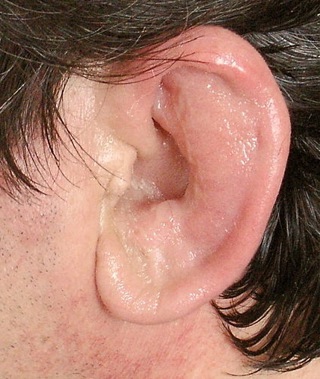
Contributor: Nick Tsipis, MD Educational Pearls: Perichondritis involves infection of not only the connective tissue of the ear but typically the cartilage as well Symptoms include erythema, ear pain...

17 Nov 20204min
Podcast 613: Spontaneous Bacterial Peritonitis

Podcast 613: Spontaneous Bacterial Peritonitis

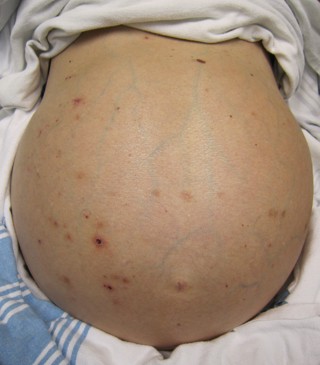
Contributor: Sam Killian, MD Educational Pearls: Spontaneous bacterial peritonitis (SBP) is an infection of peritoneal fluid that typically occurs in cirrhotic patients Symptoms may include abdominal...

16 Nov 20204min
Pharmacy Phriday #3: Drug Shortages in COVID

Pharmacy Phriday #3: Drug Shortages in COVID

Contributor: Rachael Waterson, PharmD Educational Pearls: Drug shortages have been an ongoing issue since the 2000's. Improvement was being made; however, several factors have exacerbated the drug s...

13 Nov 202016min

UnfilterED #11: Dr. Ricky Dhaliwal

UnfilterED #11: Dr. Ricky Dhaliwal

Dr. Tsipis sits down with colleague Dr. Ricky Dhaliwal for some insightful conversation regarding the differences between academic and community settings as well as the various roles of advocacy in me...

11 Nov 202040min

Podcast 612: Origin of Vaccines

Podcast 612: Origin of Vaccines

Contributor: Dave Rosenberg, MD Educational Pearls: The potential of vaccinations was first observed in the late 1600s when Jenner observed people who had cowpox never contracted smallpox, so he inoc...

10 Nov 20204min

Podcast 611: Flu Season in the time of COVID

Podcast 611: Flu Season in the time of COVID

Contributor: Chris Holmes, MD Educational Pearls: During a typical flu season positive rates of flu tests run around ~20% Surveillance data from Australia, South Africa, and Chile showed remarkably l...

9 Nov 20203min

Populært innen Vitenskap

fastlegen
tingenes-tilstand
rekommandert
jss
rss-rekommandert
villmarksliv
forskningno
sinnsyn
rss-paradigmepodden
fjellsportpodden
rss-nysgjerrige-norge
vett-og-vitenskap-med-gaute-einevoll
nevropodden
diagnose
smart-forklart
nordnorsk-historie
abid-nadia-skyld-og-skam
rss-overskuddsliv
dekodet-2
tidlose-historier