

Mental Health Monthly #5: Borderline Personality Disorder

Mental Health Monthly #5: Borderline Personality Disorder

For this episode of Mental Health Monthly, EMM is honored to collaborate with the hosts of Millennial Mental Health Channel podcast to explain Borderline Personality Disorder and tips to manage patients with this diagnosis in the Emergency Department. Dr. Justin Romano is a third year psychiatry resident in Omaha, Nebraska and Eddie Carrillo is a licensed mental health therapist currently working at partial hospitalization and IOP eating disorder program in Portland, Oregon. Their podcast Millennial Mental Health Channel seeks to explore the world of mental health from their two professional perspectives.

You can listen to their podcast on all major streaming platforms including Apple Podcasts, Spotify and Google Podcasts.

Follow them on Twitter and Instagram @millennialmhc

Contributors: Dr. Justin Romano and Eddie Carrillo, M.A., LPC

Educational Pearls:

  • 4% of the general population has Bipolar Personality Disorder (BPD) and 9% of all emergency room visits involve patients with BPD.
  • BPD is defined as a pervasive pattern of instability of interpersonal relationships, self-image, affect and marked impulsivity beginning by early adulthood and present in a variety of contexts.
  • There are 9 symptoms of BPD. In order to meet criteria for diagnosis you need 5 of the 9.
  • Symptoms include:
    • Frantic efforts to avoid real or imagined abandonment
    • Pattern of unstable and intense interpersonal relationships, characterized by alternating between extremes of idealization and devaluation
    • Identity disturbance: markedly and persistently unstable self-image or sense of self
    • Impulsivity in at least two areas that are potentially self-damaging
    • Recurrent suicidal behaviors, gestures, threats or self-mutilating behavior
    • Affect instability due to marked reactivity of mood
    • Chronic feelings of emptiness
    • Inappropriate intense anger or difficulty controlling anger
    • Transient stress related paranoid ideation or severe dissociative symptoms
  • Pathophysiology behind BPD: Overactivation of the amygdala within the limbic system which controls fear, anxiety and anger.
  • Often patients with BPD have dealt with an increased amount of trauma in their lives. They have one of the highest suicide rates at 10%.
  • Behaviors in individuals with BPD are often due to an invalidating environment in an attempt to reconnect with people they love.
  • Tips to managing patients in the emergency room with BPD.
  • Stay calm, consistent and caring and validate their feelings with:
    • Body language: sit at eye level, make good eye contact, nod your head when they talk, and use repeat back clarification questions.
    • Facial expressions: be cognizant of your facial expressions. Patients with BPD are more likely to interpret a neutral face as angry.
    • Set boundaries and stick to your word. Patients with BPD can be described as manipulative, but often they are unaware they are doing this.
    • Give validating statements. This will ensure the patient you are listening and working with them to solve their problems.

Summarized by Emily Mack, OMSIII

Episoder(1145)

Podcast 709: Clown Therapy

Podcast 709: Clown Therapy

Contributor: Jared Scott, MD Educational Pearls: Using LET, procedural sedation, and distraction techniques are often needed to successfully perform painful procedures in pediatrics patients The tech...

30 Aug 20214min

Podcast 708: Diagnostic Paracentesis

Podcast 708: Diagnostic Paracentesis

Contributor: Peter Bakes, MD Educational Pearls: Paracentesis is a procedure where fluid is removed from the peritoneal cavity by needle Indications for paracentesis include: large volume paracentesi...

24 Aug 20215min
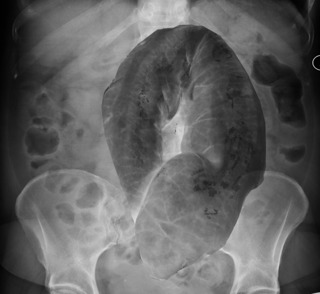
Podcast 707: Sigmoid Volvulus

Podcast 707: Sigmoid Volvulus

Contributor: Aaron Lessen, MD Educational Pearls: Sigmoid volvulus occurs when the sigmoid colon twists 180 to 360 degrees 10% of intestinal obstructions in the US; 50-70% of intestinal obstructions ...

23 Aug 20213min

Podcast 706: Pepper Spray Decon

Podcast 706: Pepper Spray Decon

Contributor: Ramnik Dhaliwal, MD JD Educational Pearls: Pepper spray is a highly irritating compound with active ingredient of capsaicin Techniques to help decontaminate and alleviate symptoms of an ...

18 Aug 20213min

Podcast 705: Pyloric Stenosis

Podcast 705: Pyloric Stenosis

Contributor: Neil Cella, MD Educational Pearls: Pylorus becomes hypertrophied and does not allow food or liquid to pass through to the duodenum tOccurs between the ages of 3 weeks to 3 months Classic...

17 Aug 20214min
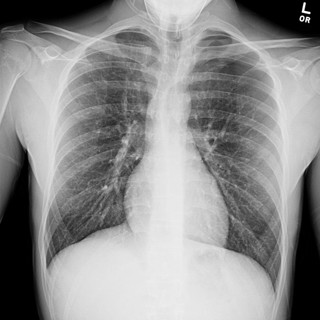
Podcast 704: Treatment of Pneumothorax

Podcast 704: Treatment of Pneumothorax

Contributor: Adam Barkin, MD Educational Pearls: Multi-center open-label non-inferiority trial looked at treatment of pneumothorax with a small-bore chest tube versus conservative management with exc...

16 Aug 20215min

Mental Health Monthly #8: Trauma-Informed Care

Mental Health Monthly #8: Trauma-Informed Care

Contributor: Randi Libbon, MD The Core features of trauma-informed care include: Patient empowerment, choice and collaboration. This means educating patients and allowing patients to make choices abo...

11 Aug 20219min

Podcast 703: Fever in Infants

Podcast 703: Fever in Infants

Contributor: Neil Cella, MD  Educational Pearls: 10% of patients 100.4) have an serious bacterial infection Most of these are UTIs, but also consider pneumonia and meningitis Requires CXR, LP, lab...

10 Aug 20215min

Populært innen Vitenskap

fastlegen
tingenes-tilstand
rekommandert
jss
rss-nysgjerrige-norge
rss-rekommandert
sinnsyn
forskningno
rss-paradigmepodden
villmarksliv
vett-og-vitenskap-med-gaute-einevoll
fjellsportpodden
nordnorsk-historie
smart-forklart
rss-overskuddsliv
diagnose
abid-nadia-skyld-og-skam
aldring-og-helse-podden
pod-britannia
tidlose-historier