
Mental Health Monthly #6: Suicide Assessment

Mental Health Monthly #6: Suicide Assessment

EMM is excited to welcome back the hosts of Millennial Mental Health Channel podcast to explain the key points of a robust suicide assessment in the ED. Dr. Justin Romano is a third year psychiatry resident in Omaha, Nebraska and Eddie Carrillo is a licensed mental health therapist currently working at partial hospitalization and IOP eating disorder program in Portland, Oregon. Their podcast Millennial Mental Health Channel seeks to explore the world of mental health from their two professional perspectives.

You can listen to their podcast on all major streaming platforms including Apple Podcasts, Spotify and Google Podcasts.

Follow them on Twitter and Instagram @millennialmhc

Contributors: Dr. Justin Romano and Eddie Carrillo, M.A., LPC

Educational Pearls:

  • Suicide is 10th most common cause in U.S. and the rate rose by 30% from 2000-2016 and the CDC reports that there was a 25% increase in ED visits for SI from January 2017 - December 2018

  • Use an objective screening tool like Columbia-Suicide Severity Rating Scale (C-SSRS) when assessing patients as they can help detect SI although ultimately it is up to your clinical impression to make a decision

  • Suicide reduction measures and strategies work! Take advantage of social workers when setting up outpatient resources for patients i.e. gun locks

  • Risk Factors include: prior attempts, substance use/abuse, mental disorders (especially depression and bipolar disorder), access to lethal means (most modifiable by risk reduction strategies), knowing someone who has died by suicide, social isolation, chronic disease or disability, lack of access to mental health resources, recent changes in social status and being a member of a high risk demographic (older caucasian men, LGBTQ+, Native Americans and Alaskan Natives)

  • Protective Factors include: good followup as an outpatient, good social support, life skills, purpose in life, cultural beliefs, children and sense of responsibility in the family

  • Sober up and reassess suicidality

  • If not medically cleared, admit to hospital to address these complaints and then address suicidality

  • If they have suicidal thoughts, plan and are reaching out for help because they don't want to do it then send to inpatient facility

  • Consult psychiatry to explain inpatient psych or when you're worried about patient safety to have them weigh in

  • Get collateral by talking to a family member to verify that the patient is telling the truth

  • At the end of the day, thorough documentation of risk and protective factors and results of screening tool in Assessment and Plan is essential to protecting yourself as a professional

References

Betz ME, Boudreaux ED. Managing Suicidal Patients in the Emergency Department. Ann Emerg Med. 2016;67(2):276-282. doi:10.1016/j.annemergmed.2015.09.001

Suicide. National Institute of Mental Health. https://www.nimh.nih.gov/health/statistics/suicide.shtml. Published September 2020. Accessed December 30, 2020.

Zwald ML, Holland KM, Annor FB, et al. Syndromic Surveillance of Suicidal Ideation and Self-Directed Violence — United States, January 2017–December 2018. MMWR Morb Mortal Wkly Rep 2020;69:103–108. DOI: http://dx.doi.org/10.15585/mmwr.mm6904a3.

Summarized by Mason Tuttle

Episoder(1146)

Podcast # 391: Necrotizing Fasciitis

Podcast # 391: Necrotizing Fasciitis

Author: Peter Bakes, MD Educational Pearls: Necrotizing fasciitis is an infection of the deep soft tissues with destruction of the muscle fascia and overlying fat Think of it if pain is out of prop...

12 Okt 20186min
Podcast # 390: Haloperidol for Pain

Podcast # 390: Haloperidol for Pain

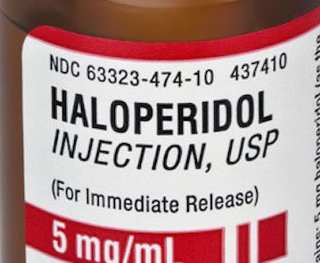
Author: Gretchen Hinson, MD Educational Pearls: Reasonable approach of haloperidol 10 mg IM (or 5 mg IV) for pain relief in opioid-dependent patients; can repeat once Chronic opioid use results in ...

10 Okt 20185min

Podcast #389: BRUE

Podcast #389: BRUE

Educational Pearls: BRUE (Brief Resolved Unexplained Event) replaces what was previously called ALTE BRUE describes an event in a child less than one year of age with one or more of the following...

8 Okt 20184min

Podcast #388: Antibiotics for Appendicitis

Podcast #388: Antibiotics for Appendicitis

Author: Aaron Lessen, MD Educational Pearls: 5-year follow up study on antibiotic treatment for uncomplicated appendicitis showed 39.1% recurrence rate requiring appendectomy by 5 years Nearly 6...

5 Okt 20182min

Podcast #387: Fluoroquinolones are Perfectly Safe?

Podcast #387: Fluoroquinolones are Perfectly Safe?

Author: Don Stader, MD Educational Pearls: Fluoroquinolones can cause connective tissue disruption leading not only to tendon rupture but also aortic dissection Retrospective study from Taiwan s...

3 Okt 20183min

Podcast #386: Respecting Transgender Patients

Podcast #386: Respecting Transgender Patients

Author: Kasey Champion, MD Educational Pearls: Transgender populations are frequent victims of discrimination in healthcare Ask transgender patients what their preferred pronoun is It is somet...

1 Okt 20183min

Podcast #385: Probiotics

Podcast #385: Probiotics

Author: John Winkler, MD Educational Pearls: Probiotics are bacteria that are ingested to promote gut health but recent research casts doubt on their effectiveness. Recent study suggests that most...

28 Sep 20182min
Podcast #384: Don't stab a PTA?

Podcast #384: Don't stab a PTA?

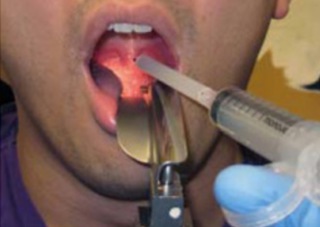
Author: Don Stader, MD Educational Pearls: Recent study suggests we may not need to drain uncomplicated peritonsillar abscesses Patients who received medical therapy alone had no difference in c...

26 Sep 20183min

Populært innen Vitenskap

fastlegen
tingenes-tilstand
rekommandert
jss
rss-rekommandert
villmarksliv
forskningno
sinnsyn
rss-paradigmepodden
fjellsportpodden
rss-nysgjerrige-norge
vett-og-vitenskap-med-gaute-einevoll
nevropodden
diagnose
smart-forklart
nordnorsk-historie
abid-nadia-skyld-og-skam
rss-overskuddsliv
dekodet-2
tidlose-historier