
Episode 868: Airway Management in Obesity

Episode 868: Airway Management in Obesity

Contributor: Aaron Lessen MD

Educational Pearls:

Why is airway management more difficult in obesity?

  • Larger body habitus causes the chest to be above the head when the patient is lying supine, creating difficult angles for intubation.

  • Reduced Functional Residual Capacity (FRC) causes these patients to deoxygenate much more quickly, reducing the amount of time during which the intubation can take place.

What special considerations need to be made?

  • Positioning. The auditory canal and sternal notch should be aligned in a horizontal plane. Do this by stacking blankets to lift the neck and head. Also, try to make the head itself parallel to the ceiling.

  • Pre-oxygenation. Use Bi-level Positive Airway Pressure (BiPAP) with Positive End Expiratory Pressure (PEEP) or a Bag-Valve-Mask (BVM) with a PEEP valve. PEEP helps prevent alveoli from collapsing after every breath and improves oxygenation.

  • Dosing of paralytics. Succinylcholine is dosed on total body weight so the dose will be much larger for the obese patient. Rocuronium is dosed on ideal body weight, but adjusted body weight may also be used in obese cases.

References

  1. De Jong A, Wrigge H, Hedenstierna G, Gattinoni L, Chiumello D, Frat JP, Ball L, Schetz M, Pickkers P, Jaber S. How to ventilate obese patients in the ICU. Intensive Care Med. 2020 Dec;46(12):2423-2435. doi: 10.1007/s00134-020-06286-x. Epub 2020 Oct 23. PMID: 33095284; PMCID: PMC7582031.

  2. Langeron O, Birenbaum A, Le Saché F, Raux M. Airway management in obese patient. Minerva Anestesiol. 2014 Mar;80(3):382-92. Epub 2013 Oct 14. PMID: 24122033.

  3. Sharma S, Arora L. Anesthesia for the Morbidly Obese Patient. Anesthesiol Clin. 2020 Mar;38(1):197-212. doi: 10.1016/j.anclin.2019.10.008. Epub 2020 Jan 2. PMID: 32008653.

  4. Singer BD, Corbridge TC. Basic invasive mechanical ventilation. South Med J. 2009 Dec;102(12):1238-45. doi: 10.1097/SMJ.0b013e3181bfac4f. PMID: 20016432.

Summarized by Jeffrey Olson, MS2 | Edited by Jorge Chalit, OMSII

Episoder(1146)

Podcast #249: Detecting Pulses

Podcast #249: Detecting Pulses

Author: Jared Scott, M.D. Educational Pearls Overall, medical providers are bad at detecting pulses. However, only 2% of patients do not have a detectable DP pulse. In one study, for patients with l...

10 Sep 20173min

Podcast #248: Family Presence During Resuscitation

Podcast #248: Family Presence During Resuscitation

Author: Aaron Lessen, M.D. Educational Pearls Traditionally the family is removed from the room during procedures and codes, but recent research shows that family presence may be beneficial. 50% pati...

8 Sep 20173min
Podcast #249: D-Dimer

Podcast #249: D-Dimer

Author: Michael Hunt, M.D. Educational Pearls In the recent YEARS study, investigators checked every patient with suspicion for PE with a D-dimer, using a modified Wells score for risk stratification...

6 Sep 20173min
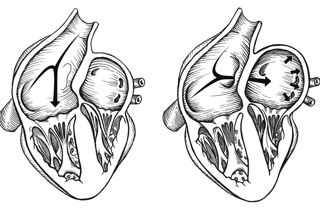
Podcast #248: Patent Foramen Ovale

Podcast #248: Patent Foramen Ovale

Author: Jared Scott, M.D. Educational Pearls The foramen ovale (FO) connects the left and right atria to allow oxygenated blood to bypass the developing lungs, it usually closes at birth but for some...

4 Sep 20173min

Podcast #247: Are You Listening? - 3 Ear Emergencies You Can't Miss!

Podcast #247: Are You Listening? - 3 Ear Emergencies You Can't Miss!

Author: Don Stader, M.D. Educational Pearls Ear pain is a common complaint in adults and kids. A red, hot, painful ear with involvement of the pinna could indicate perichondritis - an infection of th...

2 Sep 20176min
Podcast #246: Fever in Sepsis

Podcast #246: Fever in Sepsis

Author: Nick Hatch, M.D. Educational Pearls A recent observational cohort study found that the biggest predictor for sepsis survival was fever. Those with higher fevers had better outcomes. Some poss...

31 Aug 20172min
Podcast #245: Hypoglycemia

Podcast #245: Hypoglycemia

Author: Dylan Luyten, M.D. Educational Pearls Hypoglycemia is very common in type 2 diabetics, and is often caused by insulin overdose or missed meals. Knowing the peak time of action for common diab...

29 Aug 20174min
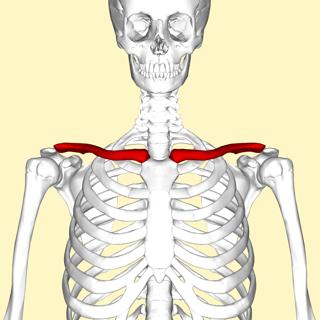
Podcast #244: Clavicle Fracture Review

Podcast #244: Clavicle Fracture Review

Author: Nick Hatch, M.D. Educational Pearls The force required to break a clavicle is significant, so clavicle fracture may be associated with other injury (pneumothorax, vascular injury). Most fract...

27 Aug 20172min

Populært innen Vitenskap

fastlegen
rekommandert
jss
tingenes-tilstand
rss-rekommandert
villmarksliv
liberal-halvtime
sinnsyn
forskningno
rss-paradigmepodden
fjellsportpodden
nevropodden
rss-nysgjerrige-norge
diagnose
vett-og-vitenskap-med-gaute-einevoll
abid-nadia-skyld-og-skam
tidlose-historier
dekodet-2
smart-forklart
hva-er-greia-med