Episode 868: Airway Management in Obesity

Episode 868: Airway Management in Obesity

Contributor: Aaron Lessen MD

Educational Pearls:

Why is airway management more difficult in obesity?

  • Larger body habitus causes the chest to be above the head when the patient is lying supine, creating difficult angles for intubation.

  • Reduced Functional Residual Capacity (FRC) causes these patients to deoxygenate much more quickly, reducing the amount of time during which the intubation can take place.

What special considerations need to be made?

  • Positioning. The auditory canal and sternal notch should be aligned in a horizontal plane. Do this by stacking blankets to lift the neck and head. Also, try to make the head itself parallel to the ceiling.

  • Pre-oxygenation. Use Bi-level Positive Airway Pressure (BiPAP) with Positive End Expiratory Pressure (PEEP) or a Bag-Valve-Mask (BVM) with a PEEP valve. PEEP helps prevent alveoli from collapsing after every breath and improves oxygenation.

  • Dosing of paralytics. Succinylcholine is dosed on total body weight so the dose will be much larger for the obese patient. Rocuronium is dosed on ideal body weight, but adjusted body weight may also be used in obese cases.

References

  1. De Jong A, Wrigge H, Hedenstierna G, Gattinoni L, Chiumello D, Frat JP, Ball L, Schetz M, Pickkers P, Jaber S. How to ventilate obese patients in the ICU. Intensive Care Med. 2020 Dec;46(12):2423-2435. doi: 10.1007/s00134-020-06286-x. Epub 2020 Oct 23. PMID: 33095284; PMCID: PMC7582031.

  2. Langeron O, Birenbaum A, Le Saché F, Raux M. Airway management in obese patient. Minerva Anestesiol. 2014 Mar;80(3):382-92. Epub 2013 Oct 14. PMID: 24122033.

  3. Sharma S, Arora L. Anesthesia for the Morbidly Obese Patient. Anesthesiol Clin. 2020 Mar;38(1):197-212. doi: 10.1016/j.anclin.2019.10.008. Epub 2020 Jan 2. PMID: 32008653.

  4. Singer BD, Corbridge TC. Basic invasive mechanical ventilation. South Med J. 2009 Dec;102(12):1238-45. doi: 10.1097/SMJ.0b013e3181bfac4f. PMID: 20016432.

Summarized by Jeffrey Olson, MS2 | Edited by Jorge Chalit, OMSII

Episoder(1147)

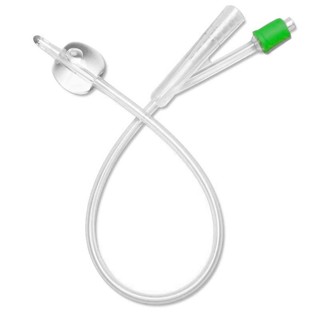
Podcast # 344: Foley troubleshooting

Podcast # 344: Foley troubleshooting

Author: Aaron Lessen, MD. Educational Pearls: When foley is stuck, balloon may not have deflated. Make sure balloon is not in the urethra, which can block drainage. Cut off the port as it may b...

22 Jun 20183min
Podcast # 343: Snake Bites

Podcast # 343: Snake Bites

Educational Pearls: Snake bites commonly occur between April and October. Rattlesnake bites are the most common. Venom contains proteins/enzymes that cause local inflammation, coagulopathy, and...

20 Jun 20186min
Podcast # 342: Scombroid

Podcast # 342: Scombroid

Author: Jared Scott, MD Educational Pearls: Scombroid is a type of food poisoning associated with dark fish (i.e. tuna, salmon, mackerel) that mimics anaphylaxis. Occurs through conversion of histi...

18 Jun 20184min
Podcast # 341: Tenecteplase vs. Alteplase

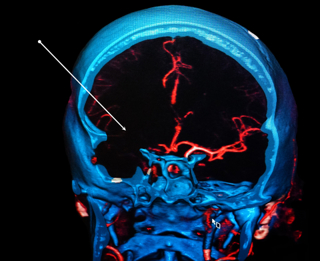
Podcast # 341: Tenecteplase vs. Alteplase

Author: Rachel Beham, PharmD Educational Pearls: Tenecteplase is more specific for fibrin and has a longer half-life than alteplase. In setting of ischemic stroke, tenecteplase before thrombectomy ...

13 Jun 20183min

Podcast # 340: Drowning

Podcast # 340: Drowning

Author: Chris Holmes, MD Educational Pearls: Epidemiology: 80% male, ages 1-4 at greatest risk, African-American > Caucasian. Freshwater and ocean water may have more bacteria than pool water. ...

11 Jun 20185min

Podcast # 339: Ectopic Pregnancy Risk Factors

Podcast # 339: Ectopic Pregnancy Risk Factors

Author: Jared Scott, MD Educational Pearls: Data is mixed, but some studies show 1-2% of pregnancies are ectopic. Risk factors for ectopic pregnancies include: pelvic inflammatory disease, prior ec...

8 Jun 20185min
Podcast # 338: Mononucleosis predictors

Podcast # 338: Mononucleosis predictors

Author: Chris Holmes, MD Educational Pearls: Symptoms commonly seen with mononucleosis are palatal petechiae, posterior cervical lymphadenopathy, inguinal/axillary lymphadenopathy, splenomegaly, and/...

6 Jun 20182min

Podcast # 337: Airway Burn Inhalation

Podcast # 337: Airway Burn Inhalation

Author: John Winkler, MD Educational Pearls: Singed nasal hairs, soot around mouth, hoarse voice, drooling, and burns to head/face are signs suggestive of inhalation injury. Early intubation is cri...

4 Jun 20186min

Populært innen Vitenskap

fastlegen
rekommandert
tingenes-tilstand
rss-rekommandert
jss
liberal-halvtime
villmarksliv
rss-paradigmepodden
forskningno
sinnsyn
fjellsportpodden
pod-britannia
nevropodden
rss-nysgjerrige-norge
tidlose-historier
hva-er-greia-med
diagnose
rss-overskuddsliv
smart-forklart
rss-lundqvist-podden