
Mental Health Monthly #17: Mania

Mental Health Monthly #17: Mania

Contributors:

Andrew White MD - Outpatient Psychiatrist; Fellowship Trained in Addiction Psychiatry; Denver Health

Travis Barlock MD - Emergency Medicine Physician; Swedish Medical Center

Summary

In this episode of Mental Health Monthly, Dr. Travis Barlock hosts Dr. Andrew White to discuss the elements of mania that may be encountered in the emergency department. The discussion includes a helpful mnemonic to assess mania, work-up and treatment in the ED, underlying causes of mania, mental health holds, inpatient treatment, and the role of sleep in mania.

Educational Pearls

  • Initial assessment of suspected mania can be done via DIGFAST:

    • Distractibility - Individual that is unable to carry a linear, goal-directed conversation

    • Impulsivity - Executive functioning is impaired and patients are unable to control their behaviors

    • Grandiosity - Elevated mood and sense of self to delusions of grandeur

    • Flight of ideas - Usually described as racing thoughts

    • Agitation - Increase in psychomotor activity; start several projects of which they have little previous knowledge

    • Sleep decrease - Typically, manic episodes start with insomnia and can devolve into multiday sleeplessness

    • Talkativeness - More talkative than usual with pressured speech and a tangential thought process

  • Interviewing patients requires an understanding of mood-based mania vs. psychosis-based mania

    • An individual with mood-based mania will more likely be restless, whereas a patient with psychosis-based mania will be more relaxed from a psychomotor standpoint

  • Treatment of manic patients in the ED includes the use of antipsychotics to manage acute symptomatology

    • Management can be informed and directed by the patient's history i.e. known medications that have worked for the patient

  • ED management of manic patients involves a work-up for a broad differential including agitated delirium, substance-induced mania, metabolic disorders, and autoimmune diseases.

  • Some individuals experience manic episodes from marijuana and other illicit substances

  • Antidepressants used in bipolar patients for suspected depression may induce mania

    • Important to avoid using antidepressants as first-line therapy

  • Mental health holds can be beneficial in patients with grave disabilities from mania

    • Oftentimes, undertreatment of manic episodes leads to re-hospitalization

  • Inpatient treatment:

    • Environment is important - ensure that patients get solo rooms if possible to minimize stimulation

    • Antipsychotics, including risperidone and olanzapine, with or without a benzodiazepine, are useful for short-term agitation

    • Long-term treatment involves coupled pharmacological treatments with non-pharmacological treatments

  • Sleep

    • Fractured sleep is one of the earliest warning signs that someone has an imminent manic episode

    • Poor sleep can be an inciting factor for mania, which then turns into a cycle that further propagates a patient's manic episode

Summarized and edited by Jorge Chalit, OMSII | Studio production by Jeffrey Olson, MS2

Episoder(1146)

Podcast 634: D10 for Hypoglycemia

Podcast 634: D10 for Hypoglycemia

Contributor: Dylan Luyten, MD Educational Pearls: D10 may be a better alternative to D50 in correcting hypoglycemia Risks of D50: Can cause extravasation injury Risk of rebound hypoglycemia D10 ...

25 Jan 20214min
Podcast 633: Pathologic Femur Fractures

Podcast 633: Pathologic Femur Fractures

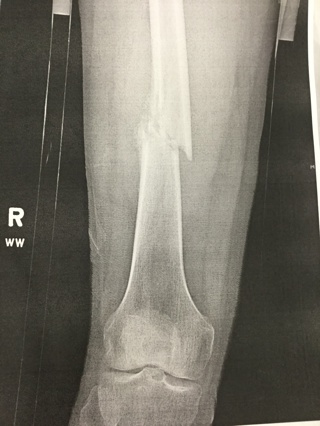
Contributor: Jared Scott, MD Educational Pearls: Pathologic bone fractures occur due to weakened bones from chronic disease and with less force when compared to non-pathologic fractures Can be due to...

19 Jan 20215min

Podcast 632: Neonatal Jaundice

Podcast 632: Neonatal Jaundice

Contributor: Jared Scott, MD Educational Pearls: Bilirubin is natural breakdown product of red blood cells but can be neurotoxic if levels become too high Fetal red blood cells are fragile and break ...

18 Jan 20216min
Pharmacy Phriday #7: Bactrim Adverse Events

Pharmacy Phriday #7: Bactrim Adverse Events

Contributor: Cheyenne Bean, PharmD Educational Pearls: Bactrim (TMP-SMX) is a sulfa antibiotic used for a number of infections but can have untoward effects. Hypoglycemia can be induced by the sulfa ...

15 Jan 20214min
Podcast 631: UK COVID-19 Mutation

Podcast 631: UK COVID-19 Mutation

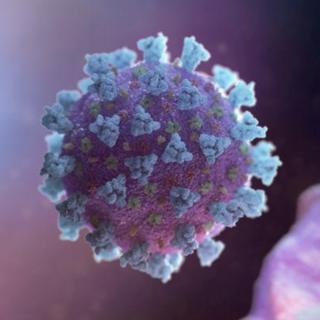
Contributor: Gretchen Hinson, MD Educational Pearls: Viruses mutate frequently and a new variant of COVID has been found in the United Kingdom. Mutations typically occur due to transcription errors d...

13 Jan 20215min
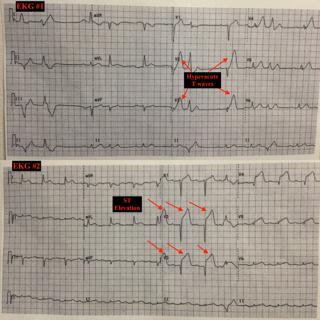
Podcast 630: Evolution of an STEMI

Podcast 630: Evolution of an STEMI

Contributor: Peter Bakes, MD Educational Pearls: Hyperacute T waves can occur immediately and typical last less than an hour Hyperacute T waves are typically broader than peaked T-waves, which are ...

12 Jan 20215min
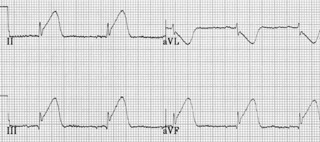
Podcast 629: Inferior STEMI

Podcast 629: Inferior STEMI

Contributor: Jared Scott, MD Educational Pearls: EKGs look at different angles, or vectors, of the heart's electrical conduction as it travels through the heart. Knowing how to read these vectors is ...

11 Jan 20214min

Podcast 628: ST Elevation

Podcast 628: ST Elevation

Contributor: Peter Bakes, MD Educational Pearls: STEMI criteria is not just 1mm elevation in contiguous leads 1.5 mm in V2-V3 for women 2.0 mm in V2-V3 for men 2.5 mm in V2-V3 for men under 40 In...

5 Jan 20215min

Populært innen Vitenskap

fastlegen
rekommandert
jss
tingenes-tilstand
rss-rekommandert
villmarksliv
liberal-halvtime
sinnsyn
forskningno
rss-paradigmepodden
fjellsportpodden
nevropodden
rss-nysgjerrige-norge
diagnose
vett-og-vitenskap-med-gaute-einevoll
abid-nadia-skyld-og-skam
tidlose-historier
dekodet-2
smart-forklart
hva-er-greia-med