

Podcast 872: Preseptal and Orbital Cellulitis

Podcast 872: Preseptal and Orbital Cellulitis

Contributor: Meghan Hurley MD

Educational Pearls:

What is Cellulitis?

  • A common and potentially serious bacterial skin infection.

  • Caused by various types of bacteria, with Streptococcus and Staphylococcus species being the most common.

What is Preseptal Cellulitis and why is it more serious than facial cellulitis?

  • Preseptal Cellulitis, also known as Periorbital Cellulitis, is a bacterial infection of the soft tissues in the eyelid and the surrounding area.

  • This requires prompt and aggressive treatment to avoid progression into Orbital Cellulitis.

How is Preseptal Cellulitis treated?

  • Oral antibiotics for five to seven days.

  • In the setting of trauma (scratching bug bites) Clindamycin or TMP-SMX (for MRSA coverage) and Amoxicillin-clavulanic acid or Cefpodoxime or Cefdinir.

  • If there is no trauma, monotherapy with amoxicillin-clavulanic acid is appropriate.

  • Check immunization status against H.influenzae and adjust appropriately.

What is Orbital Cellulitis, how is it diagnosed, and why is it more serious than Preseptal Cellulitis?

  • Orbital cellulitis involves the tissues behind the eyeball and within the eye socket itself.

  • Key features include:

    • Eye pain.

    • Proptosis (Bulging of the eye out of its normal position).

    • Impaired eye movement.

    • Blurred or double vision.

  • This can lead to three very serious complications:

    • Orbital Compartment Syndrome. This can push eye forward, stretch optic nerve, and threaten vision.

    • Meningitis given that the meninges of the brain are continuous with optic nerve.

    • Endophthalmitis, which is inflammation of the inner coats of the eye. This can also threaten vision.

  • If suspected, get a CT of the orbits and/or an MRI to look for an abscess behind the eyes.

How is Orbital Cellulitis treated?

  • IV antibiotics. Cover for meningitis with Ceftriaxone and Vancomycin.

  • Add Metronidazole until intracranial involvement has been ruled out.

  • Drain the abscess surgically. Usually this is performed by an ophthalmologist or an otolaryngologist.

  • Admit to the hospital.

References

  1. Bae C, Bourget D. Periorbital Cellulitis. 2023 Jul 17. In: StatPearls [Internet]. Treasure Island (FL): StatPearls Publishing; 2023 Jan–. PMID: 29261970.

  2. Chaudhry IA, Shamsi FA, Elzaridi E, Al-Rashed W, Al-Amri A, Al-Anezi F, Arat YO, Holck DE. Outcome of treated orbital cellulitis in a tertiary eye care center in the middle East. Ophthalmology. 2007 Feb;114(2):345-54. doi: 10.1016/j.ophtha.2006.07.059. PMID: 17270683.

  3. Seltz LB, Smith J, Durairaj VD, Enzenauer R, Todd J. Microbiology and antibiotic management of orbital cellulitis. Pediatrics. 2011 Mar;127(3):e566-72. doi: 10.1542/peds.2010-2117. Epub 2011 Feb 14. PMID: 21321025.

  4. Wong SJ, Levi J. Management of pediatric orbital cellulitis: A systematic review. Int J Pediatr Otorhinolaryngol. 2018 Jul;110:123-129. doi: 10.1016/j.ijporl.2018.05.006. Epub 2018 May 8. PMID: 29859573.

Summarized by Jeffrey Olson MS2 | Edited by Meg Joyce & Jorge Chalit, OMSII

Episoder(1146)

Podcast 538:  Low Maintenance Boxer's Fracture

Podcast 538: Low Maintenance Boxer's Fracture

Contributor: Jared Scott, MD Educational Pearls: A distal 5th metacarpal neck fracture is often referred to as a "boxer's fracture" and a common fracture encountered in the emergency department Splin...

4 Feb 20202min

Podcast 537:  Thoughts on Cardiac Arrest

Podcast 537: Thoughts on Cardiac Arrest

Contributor:  Don Stader, MD Educational Pearls: High-quality compressions are an essential, and probably one of the most important, part of cardiac arrest  Actual evidence for drugs in cardiac arres...

3 Feb 20205min

UnfilterED #4: Dr. Vivek Tayal

UnfilterED #4: Dr. Vivek Tayal

Dr. Vivek Tayal of Carolinas Medical Center, a pioneer of using ultrasound in the emergency department, reflects on his role in establishing ultrasound use in emergency medicine and much more! Ultra...

29 Jan 202045min
Podcast 536:  Epistaxis 101

Podcast 536: Epistaxis 101

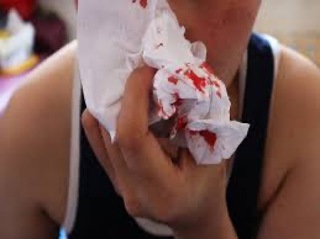
Contributor:  Dylan Luyten, MD Educational Pearls: Clear the nasal passages - have the patient, if stable, blow their nose to dislodge any clot that might be in the way Searching for the source of bl...

28 Jan 20208min
Podcast 535: A Prescription for Falls

Podcast 535: A Prescription for Falls

Contributor: Aaron Lessen, MD Educational Pearls: Emergency department evaluation of falls, particularly in the elderly, should include an assessment of risk factors Common causes of falls in th...

28 Jan 20202min

Mental Health Monthly #1: Decision Making Capacity

Mental Health Monthly #1: Decision Making Capacity

In the first episode of this new series, the complexities of decision making capacity are discussed. References and Further Reading: [1] Appelbaum, P. S. (2007). Assessment of patients' competence to...

22 Jan 202010min

Podcast 534: Nerve Agents

Podcast 534: Nerve Agents

Author: Michael Hunt, MD Educational Pearls: Organophosphate "nerve agents" were developed in the 1930's These agents have cholinergic effects, which can be remembered by the mnemonic "SLUDGE" Sali...

21 Jan 20205min

Podcast 533:  Hypoglycemia

Podcast 533: Hypoglycemia

Contributor: Dylan Luyten, MD Educational Pearls: Insulin related hypoglycemia can vary from a brief transient effect from short-acting forms (i.e. insulin lispro) to prolonged from long acting (i.e....

20 Jan 20204min

Populært innen Vitenskap

fastlegen
rekommandert
tingenes-tilstand
jss
rss-rekommandert
liberal-halvtime
villmarksliv
forskningno
sinnsyn
fjellsportpodden
rss-paradigmepodden
nevropodden
rss-nysgjerrige-norge
tidlose-historier
vett-og-vitenskap-med-gaute-einevoll
diagnose
smart-forklart
pod-britannia
dekodet-2
hva-er-greia-med


















