Podcast 876: Sedation Pearls

Podcast 876: Sedation Pearls

Contributor: Travis Barlock MD

Educational Pearls:

Common sedatives used in the Emergency Department and a few pearls for each.

  • Propofol

    • Type: Non-barbiturate sedative hypnotic agonizing GABA receptors.

    • Benefit: Quick on and quick off (duration of action is approximately 2-7 minutes), helpful for suspected neurologic injury so the patient can wake up and be re-evaluated. Also has the benefit of reducing intracranial pressure (ICP).

    • Downsides: Hypotension, bradycardia, respiratory depression.

    • What should you do if a patient is getting hypotensive on propofol?

      • Do not stop the propofol. Start pressors. May have to reduce the propofol dose if delay in pressors.

  • Dexmedetomidine (Precedex)

    • Type: Alpha 2 agonist - causes central sedation

    • Uses: Patients are more alert and responsive and therefore can be on BiPAP instead of being intubated. Does not cause respiratory depression.

    • Downsides: Hypotension and Bradycardia.

    • Caution in using this for head injuries, its side effects can mask the Cushing reflex and make it more difficult to spot acute elevations in ICP and uncal herniation.

  • Ketamine

    • Type: NMDA antagonist and dissociative anesthetic, among other mechanisms.

    • Benefits: Quick Onset (but slower than propofol). Does not cause hypotension, but can even increase HR and BP (Thought to potentially cause hypotension if patient is catecholamine-depleted (ie. sepsis, delayed trauma)).

    • Dosing ketamine can be challenging. Typically low doses (0.1-0.3mg/kg (max ~30mg)) can give good pain relief. Higher doses (for intubation/procedural sedation) are generally thought to have a higher risk of dissociation.

    • Downsides: Emergence reactions which include hallucinations, vivid dreams, and agitation. Increased secretions.

  • Benzos

    • Type: GABA agonists.

    • Benefits: Seizure, alcohol withdrawal, agitation due to toxic overdoses.

    • Push doses are useful because doses can stack. Longer half-life than propofol.

    • Downsides: Respiratory depression. Longer half-life can make neuro assessments difficult to complete.

  • Etomidate

    • MOA: Displaces endogenous GABA inhibitors.

    • Useful as a one-time dose for quick procedures (cardioversion, intubation). Often drug of choice for intubation since it is thought to have no hemodynamic effects.

    • Downsides; If used without paralytic - myoclonus. Though to have some adrenal suppression.

  • Fentanyl

    • Type: Opioid analgesic. Not traditional sedative.

    • Benefits: There are many instances in emergency medicine in which sedation can be avoided by prioritizing proper analgesia. Fentanyl can even be used to maintain intubated patients without needing to keep them constantly sedated.

    • Downsides: Respiratory depression. Patients may have tolerance.

References

  1. Chawla N, Boateng A, Deshpande R. Procedural sedation in the ICU and emergency department. Curr Opin Anaesthesiol. 2017 Aug;30(4):507-512. doi: 10.1097/ACO.0000000000000487. PMID: 28562388.

  2. Keating GM. Dexmedetomidine: A Review of Its Use for Sedation in the Intensive Care Setting. Drugs. 2015 Jul;75(10):1119-30. doi: 10.1007/s40265-015-0419-5. PMID: 26063213.

  3. Lundström S, Twycross R, Mihalyo M, Wilcock A. Propofol. J Pain Symptom Manage. 2010 Sep;40(3):466-70. doi: 10.1016/j.jpainsymman.2010.07.001. PMID: 20816571.

  4. Matchett G, Gasanova I, Riccio CA, Nasir D, Sunna MC, Bravenec BJ, Azizad O, Farrell B, Minhajuddin A, Stewart JW, Liang LW, Moon TS, Fox PE, Ebeling CG, Smith MN, Trousdale D, Ogunnaike BO; EvK Clinical Trial Collaborators. Etomidate versus ketamine for emergency endotracheal intubation: a randomized clinical trial. Intensive Care Med. 2022 Jan;48(1):78-91. doi: 10.1007/s00134-021-06577-x. Epub 2021 Dec 14. PMID: 34904190.

  5. Mihaljević S, Pavlović M, Reiner K, Ćaćić M. Therapeutic Mechanisms of Ketamine. Psychiatr Danub. 2020 Autumn-Winter;32(3-4):325-333. doi: 10.24869/psyd.2020.325. PMID: 33370729.

  6. Nakauchi C, Miyata M, Kamino S, Funato Y, Manabe M, Kojima A, Kawai Y, Uchida H, Fujino M, Boda H. Dexmedetomidine versus fentanyl for sedation in extremely preterm infants. Pediatr Int. 2023 Jan-Dec;65(1):e15581. doi: 10.1111/ped.15581. PMID: 37428855.

Summarized by Jeffrey Olson MS2 | Edited by Jorge Chalit, OMSII

Episoder(1146)

Husband & Wife, Both ER Clinicians, Share Their Experience Having COVID-19

Husband & Wife, Both ER Clinicians, Share Their Experience Having COVID-19

Long time friends of EMM, Aaron and Bree, share their experiences on the frontlines in the ED, coping with COVID, managing anxiety and quarantining with their family.

1 Apr 202036min
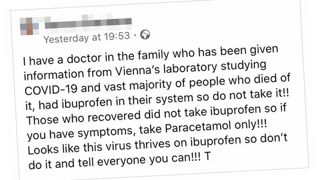
COVID-19 Digest: Do NSAIDs Make COVID-19 More Severe? (Recorded 3/30/20, 18:00 MST)

COVID-19 Digest: Do NSAIDs Make COVID-19 More Severe? (Recorded 3/30/20, 18:00 MST)

In the past two weeks, warnings, questions, and misinformation concerning COVID-19 and NSAID use have been spreading...no pun intended..virally. The pace of this evolving pandemic and the equally quic...

31 Mar 202018min

Podcast 552: PE Management and Risk Stratification

Podcast 552: PE Management and Risk Stratification

Contributor: Dylan Luyten, MD Educational Pearls: After you diagnose a pulmonary embolism (PE) via CT or VQ scan, we need to categorize the PE as massive, sub-massive, or just PE to dictate treatment...

30 Mar 20209min
COVID-19 Digest: If You've Had COVID-19, Can You Get it Again? / Convalescent Serum (Recorded 3/26/20, 18:00 MST)

COVID-19 Digest: If You've Had COVID-19, Can You Get it Again? / Convalescent Serum (Recorded 3/26/20, 18:00 MST)

Host: Elizabeth Esty, MD Research By: Elizabeth Esty and Nathan Novotny References: Osumi M. Questions raised over COVID-19 reinfection after Japanese woman develops illness again. The Japan Times. h...

27 Mar 202010min

ER Doc Infected with COVID-19 Shares Experience

ER Doc Infected with COVID-19 Shares Experience

Recorded 3/26/20

27 Mar 202020min

COVID-19: Hydroxychloroquine & Azithromycin / Anosmia / The Aerosolized vs. Droplet Debate (Recorded 3/24/20, 18:00 MST)

COVID-19: Hydroxychloroquine & Azithromycin / Anosmia / The Aerosolized vs. Droplet Debate (Recorded 3/24/20, 18:00 MST)

The circumstances surrounding the COVID-19 virus are quickly evolving and that means that EMM will have to as well. For the foreseeable future, EMM will be releasing COVID-19 updates. In this series, ...

25 Mar 202015min
Podcast 551:  PPIs are Not Benign

Podcast 551: PPIs are Not Benign

Contributor: Don Stader, MD Educational Pearls: PPIs (Proton pump inhibitors) reduce stomach acid levels and are commonly prescribed in patients with GERD or peptic ulcer disease Stopping a PPI after...

23 Mar 20203min

On the Streets #3: COVID-19

On the Streets #3: COVID-19

In this special edition of our On the Streets podcast, we discuss COVID-19 as well as what first responders and emergency providers need to know to keep themselves and their patients safe during this ...

19 Mar 202020min

Populært innen Vitenskap

fastlegen
rekommandert
jss
tingenes-tilstand
rss-rekommandert
villmarksliv
liberal-halvtime
sinnsyn
forskningno
rss-paradigmepodden
fjellsportpodden
nevropodden
rss-nysgjerrige-norge
diagnose
vett-og-vitenskap-med-gaute-einevoll
abid-nadia-skyld-og-skam
tidlose-historier
dekodet-2
smart-forklart
hva-er-greia-med