
Episode 894: DKA and HHS

Episode 894: DKA and HHS

Contributor: Ricky Dhaliwal, MD

Educational Pearls:

What are DKA and HHS?

  • DKA (Diabetic Ketoacidosis) and HHS (Hyperosmolar Hyperglycemic State) are both acute hyperglycemic states.

DKA

  • More common in type 1 diabetes.

  • Triggered by decreased circulating insulin.

    • The body needs energy but cannot use glucose because it can't get it into the cells.

    • This leads to increased metabolism of free fatty acids and the increased production of ketones.

    • The buildup of ketones causes acidosis.

    • The kidneys attempt to compensate for the acidosis by increasing diuresis.

  • These patients present as dry and altered, with sweet-smelling breath and Kussmaul (fast and deep) respirations.

HSS

  • More common in type 2 diabetes.

  • In this condition there is still enough circulating insulin to avoid the breakdown of fats for energy but not enough insulin to prevent hyperglycemia.

  • Serum glucose levels are very high – around 600 to 1200 mg/dl.

  • Also presents similarly to DKA with the patient being dry and altered.

Important labs to monitor

  • Serum glucose

  • Potassium

  • Phosphorus

  • Magnesium

  • Anion gap (Na - Cl - HCO3)

  • Renal function (Creatinine and BUN)

  • ABG/VBG for pH

  • Urinalysis and urine ketones by dipstick

Treatment

  • Identify the cause, i.e. Has the patient stopped taking their insulin?

  • Aggressive hydration with isotonic fluids.

    • Normal Saline (NS) vs Lactated Ringers (LR)?

      • LR might resolve the DKA/HHS faster with less risk of hypernatremia.

  • Should you bolus with insulin?

  • No, just start a drip.

    • 0.1-0.14 units per kg of insulin.

  • Make sure you have your potassium back before starting insulin as the insulin can shift the potassium into the cells and lead to dangerous hypokalemia.

  • Should you treat hyponatremia?

    • Make sure to correct for hyperglycemia before treating. This artificially depresses the sodium.

  • Should you give bicarb?

    • Replace if the pH < 6.9. Otherwise, it won't do anything to help.

  • Don't intubate, if the patient is breathing fast it is because they are compensating for their acidosis.

References

  1. Andrade-Castellanos, C. A., Colunga-Lozano, L. E., Delgado-Figueroa, N., & Gonzalez-Padilla, D. A. (2016). Subcutaneous rapid-acting insulin analogues for diabetic ketoacidosis. The Cochrane database of systematic reviews, 2016(1), CD011281. https://doi.org/10.1002/14651858.CD011281.pub2

  2. Chaithongdi, N., Subauste, J. S., Koch, C. A., & Geraci, S. A. (2011). Diagnosis and management of hyperglycemic emergencies. Hormones (Athens, Greece), 10(4), 250–260. https://doi.org/10.14310/horm.2002.1316

  3. Dhatariya, K. K., Glaser, N. S., Codner, E., & Umpierrez, G. E. (2020). Diabetic ketoacidosis. Nature reviews. Disease primers, 6(1), 40. https://doi.org/10.1038/s41572-020-0165-1

  4. Duhon, B., Attridge, R. L., Franco-Martinez, A. C., Maxwell, P. R., & Hughes, D. W. (2013). Intravenous sodium bicarbonate therapy in severely acidotic diabetic ketoacidosis. The Annals of pharmacotherapy, 47(7-8), 970–975. https://doi.org/10.1345/aph.1S014

  5. Modi, A., Agrawal, A., & Morgan, F. (2017). Euglycemic Diabetic Ketoacidosis: A Review. Current diabetes reviews, 13(3), 315–321. https://doi.org/10.2174/1573399812666160421121307

  6. Self, W. H., Evans, C. S., Jenkins, C. A., Brown, R. M., Casey, J. D., Collins, S. P., Coston, T. D., Felbinger, M., Flemmons, L. N., Hellervik, S. M., Lindsell, C. J., Liu, D., McCoin, N. S., Niswender, K. D., Slovis, C. M., Stollings, J. L., Wang, L., Rice, T. W., Semler, M. W., & Pragmatic Critical Care Research Group (2020). Clinical Effects of Balanced Crystalloids vs Saline in Adults With Diabetic Ketoacidosis: A Subgroup Analysis of Cluster Randomized Clinical Trials. JAMA network open, 3(11), e2024596. https://doi.org/10.1001/jamanetworkopen.2020.24596

Summarized by Jeffrey Olson MS2 | Edited by Meg Joyce & Jorge Chalit, OMSII

Episoder(1146)

Podcast #263: Early Antibiotics in Sepsis

Podcast #263: Early Antibiotics in Sepsis

Educational Pearls After the first hour, every 1 hour delay in antibiotics in a patient with septic shock patient is associated with a 4% increase in mortality. In patients with high suspicion for se...

25 Okt 20172min

Podcast #262: Pertussis

Podcast #262: Pertussis

Author: Julian Orenstein, M.D. Educational Pearls Colorado has a high population of unvaccinated children, and is at increased risk for pertussis outbreaks. The causative organism is Bordetella pertu...

23 Okt 20174min

Deep Dive #7: Domestic Violence

Deep Dive #7: Domestic Violence

Authors: Katie Sprinkel, MD Emergency Medicine Physician SANE Medical Director, Medical Center of Aurora Amy Ferrin, Senior Deputy District Attorney County Court Supervisor Office of the District A...

16 Okt 201737min
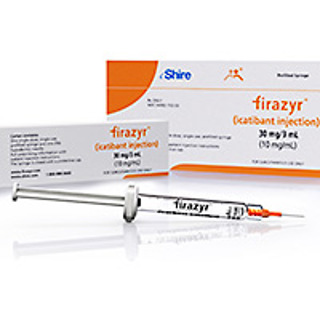
Podcast #261: Icatibant

Podcast #261: Icatibant

Author: Aaron Lessen, M.D. Educational Pearls Icatibant was introduced to treat ACE-inhibitor induced angioendema. This type of angioedema is refractory to epinephrine and antihistamines, and is like...

13 Okt 20172min
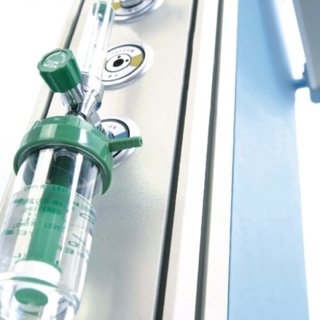
Podcast #260: Preoxygenation

Podcast #260: Preoxygenation

Author: David Rosenberg, M.D. Educational Pearls Preoxygenation is done before rapid sequence intubation, and should be done even if SaO2 is at 100%. Preoxygenation is done to fill the lungs with oxy...

11 Okt 20172min

Podcast #259: Transient Ischemic Attacks

Podcast #259: Transient Ischemic Attacks

Podcast #259: TIA Author: Peter Bakes, M.D. Educational Pearls A TIA is defined as focal neurological deficit that resolves within 24 hours and has negative imaging. The etiology is a transient throm...

9 Okt 20177min
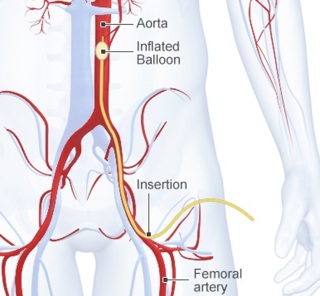
Podcast #258: REBOA

Podcast #258: REBOA

Author: Dylan Luyten, M.D. Educational Pearls Resuscitative Endovascular Balloon Occlusion of the Aorta (REBOA). Exsanguination is a major cause of mortality in trauma One temporizing technique to bu...

6 Okt 20173min

Podcast #257: Strangulation

Podcast #257: Strangulation

Educational Pearls Strangulation is common in cases of domestic violence and sexual assault, and it is associated with higher mortality People who have been strangled have a higher rate of stroke due...

4 Okt 20174min

Populært innen Vitenskap

fastlegen
rekommandert
jss
tingenes-tilstand
rss-rekommandert
villmarksliv
liberal-halvtime
sinnsyn
forskningno
rss-paradigmepodden
fjellsportpodden
nevropodden
rss-nysgjerrige-norge
diagnose
vett-og-vitenskap-med-gaute-einevoll
abid-nadia-skyld-og-skam
tidlose-historier
dekodet-2
smart-forklart
hva-er-greia-med