Podcast 914: Neuroleptic Malignant Syndrome (NMS)

Podcast 914: Neuroleptic Malignant Syndrome (NMS)

Contributor: Taylor Lynch, MD

Educational Pearls:

What is NMS?

  • Neuroleptic Malignant Syndrome

  • Caused by anti-dopamine medication or rapid withdrawal of pro-dopamenergic medications

  • Mechanism is poorly understood

  • Life threatening

What medications can cause it?

  • Typical antipsychotics

    • Haloperidol, chlorpromazine, prochlorperazine, fluphenazine, trifluoperazine

  • Atypical antipsychotics

    • Less risk

    • Risperidone, clozapine, quetiapine, olanzapine, aripiprazole, ziprasidone

  • Anti-emetic agents with anti dopamine activity

    • Metoclopramide, promethazine, haloperidol

    • Not ondansetron

  • Abrupt withdrawal of levodopa

How does it present?

  • Slowly over 1-3 days (unlike serotonin syndrome which has a more acute onset)

  • Altered mental status, 82% of patients, typically agitated delirium with confusion

  • Peripheral muscle rigidity and decreased reflexes. AKA lead pipe rigidity. (As opposed to clonus and hyperreflexia in serotonin syndrome)

  • Hyperthermia (>38C seen in 87% of patients)

  • Can also have tachycardia, labile blood pressures, tachypnea, and tremor

How is it diagnosed?

  • Clinical diagnosis, focus on the timing of symptoms

  • No confirmatory lab test but can see possible elevated CK levels and WBC of 10-40k with a left shift

What else might be on the differential?

  • Sepsis

  • CNS infections

  • Heat stroke

  • Agitated delirium

  • Status eptilepticus

  • Drug induced extrapyramidal symptoms

  • Serotonin syndrome

  • Malignant hyperthermia

What is the treatment?

  • Start with ABC's

  • Stop all anti-dopaminergic meds and restart pro-dopamine meds if recently stopped

  • Maintain urine output with IV fluids if needed to avoid rhabdomyolysis

  • Active or passive cooling if needed

  • Benzodiazapines, such as lorazepam 1-2 mg IV q 4hrs

What are active medical therapies?

  • Controversial treatments

  • Bromocriptine, dopamine agonist

  • Dantrolene, classically used for malignant hyperthermia

  • Amantadine, increases dopamine release

  • Use as a last resort

Dispo?

  • Mortality is around 10% if not recognized and treated

  • Most patients recover in 2-14 days

  • Must wait 2 weeks before restarting any medications

References

  • Oruch, R., Pryme, I. F., Engelsen, B. A., & Lund, A. (2017). Neuroleptic malignant syndrome: an easily overlooked neurologic emergency. Neuropsychiatric disease and treatment, 13, 161–175. https://doi.org/10.2147/NDT.S118438

  • Tormoehlen, L. M., & Rusyniak, D. E. (2018). Neuroleptic malignant syndrome and serotonin syndrome. Handbook of clinical neurology, 157, 663–675. https://doi.org/10.1016/B978-0-444-64074-1.00039-2

  • Velamoor, V. R., Norman, R. M., Caroff, S. N., Mann, S. C., Sullivan, K. A., & Antelo, R. E. (1994). Progression of symptoms in neuroleptic malignant syndrome. The Journal of nervous and mental disease, 182(3), 168–173. https://doi.org/10.1097/00005053-199403000-00007

  • Ware, M. R., Feller, D. B., & Hall, K. L. (2018). Neuroleptic Malignant Syndrome: Diagnosis and Management. The primary care companion for CNS disorders, 20(1), 17r02185. https://doi.org/10.4088/PCC.17r02185

Summarized by Jeffrey Olson MS2 | Edited by Meg Joyce & Jorge Chalit, OMSIII

Episoder(1146)

Podcast #399: Hunting for pancreatitis

Podcast #399: Hunting for pancreatitis

Author: Michael Hunt, MD Educational Pearls: Alcohol and gallstones are most common causes of pancreatitis Diagnosis is not simply based on lipase alone - must have at least two the the three criteri...

31 Okt 20183min
Podcast #398:  Who is gonna fail your antibiotic plan?

Podcast #398: Who is gonna fail your antibiotic plan?

Author: Erik Verzemnieks, MD Educational Pearls: Recent study provides at least some evidence to help predict antibiotic failure for cellulitis, which is not necessarily straight forward Intuitive ri...

29 Okt 20181min
Podcast #397: Oh… Pharyngeal Trauma

Podcast #397: Oh… Pharyngeal Trauma

Author: Aaron Lessen, MD Educational Pearls: Injuries from penetrating pharyngeal trauma are often subtle on examination in children Potentially serious complications including carotid artery inju...

27 Okt 20183min
Podcast #396: Oncologic Emergencies

Podcast #396: Oncologic Emergencies

Author: Rachel Brady, MD Educational Pearls: Hypercalcemia of malignancy: Hypercalcemia of malignancy can present with lethargy, muscle weakness, hyperreflexia, altered mental status, cardiac dysrhyt...

24 Okt 20184min
Podcast #395:  Aspirin for everyone!

Podcast #395: Aspirin for everyone!

Author: Aaron Lessen, MD Educational Pearls: In patients without indications for aspirin, three recent studies looked at prevention of several end points in the elderly These showed no benefit in p...

22 Okt 20182min
Podcast #394: Myths of Medication Assisted Treatment

Podcast #394: Myths of Medication Assisted Treatment

Author: Katie Sprinkle, MD Educational Pearls: Medication Assisted Treatment (MAT) is the treatment of addiction with medications, commonly used for opioid use disorders A long held belief is MAT sim...

20 Okt 20185min
Podcast #393: Neonatal Vomiting

Podcast #393: Neonatal Vomiting

Author: Peter Bakes, MD Educational Pearls: Important historical information to elicit is the birth history, feeding habits, stooling habits, associated symptoms, presence of bile, and presence of ...

17 Okt 20185min
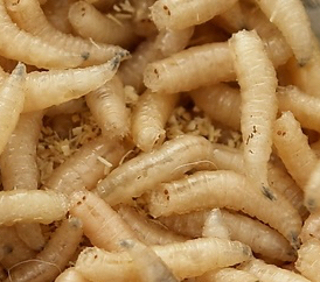
Podcast # 392: Maggot Therapy

Podcast # 392: Maggot Therapy

Author: Jared Scott, MD Educational Pearls: Interest started as it was noticed soldiers who had wounds infected with maggots had better outcomes than those without maggots Studies have shown that wou...

15 Okt 20183min

Populært innen Vitenskap

fastlegen
rekommandert
jss
tingenes-tilstand
rss-rekommandert
villmarksliv
liberal-halvtime
sinnsyn
forskningno
rss-paradigmepodden
fjellsportpodden
nevropodden
rss-nysgjerrige-norge
diagnose
vett-og-vitenskap-med-gaute-einevoll
abid-nadia-skyld-og-skam
tidlose-historier
dekodet-2
smart-forklart
hva-er-greia-med