
Episode 918: Automated Blood Pressure Cuffs

Episode 918: Automated Blood Pressure Cuffs

Contributor: Aaron Lessen, MD

Educational Pearls:

How does an automated blood pressure cuff work?

  • Automated blood pressure cuffs work differently than taking a manual blood pressure.

  • While taking a manual blood pressure, one typically listens for Korotkoff sounds (turbulent flow) while slowly deflating the cuff.

  • An automatic blood pressure cuff only senses the pressure in the cuff itself and specifically pays attention to oscillations in the pressure caused by when the pressure of the cuff is between the systolic (heart squeezing) and diastolic (heart relaxed) pressures.

  • These oscillations are at a maximum when the pressure in the cuff matches the mean arterial pressure (MAP) and therefore the machines are most accurate at reporting the MAP.

  • The machines then use the MAP and other information about the oscillations to estimate the systolic and diastolic pressures, which are less accurate.

What should you do if you need more accurate systolic and diastolic blood pressures?

  • Take a manual blood pressure.

  • Get an arterial-line (a-line), which provides continuous data for the blood pressure at the end of a catheter.

What happens if the cuff is too big or too small for the patient?

  • If the cuff is too small it will overestimate the pressure.

  • If the cuff is too large it will underestimate the pressure.

What should you do if the cuff cycles a bunch of times before reporting a blood pressure?

  • It probably isn't very accurate so consider another method.

Bonus fact!

  • The MAP is not directly in the middle of the systolic and diastolic pressures but is weighted towards the diastolic pressure. The MAP can be calculated by adding two-thirds of the diastolic pressure to one third of the systolic pressure. For example if the BP is 120/90 the MAP is 100 mmHg.

References

  1. Benmira, A., Perez-Martin, A., Schuster, I., Aichoun, I., Coudray, S., Bereksi-Reguig, F., & Dauzat, M. (2016). From Korotkoff and Marey to automatic non-invasive oscillometric blood pressure measurement: does easiness come with reliability?. Expert review of medical devices, 13(2), 179–189. https://doi.org/10.1586/17434440.2016.1128821

  2. Liu, J., Li, Y., Li, J., Zheng, D., & Liu, C. (2022). Sources of automatic office blood pressure measurement error: a systematic review. Physiological measurement, 43(9), 10.1088/1361-6579/ac890e. https://doi.org/10.1088/1361-6579/ac890e

  3. Vilaplana J. M. (2006). Blood pressure measurement. Journal of renal care, 32(4), 210–213. https://doi.org/10.1111/j.1755-6686.2006.tb00025.x

Summarized by Jeffrey Olson, MS3 | Edited by Meg Joyce, MS1 & Jorge Chalit, OMS3

Donate: https://emergencymedicalminute.org/donate/

Episoder(1146)

Mental Health Monthly #3: Maintaining Mental Health and Wellness for Healthcare Professionals

Mental Health Monthly #3: Maintaining Mental Health and Wellness for Healthcare Professionals

In this timely installment of Mental Health Monthly, mental health expert Lexi Eliades shares useful tips for identifying burnout and mental health decline as well as ways to maintain mental wellness ...

6 Mai 202010min
Podcast 559: Metabolic Acidosis

Podcast 559: Metabolic Acidosis

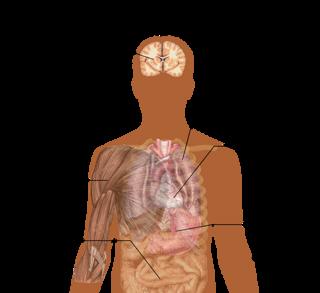
Contributor: Dylan Luyten, MD Educational Pearls Acidosis can be caused by a respiratory, metabolic, or mixed source A respiratory acidosis will have a low serum pH and elevated bicarbonate if it's c...

5 Mai 20203min
Podcast 558:  Rapid ARDS Review

Podcast 558: Rapid ARDS Review

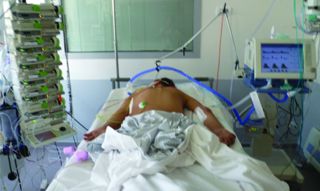
Contributor: Don Stader, MD Educational Pearls: Acute respiratory distress syndrome (ARDS) is a catch all term for when lung injury leads to fluid collection in the air spaces of the lungs  Ventila...

4 Mai 20204min
COVID-19 Digest: Strokes in Young People with COVID

COVID-19 Digest: Strokes in Young People with COVID

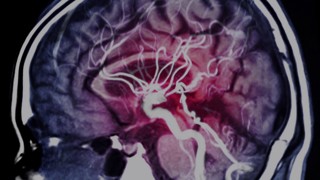
Last week we looked at neurologic presentations of COVID-19; this week we'll look more closely at strokes in young people with COVID. A letter published 2 days ago in the NEJM with lead author Thomas ...

1 Mai 20208min
Podcast 557:  COVID-19 Lab Trends

Podcast 557: COVID-19 Lab Trends

Contributor: Don Stader, MD Educational Pearls: COVID-19 is diagnosed with a nasopharyngeal swab (q-tip). This unfortunately can be painful, but if the swab doesn't go deep into the nasal cavity th...

29 Apr 20207min
Podcast 556:  CSF - What is it good for?

Podcast 556: CSF - What is it good for?

Contributor: Eric Miller, MD Educational Pearls: A cell count is performed on tubes 1 and 4 to account for changes that may occur from blood entering the first sample from the needle insertion Tube 2...

28 Apr 20206min

Podcast 555:  Anticoagulation vs. Antiplatelet

Podcast 555: Anticoagulation vs. Antiplatelet

Contributor: Don Stader, MD Educational Pearls: When do we give antiplatelet drugs or anti-coagulation drugs? Arterial issues get antiplatelet therapy Venous issues, or slow flow states, get antico...

27 Apr 20203min
COVID-19 Digest: Neurological Manifestations of COVID-19

COVID-19 Digest: Neurological Manifestations of COVID-19

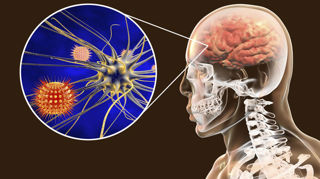
Accumulating clinical evidence suggests that many patients with COVID have neurological symptoms and that some may even present with neurologic manifestations of the disease. Most COVID patients have ...

23 Apr 202014min

Populært innen Vitenskap

fastlegen
rekommandert
tingenes-tilstand
jss
rss-rekommandert
liberal-halvtime
villmarksliv
forskningno
sinnsyn
fjellsportpodden
rss-paradigmepodden
nevropodden
rss-nysgjerrige-norge
tidlose-historier
vett-og-vitenskap-med-gaute-einevoll
diagnose
smart-forklart
pod-britannia
dekodet-2
hva-er-greia-med


















