Episode 918: Automated Blood Pressure Cuffs

Episode 918: Automated Blood Pressure Cuffs

Contributor: Aaron Lessen, MD

Educational Pearls:

How does an automated blood pressure cuff work?

  • Automated blood pressure cuffs work differently than taking a manual blood pressure.

  • While taking a manual blood pressure, one typically listens for Korotkoff sounds (turbulent flow) while slowly deflating the cuff.

  • An automatic blood pressure cuff only senses the pressure in the cuff itself and specifically pays attention to oscillations in the pressure caused by when the pressure of the cuff is between the systolic (heart squeezing) and diastolic (heart relaxed) pressures.

  • These oscillations are at a maximum when the pressure in the cuff matches the mean arterial pressure (MAP) and therefore the machines are most accurate at reporting the MAP.

  • The machines then use the MAP and other information about the oscillations to estimate the systolic and diastolic pressures, which are less accurate.

What should you do if you need more accurate systolic and diastolic blood pressures?

  • Take a manual blood pressure.

  • Get an arterial-line (a-line), which provides continuous data for the blood pressure at the end of a catheter.

What happens if the cuff is too big or too small for the patient?

  • If the cuff is too small it will overestimate the pressure.

  • If the cuff is too large it will underestimate the pressure.

What should you do if the cuff cycles a bunch of times before reporting a blood pressure?

  • It probably isn't very accurate so consider another method.

Bonus fact!

  • The MAP is not directly in the middle of the systolic and diastolic pressures but is weighted towards the diastolic pressure. The MAP can be calculated by adding two-thirds of the diastolic pressure to one third of the systolic pressure. For example if the BP is 120/90 the MAP is 100 mmHg.

References

  1. Benmira, A., Perez-Martin, A., Schuster, I., Aichoun, I., Coudray, S., Bereksi-Reguig, F., & Dauzat, M. (2016). From Korotkoff and Marey to automatic non-invasive oscillometric blood pressure measurement: does easiness come with reliability?. Expert review of medical devices, 13(2), 179–189. https://doi.org/10.1586/17434440.2016.1128821

  2. Liu, J., Li, Y., Li, J., Zheng, D., & Liu, C. (2022). Sources of automatic office blood pressure measurement error: a systematic review. Physiological measurement, 43(9), 10.1088/1361-6579/ac890e. https://doi.org/10.1088/1361-6579/ac890e

  3. Vilaplana J. M. (2006). Blood pressure measurement. Journal of renal care, 32(4), 210–213. https://doi.org/10.1111/j.1755-6686.2006.tb00025.x

Summarized by Jeffrey Olson, MS3 | Edited by Meg Joyce, MS1 & Jorge Chalit, OMS3

Donate: https://emergencymedicalminute.org/donate/

Episoder(1146)

Podcast # 415: Myofascial Pain Syndrome & Fibromyalgia

Podcast # 415: Myofascial Pain Syndrome & Fibromyalgia

Author: Ryan Circh, MD Educational Pearls: Myofascial pain syndrome (MFPS) is typically unilateral with discrete points of palpable pain Often secondary to repeated use and poor posture. MFPS typical...

10 Des 20182min
Podcast # 414: Acute Limb Ischemia

Podcast # 414: Acute Limb Ischemia

Author: Dylan Luyten, MD Educational Pearls: Symptoms of acute limb ischemia are the 5 P's: Pulselessness, pain, pallor, paresthesias, and poikilothermia Sudden onset of non-traumatic extremity pai...

8 Des 20184min
Podcast # 413: Fascia Iliaca Block

Podcast # 413: Fascia Iliaca Block

Author: Katie Sprinkle, MD Educational Pearls: The fascia iliaca block is useful for hip and proximal femur fractures. Typically involves injecting 40-60 mL of diluted bupivacaine (0.25%) under the...

6 Des 20186min

Podcast #412: tPa Mission Creep

Podcast #412: tPa Mission Creep

Author: Aaron Lessen, MD Educational Pearls: Patients with "minor" strokes with NIHSS 0 to 5 can still end up having poor long-term outcomes Recent study compared use of alteplase vs. aspirin for th...

3 Des 20182min
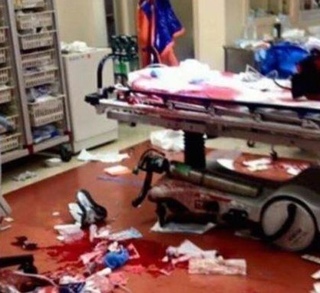
Podcast #411: Mass Casualty Incident

Podcast #411: Mass Casualty Incident

Author: Dylan Luyten, MD Educational Pearls: Early recognition that the current situation is a mass casualty incident (MCI) is essential with establishing a sole provider/nurse to oversee Team memb...

30 Nov 20184min

Podcast #410: FAmbulance

Podcast #410: FAmbulance

Author: Aaron Lessen, MD Educational Pearls: Retrospective study looking at type of transportation and mortality outcomes for patients with penetrating trauma Mortality was 2.2 % for those brought in...

28 Nov 20182min

Podcast #409:  Acute CHF Second Liners

Podcast #409: Acute CHF Second Liners

Author: Nick Hatch, MD Educational Pearls:   Quick review on typical treatments for acute CHF: Nitrates are a mainstay to reduce preload Furosemide has fallen out of favor in regards to urgency but ...

26 Nov 20183min

Podcast #408:  Go the hell to sleep

Podcast #408: Go the hell to sleep

Author: Don Stader, MD Educational Pearls: Recent study showed efficacy 5mg IM midazolam > 10mg IM olanzapine > 10mg IM haloperidol for quickly sedating an agitated patient If you have access, ketami...

23 Nov 20183min

Populært innen Vitenskap

fastlegen
tingenes-tilstand
rekommandert
jss
rss-rekommandert
villmarksliv
forskningno
sinnsyn
rss-paradigmepodden
fjellsportpodden
rss-nysgjerrige-norge
vett-og-vitenskap-med-gaute-einevoll
nevropodden
diagnose
smart-forklart
nordnorsk-historie
abid-nadia-skyld-og-skam
rss-overskuddsliv
dekodet-2
tidlose-historier