Pandemic Relief and Fraud: Willful Deceit or Design Defect?
The a16z Show4 Sep 2020

Pandemic Relief and Fraud: Willful Deceit or Design Defect?

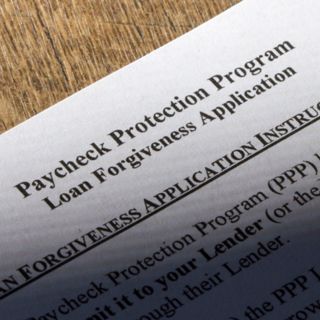
This episode examines the potential for misuse and fraud among those applying for the Paycheck Protection Program (PPP)—and how fintech and software provide overlooked tools to stop it.

On March 27th, the government enacted a $2.2 trillion dollar stimulus package called the CARES Act, the largest aid measure in history. The act provides more than $500 billion for the Paycheck Protection Program, or PPP, a low-interest, forgivable loan program designed to help small businesses and self-employed individuals retain workers and stay afloat during the pandemic. Since March, the Small Business Administration has approved billions of dollars in PPP loans. But it is also estimated that U.S. losses from coronavirus-related fraud and identity theft have reached almost $100 million. According to the New York Times, the Small Business Administration’s fraud hotline has received 42,000 reports about coronavirus-related cheating and misuse; by comparison, last year it had less than 800.

To date, the Department of Justice has charged more than 40 cases of PPP-related schemes, from claiming non-existent employees or non-existent businesses to identity theft, kickback schemes, fake tax documents, and multi-state fraud rings. Most of those cases have alleged fraud of more than a $1 million. But what about the countless others that may be cheating taxpayers out of smaller—but not insignificant—sums? How does the government decide who should get money and who shouldn’t among millions of applications from businesses of all industries and sizes—and what role do banks play? How does the program then distribute that money quickly and accurately—or not, in many cases? And what tools are at our disposal to catch those who cheat the system?

Host Lauren Murrow is joined by Bharat Ramamurti, the original member of the COVID-19 Congressional Oversight Commission, which is tasked with evaluating the impact of coronavirus relief loans; Naftali Harris, the CEO of SentiLink, a software company that builds technology to detect synthetic fraud; and a16z fintech general partner Alex Rampell.

Stay Updated:

Find a16z on YouTube: YouTube

Find a16z on X

Find a16z on LinkedIn

Listen to the a16z Show on Spotify

Listen to the a16z Show on Apple Podcasts

Follow our host: https://twitter.com/eriktorenberg

Please note that the content here is for informational purposes only; should NOT be taken as legal, business, tax, or investment advice or be used to evaluate any investment or security; and is not directed at any investors or potential investors in any a16z fund. a16z and its affiliates may maintain investments in the companies discussed. For more details please see a16z.com/disclosures.


Hosted by Simplecast, an AdsWizz company. See pcm.adswizz.com for information about our collection and use of personal data for advertising.

Episoder(1000)

a16z Podcast: Mindsets for Engineering Biology

a16z Podcast: Mindsets for Engineering Biology

Head of the largest bioengineering lab in the world, former chairman of the FDA and one of the few recipients of the National Medals of Science and of Technology and Innovation, Bob Langer's work has ...

6 Okt 201728min

a16z Podcast: Why Crypto Tokens Matter

a16z Podcast: Why Crypto Tokens Matter

with Chris Dixon and Fred Ehrsam We’ve already talked about why bitcoin matters. But as the set of cryptocurrencies — and networks and “tokens” enabled by the underlying blockchain — grow (Ethereum be...

28 Sep 201735min

a16z Podcast: The Case Study of Lyft and Local Governments

a16z Podcast: The Case Study of Lyft and Local Governments

with David Mack, Joseph Okpaku, and Matt Spence How should startups engage with policymakers, build their own government relations (GR) function (whether in house or with consultants), and just begin ...

26 Sep 201720min

a16z Podcast: Exploding the Map

a16z Podcast: Exploding the Map

with Wei Luo, David Rumsey (@davidrumseymaps), and Hanne Tidnam (@omnivorousread) In this episode, Wei Luo, founding COO of DeepMap -- who build HD maps for autonomous vehicles -- and David Rumsey, fo...

16 Sep 201738min

a16z Podcast: Getting Applications Into People's Hands

a16z Podcast: Getting Applications Into People's Hands

with Juan Benet and Chris Dixon The story of how innovation happens is a long one — from government funding early basic research, to the heyday of corporate R&D like Bell Labs, to startups as experime...

15 Sep 201721min

a16z Podcast: The Asshole Survival Guide

a16z Podcast: The Asshole Survival Guide

with Michael Dearing (@mcgd), Bob Sutton (@work_matters), and Hanne Tidnam (@omnivorousread) Bob Sutton's book The No Asshole Rule was all about how to foster company cultures that don't tolerate assh...

13 Sep 201734min

a16z Podcast: Adjusting to Trade... and Innovation

a16z Podcast: Adjusting to Trade... and Innovation

with Russ Roberts, Noah Smith, and Sonal Chokshi Beyond the overly simplistic framing of trade as “good” or “bad” — by politicians, by Econ 101 — why is the topic of trade (or rather, economies and pe...

10 Sep 201738min

a16z Podcast: The Macro and Micro of Parenting

a16z Podcast: The Macro and Micro of Parenting

We tend to talk about tech and parenting through devices and artifacts -- screen time, to code or not to code -- but actually, there's a bigger, macro picture at play there: game theory, economic ince...

5 Sep 201729min

Populært innen Business og økonomi

lydartikler-fra-aftenposten
stopp-verden
dine-penger-pengeradet
e24-podden
rss-penger-polser-og-politikk
rss-borsmorgen-okonominyhetene
pengesnakk
tid-er-penger-en-podcast-med-peter-warren
finansredaksjonen
pengepodden-2
livet-pa-veien-med-jan-erik-larssen
utbytte
rss-sunn-okonomi
morgenkaffen-med-finansavisen
stormkast-med-valebrokk-stordalen
liberal-halvtime
lederpodden
rss-markedspuls-2
okonomiamatorene
rss-politisk-preik



















