Of Ghost Foods and Culinary Extinction
Gastropod5 Nov 2019

Of Ghost Foods and Culinary Extinction

The earliest humans favored juicy, meaty mammoth at mealtimes. Ancient Romans loved their favorite herb, silphium, so much that they sprinkled it on everything from lamb to melon. In the 19th century United States, passenger pigeon pie was a cherished comfort food, long before chicken pot pie became commonplace. And, for dessert, Americans a century ago might have enjoyed a superlatively buttery Ansault pear, reckoned to be the greatest pear ever grown. What did these foods beloved by previous generations taste like? Well, apart from some written descriptions, we’ll never know: they’re all extinct. Join us this episode as culinary geographer Lenore Newman takes us on a tour of lost foods—and the lessons they can teach us as we fight to save our current favorite foods from disappearing forever. “Shooting wild pigeons in Iowa,” illustration from the 2 July 1867 edition of Frank Leslie’s Illustrated Newspaper (vol. XXV, no. 625, p. 8), from “Large-scale live capture of Passenger Pigeons Ectopistes migratorius for sporting purposes: Overlooked illustrated documentation,” by Julian Hume. “This project started because of a bird,” Lenore Newman told Gastropod. “And that bird was Martha.” Newman’s project is a new book titled Lost Feast: Culinary Extinction and the Future of Food; Martha was a passenger pigeon and the last living member of her species—an “endling,” as such lonely creatures are evocatively called. Her death, on September 1st, 1914, represented the first time that humanity watched a species disappear, in full awareness of the concept of extinction and our role in causing this particular one. “There was no denying it was us,” said Newman: somehow, together, we had eaten so many pigeons that we had wiped the most abundant bird in North America off the face of the planet. But the passenger pigeon wasn’t our first culinary extinction. This episode, Newman takes us on a tour through the foods we have eaten to their end, such as the Pleistocene megafauna, which early humans destroyed as our numbers spread around the world, and the leek-flavored silphium that was so valuable its last stalks were hoarded, alongside gold and jewels, by Roman emperors. In each case, we sift through the evidence that points to human appetite as the leading cause of extinction, and unpack the response of a bewildered, bereft humanity. Gold coin from Cyrene, from between 308-250 BC; the tails side depicts silphium. The Romans clung to the belief that their beloved silphium could perhaps spontaneous reappear someday; the idea that that something could be gone forever was simply, at the time, inconceivable. The concept of extinction—along with its mirror, evolution—wasn’t formulated until the end of the eighteenth century, and it finally gave humans a framework within which to understand their actions. But, as Newman describes, the pace of culinary extinctions has only increased since then, with thousands and thousands of varieties of plants and breeds of animals vanishing in the early 20th century. Why have we allowed so many of the foods we love to vanish? What impact has their loss had—and what lessons can it teach us for the future? Listen in this episode as Newman helps us tackle these morbid questions, leaving us with some hope, as well as a whole new perspective on chicken.Episode NotesLenore Newman‘s Lost Feast Lenore Newman holds a Canada Research Chair in Food Security and Environment at the University of the Fraser Valley, where she is currently an associate professor of geography and the environment. Her most recent book is Lost Feast: Culinary Extinction and the Future of Food; prior to that, she authored Speaking in Cod Tongues: A Canadian Culinary Journey. The Ansault pear, painted by Deborah G. Passmore on 10/13/1897, from the collection of the USDA National Agricultural Library in Beltsville, Maryland. The post Of Ghost Foods and Culinary Extinction appeared first on Gastropod. Learn more about your ad choices. Visit podcastchoices.com/adchoices

Denne episoden er hentet fra en åpen RSS-feed og er ikke publisert av Podme. Den kan derfor inneholde annonser.

Episoder(293)

Salad Days: A Story of Science, Sexism, and Jell-O

Salad Days: A Story of Science, Sexism, and Jell-O

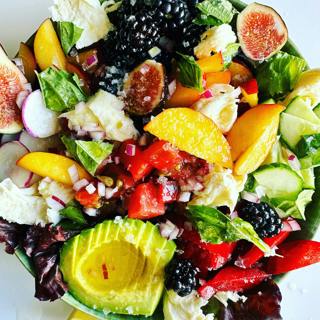
If leafy greens and a little vinaigrette is salad, and chicken with mayo is salad, and vegetables in Jello-O are ALSO salad… What exactly is salad?! That's the big question we're tackling this episode...

4 Aug 44min

Where There's Smoke, There's...Whiskey, Fish, and Barbecue!

Where There's Smoke, There's...Whiskey, Fish, and Barbecue!

As anyone who’s spent time by a crackling campfire or a barbecue pit can attest, the scent of smoke is unmistakable—and surprisingly mysterious. Smoke clings to clothing but vanishes in the breeze. Yo...

21 Jul 51min
America's Forbidden Fruit and Forgotten First Soda: Ask Gastropod

America's Forbidden Fruit and Forgotten First Soda: Ask Gastropod

Fan favorite Ask Gastropod is back, and we’re celebrating the season by solving a pair of trans-Atlantic mysteries! First up: if you have a purple candy in Europe, it’s nearly guaranteed to be flavore...

7 Jul 50min
Bringing Home the Bacon: From Shakespeare to the Baconator

Bringing Home the Bacon: From Shakespeare to the Baconator

For many Americans, bacon is an essential element of the perfect breakfast—not to mention a welcome addition to everything from cheeseburgers to doughnuts. But bacon hasn't always been beloved. Ancien...

23 Jun 48min

What the Shell? Cracking the Lobster's Mysteries

What the Shell? Cracking the Lobster's Mysteries

Consider the lobster roll: tender chunks of lobster bathed in butter or mayo, sandwiched between two slices of a squishy bread roll… Have we caught your attention yet? Lobster is a summertime staple i...

9 Jun 44min

A Dog's Dinner: What Should We Really Be Feeding Our Pets?

A Dog's Dinner: What Should We Really Be Feeding Our Pets?

In millions of homes, humans aren’t the only creatures sitting down to dinner. So what's on the menu for pets—and what impact does it have on their health, as well as the environment? This episode, we...

19 Mai 50min

Feel the Beet: The Most Fascinating Woman You've Never Heard Of

Feel the Beet: The Most Fascinating Woman You've Never Heard Of

For those who like its earthy flavor, the humble beet can do a lot for a salad or a soup. But could it help end slavery? In the 1800s, one woman believed it could—and she wasn't just any old woman. Th...

5 Mai 44min

White vs. Wheat: The Food Fight of the Centuries

White vs. Wheat: The Food Fight of the Centuries

White or whole wheat: while today the question is most frequently asked at the sandwich counter, the debate over the correct answer goes back literally thousands of years. This episode, we dive into t...

21 Apr 52min

Populært innen Vitenskap

fastlegen
tingenes-tilstand
romkapsel
jss
liberal-halvtime
rekommandert
villmarksliv
abels-tarn
dekodet-2
vett-og-vitenskap-med-gaute-einevoll
sinnsyn
fjellsportpodden
rss-overskuddsliv
rss-rekommandert
tomprat-med-gunnar-tjomlid
rss-inn-til-kjernen-med-sunniva-rose
hva-er-greia-med
rss-nysgjerrige-norge
diagnose
kvinnehelsepodden