
Ep. 291 Percutaneous Creation of a Distal Deep Venous Arterialization (dDVA) with Dr. August Ysa

Ep. 291 Percutaneous Creation of a Distal Deep Venous Arterialization (dDVA) with Dr. August Ysa

In this episode, host Dr. Sabeen Dhand interviews Dr. August Ysa, vascular surgeon in Spain, about distal deep venous arterialization, including indications, patient selection, and how to perform his gunsight technique. --- CHECK OUT OUR SPONSORS Viz.ai https://www.viz.ai/ BD Rotarex Atherectomy System https://www.bd.com/rotarex Reflow Medical https://www.reflowmedical.com/ --- SHOW NOTES We begin by discussing his training and background. Initially trained in Barcelona before moving to Bilbao as a young vascular surgeon. He came to the US briefly to train at Montefiore and Houston Methodist. When attending the LINNC in Europe one year he saw a live endovascular case, which is when he decided to devote his career to peripheral arterial disease (PAD), specifically below the knee (BTK) and below the ankle (BTA) interventions. He currently works with Dr. Marta Lobato, and they have done around 25 combined deep venous arterializations (DVAs) in their practice. They love this technique because it gives someone previously faced with amputation a new chance. It is a technique to reroute blood flow to get oxygen to a wound and promote wound healing. There are two types of DVA: proximal DVA, which is done closer to the origin of the posterior tibial artery (PTA), and distal DVA, which is at the level of the ankle, and usually also involves the PTA. Thus far, it is unknown which technique is better in terms of limb salvage, and data shows both techniques yield 60-70% limb salvage rates. One advantage to distal DVA is lower rates of post-DVA storm, a type of ischemic steal syndrome. Availability of devices and lower cost also make distal DVA more appealing. DVA is never the first option, traditional recanalization techniques are always explored first. Wounds that are not candidates for DVA are large infected wounds or areas of necrotic tissue. This is because it takes 6-8 weeks to establish the newly created connection, and if the wound is already past the point of healing, DVA will not help. Other reasons DVA can fail is due to choosing the wrong candidates. Mean wound healing time after DVA is 4-7 months, so patients need to be able to commit to close follow up and wound care, and they must have the social support to be compliant with frequent clinic visits. Finally, Dr. Ysa explains his venous arterialization simplification technique (VAST). Before the procedure, he always does a venous ultrasound to rule out prior DVT and evaluate the status of the main veins of the foot. He uses two snares via the gunsight approach, which most IRs are familiar with from TIPS procedures. It involves overlapping two snares and then performing a through and through puncture from the PTA to the posterior tibial vein (PTV). The PTA is generally used over the anterior tibial or the peroneal artery due to its robust connections with the lateral plantar and the plantar arch. He then performs balloon angioplasty (BA) on the PTV. He initially uses the PTA for sizing, but generally goes bigger, between 4-5mm. For valves, he usually does regular BA but will sometimes use a cutting balloon. Two weeks post-DVA he gets an ultrasound, and at one month he gets an angiogram to evaluate the new tract. He has his patients take a single antiplatelet and a blood thinner after the procedure. He considers DVA to have failed if there is progression of wound necrosis. --- RESOURCES Dr. Ysa LinkedIn: https://www.linkedin.com/in/august-ysa-56a99a174/ YouTube DVA Webinar with Dr. Ysa and Dra. Lobato: https://www.youtube.com/watch?v=kDW5Rg5g49I Ep. 93 - DVA for CLI with Dr. Fadi Saab: https://www.backtable.com/shows/vi/podcasts/93/deep-venous-arterialization-for-cli Live Interventional Neuroradiology, Neurology and Neurosurgery Course (LINNC): https://www.linnc.com Patterns of Failure in DVA Paper: https://www.clijournal.com/article/patterns-failure-deep-venous-arterialization-and-implications-management

Episoder(639)

Ep. 515 Curative Intent Therapies for HCC: Today and Tomorrow

Ep. 515 Curative Intent Therapies for HCC: Today and Tomorrow

For hepatocellular carcinoma (HCC) patients who are not candidates for liver transplant or resection, lesion ablation can be a curative treatment. With multiple ablation options available and still un...

7 Feb 202553min
Ep. 514 Deep Sedation in IR: Intro to Ketamine with Dr. Amy Deipolyi

Ep. 514 Deep Sedation in IR: Intro to Ketamine with Dr. Amy Deipolyi

When deep sedation is required, it can be challenging to implement due to the difficulty of scheduling dedicated anesthesia coverage in the IR suite. Dr. Amy Deipolyi (interventional radiologist and D...

4 Feb 202534min

Ep. 513 Combination Therapy and Clinical trials for Advanced HCC: What They Really Mean

Ep. 513 Combination Therapy and Clinical trials for Advanced HCC: What They Really Mean

In the past five years, the use of immunotherapeutic agents for advanced cancers has emerged as a promising alternative to tyrosine kinase inhibitors and chemotherapy, making it an exciting time to be...

31 Jan 202548min
Ep. 512 The "Alzate Maneuver”: Flipping Retrograde Access with Dr. Gregg Alzate

Ep. 512 The "Alzate Maneuver”: Flipping Retrograde Access with Dr. Gregg Alzate

Proximity to innovation often gives rise to further innovation. This trend is especially true in interventional radiology. Dr. Gregg Alzate (interventional radiologist in San Diego, California) joins ...

28 Jan 202550min
Ep. 511 How to Simplify Dosing: Understanding Y-90 Dosimetry from Simple to Complex

Ep. 511 How to Simplify Dosing: Understanding Y-90 Dosimetry from Simple to Complex

Of all the topics covered during interventional radiology training, dosimetry education is often delayed until after IRs enter clinical practice. In this episode, Drs. Tyler Sandow and Sabeen Dhand ho...

24 Jan 202555min
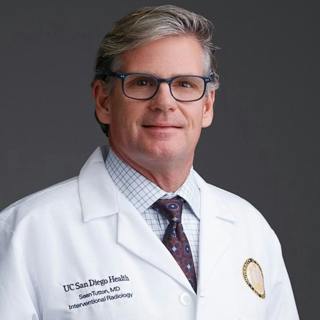
Ep. 510 Robotics Revolution in Interventional Radiology with Dr. Sean Tutton and Dr. Raj Narayanan

Ep. 510 Robotics Revolution in Interventional Radiology with Dr. Sean Tutton and Dr. Raj Narayanan

Robot-assisted technology has revolutionized surgical fields such as general surgery and urology—could interventional radiology be the next frontier? In this episode of the BackTable podcast, host Dr....

21 Jan 202556min

Ep. 509 Multidisciplinary HCC Care: Improving the Patient Experience with Combined Clinic

Ep. 509 Multidisciplinary HCC Care: Improving the Patient Experience with Combined Clinic

Welcome to the first episode of BackTable Tumor Board, and our first recording session at our new in-person studio! Guest host Dr. Tyler Sandow (interventional radiologist) leads a multidisciplinary d...

17 Jan 202545min

Introducing Backtable Tumor Board

Introducing Backtable Tumor Board

Welcome to the first episode of BackTable Tumor Board, and our first recording session at our new in-person studio! Guest host Dr. Tyler Sandow (interventional radiologist) leads a multidisciplinary d...

16 Jan 20252min

Populært innen Fakta

fastlegen
dine-penger-pengeradet
relasjonspodden-med-dora-thorhallsdottir-kjersti-idem
treningspodden
rss-strid-de-norske-borgerkrigene
foreldreradet
rss-sunn-okonomi
jakt-og-fiskepodden
takk-og-lov-med-anine-kierulf
sinnsyn
rss-kunsten-a-leve
merry-quizmas
gravid-uke-for-uke
hverdagspsyken
smart-forklart
hagespiren-podcast
rss-kull
lederskap-nhhs-podkast-om-ledelse
fryktlos
uroskolen