Ep. 328 Adrenal Vein Sampling with Dr, Fritz Angle

Ep. 328 Adrenal Vein Sampling with Dr, Fritz Angle

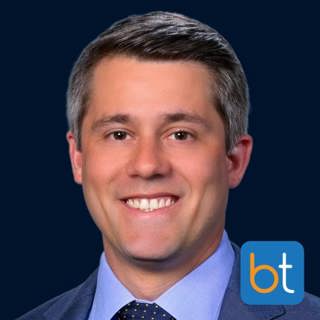
In this episode, host Dr. Aparna Baheti interviews Dr. Fritz Angle about adrenal vein sampling, including indications, workup, and his technique for accessing the right adrenal vein. --- CHECK OUT OUR SPONSOR RADPAD® Radiation Protection https://www.radpad.com/ --- SHOW NOTES Dr. Fritz Angle is the Director of Interventional Radiology at the University of Virginia. He frequently performs adrenal vein sampling for primary hyperaldosteronism, and has developed a specific technique. The patient is usually referred from an endocrinologist or primary care doctor. The IR should review the labs to verify the aldosterone-to-renin ratio is greater than 20. Additionally, it is important to review medications and stop all potassium sparing diuretics at least two weeks before the procedure. If they haven’t had a CT scan, the IR should order one to assess the position of the right adrenal vein, the hardest to access due to its variable anatomy. The morning of the procedure, Dr. Angle always checks a potassium level to know whether to give potassium supplements. He gets dual femoral access, so that he can obtain both non-stimulated and ACTH-stimulated samples. He obtains the sample from the left adrenal vein first. For the right side, he starts with a C2 catheter, to which he adds side holes using a biopsy needle. The left adrenal vein is almost always one vertebral body above the right renal vein, so he begins here, with the catheter pointing directly posterior. He searches around the entire back wall of the IVC by puffing contrast and rotating the catheter. He moves up and down by half a vertebral level. If he still cannot locate it, he begins looking to the left and right. When injecting, it is important to be gentle. To do this, he inserts an 014 wire through his catheter, then does a dry scan to see if the vein is pointing toward the liver or the right adrenal gland. If the vein is injected too hard, it can cause a venous infarct and adrenal insufficiency. The right adrenal vein forms an upside down Y shape. Dr. Angle draws two sets each from the right and left adrenal veins and two peripheral samples. To interpret results, look for a cortisol of 2-3x greater (3-4x greater in stimulated samples) compared to the peripheral blood to confirm correct placement in the adrenal veins. Once you correct aldosterone levels to cortisol levels, the aldosterone-to-cortisol ratio should be about 5x greater on one side (compared to the other side) to confirm the diagnosis and lateralize the hyperaldosteronism to one side. About 2 ⁄ 3 cases lateralize, but Dr. Angle has found many patients’ symptoms are actually due to bilateral adrenal hyperplasia. Finally, Dr. Angle emphasizes that this is an easy, safe procedure that all IRs should offer.

Episoder(639)

Ep. 602 Managing Neuroendocrine Tumors in Interventional Radiology with Dr. Daniel DePietro

Ep. 602 Managing Neuroendocrine Tumors in Interventional Radiology with Dr. Daniel DePietro

What considerations drive your decision between bland embolization, TACE, and radioembolization in managing neuroendocrine tumors? In this BackTable episode, Dr. Daniel DePietro, interventional radiol...

30 Des 20251h 23min
Ep. 601 Revenue Cycle Management: Key Strategies for Healthcare Success with Laurie Bouzarelos MHA, CPC, FACHE

Ep. 601 Revenue Cycle Management: Key Strategies for Healthcare Success with Laurie Bouzarelos MHA, CPC, FACHE

The ultimate challenge of operating an OBL is staying profitable. In this episode of BackTable, we bring on healthcare administrator Laurie Bouzarelos and interventional radiologist Dr. Mary Costantin...

26 Des 20251h 42min
Ep. 600 Exploring Artificial Intelligence Utility in Endovascular Procedures with Dr. Emil Cohen

Ep. 600 Exploring Artificial Intelligence Utility in Endovascular Procedures with Dr. Emil Cohen

OpenEvidence was founded in 2022. In just 3 short years, it has become a household name amongst aspiring and established healthcare providers. AI-based tools are now being used to augment workflows, i...

23 Des 202558min
Ep. 599 Lung Ablation: Techniques, Challenges, & Best Practices with Dr. Alan Lee, Dr. Scott Oh, and Dr. Rob Suh

Ep. 599 Lung Ablation: Techniques, Challenges, & Best Practices with Dr. Alan Lee, Dr. Scott Oh, and Dr. Rob Suh

Collaboration between interventional radiology and radiation oncology has enabled high-dose brachytherapy in central lung lesions that were previously untreatable. This episode of the 2025 NSCLC Creat...

19 Des 202540min
 Ep. 598 Genicular Artery Embolization: Insights & Techniques with Dr. Rachel Piechowiak and Dr. Faraz Khan

Ep. 598 Genicular Artery Embolization: Insights & Techniques with Dr. Rachel Piechowiak and Dr. Faraz Khan

How is genicular artery embolization reshaping our clinical approach to patients with chronic knee pain? Dr. Rachel Piechowiak and Dr. Faraz Khan, interventional radiologists at IR Centers join Dr. D...

16 Des 202558min
Ep. 597 Ablative Treatments & Radiotherapy: The Latest in Lung Cancer Treatment with Dr. Alan Lee, Dr. Scott Oh, and Dr. Rob Suh

Ep. 597 Ablative Treatments & Radiotherapy: The Latest in Lung Cancer Treatment with Dr. Alan Lee, Dr. Scott Oh, and Dr. Rob Suh

Why might the standard RECIST criteria fail to accurately track success after tumor ablation, and what should you look for instead? In the 4th installment of the 2025 NSCLC Creator Weekend™ series, ho...

12 Des 20251h 10min
Ep. 596 Thrombin Injection for Pseudoaneurysms: Technique & Considerations with Dr. Gabriel Werder

Ep. 596 Thrombin Injection for Pseudoaneurysms: Technique & Considerations with Dr. Gabriel Werder

Pseudoaneurysms are among the most common complications of vascular access. Here’s a refresher on how to treat them with thrombin injection featuring interventional radiologist Dr. Gabriel Werder from...

9 Des 202533min
Ep. 595 Lung Cancer Staging and Systemic Therapies: Recent Advancements with Dr. Karen Reckamp and Dr. Scott Atay

Ep. 595 Lung Cancer Staging and Systemic Therapies: Recent Advancements with Dr. Karen Reckamp and Dr. Scott Atay

How do leading oncologists interpret the abundance of molecular tests, genomic data, and biomarkers to create a lung cancer patient’s treatment plan? In this episode of the 2025 NSCLC Creator Weekend™...

5 Des 20251h 9min

Populært innen Fakta

fastlegen
dine-penger-pengeradet
relasjonspodden-med-dora-thorhallsdottir-kjersti-idem
rss-strid-de-norske-borgerkrigene
foreldreradet
treningspodden
rss-sunn-okonomi
jakt-og-fiskepodden
takk-og-lov-med-anine-kierulf
sinnsyn
merry-quizmas
gravid-uke-for-uke
rss-kunsten-a-leve
rss-kull
hagespiren-podcast
hverdagspsyken
rss-var-forste-kaffe
fryktlos
rss-mann-i-krise-med-sagen
smart-forklart