218. Surprised by the man of no suprises

218. Surprised by the man of no suprises

We start this week with Hitler announcing that there would be no more surprises, though we immediately question whether his word could always be wholly trusted.

We go on to look at the way Hitler was building a regime which didn’t just want war, above all against what he saw as a Jewish-Bolshevik menace, but actually needed it as the only way to obtain basic products for the German population, and raw materials that the military machine itself had to have.

Meanwhile, British foreign policy was under new management, with Anthony Eden as Foreign Secretary in place of the disgraced Samuel Hoare. The Prime Minister, Stanley Baldwin, told him he wanted better relations with Germany and when Eden asked how he was to obtain them, he told him that it was Eden’s job to work that out. But then Baldwin stood down, and his successor, Neville Chamberlain, had a different approach. He wanted to run foreign affairs himself, and he was intent on going flat out for appeasement.

That finally brought the Prime Minister and his Foreign Secretary into a head-on clash, over concessions to Italy, in the hope of securing Mussolini’s assistance. Chamberlain was prepared to recognise that Italy had the right to invade and occupy Abyssinia (Ethiopia today), even though that was a breach of international law. Eden was in favour of appeasement, but not at the cost of unreasonable concessions, and this one he decided really wasn’t reasonable. Eden went. His replacement was Lord Halifax. He’d recently been on a hunting trip to Germany as the guest of Hermann Goering, and came back convinced that the Nazi leaders were reasonable men with whom a sensible set of arrangements could be negotiated.

Then Hitler showed that the age of surprises really wasn’t over. He sent troops over the border into neighbouring Austria, to absorb it into the German Reich. There was no resistance in the country, and none from outside either, including from Britain.

European great powers didn’t greatly rate the rights of Africa’s native peoples. Writing off the rights of the Abyssinians therefore was no great shock. But this was Austria, a European country, and Hitler invaded and annexed it without the slightest attempt to stop him from abroad.

It seemed that appeasers were prepared to step across some red lines in their bid to buy peace through concessions to dictators.


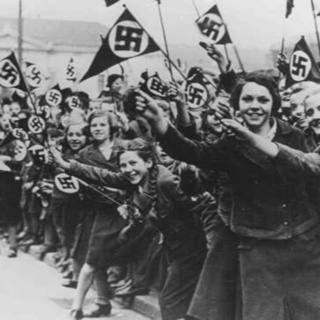
Illustration: Members of the Nazi organisation, the League of German Girls, celebrating the arrival of German troops in Vienna. Dokumentationsarchiv des Oesterreichischen Widerstandes

Music: Bach Partita #2c by J Bu licensed under an Attribution-NonCommercial-No Derivatives (aka Music Sharing) 3.0 International License


Episoder(274)

257. Iron Lady out, Grey Man in

257. Iron Lady out, Grey Man in

With the poll tax, Thatcher took one bad decision to many. From the point of view of orthodox Thatcherite thought, it sounded like a good idea. She’d been working for years to shrink the state but, wh...

24 Aug 202514min
256. Maggie losing it

256. Maggie losing it

Having looked last week at how Maggie Thatcher was running out of options for how to carve out a new role for Britain on the world stage, this week we look at how things were going at home. After all,...

17 Aug 202514min
255. Maggie: lioness or poodle?

255. Maggie: lioness or poodle?

Maggie Thatcher in 1987 pulled off a trick that had eluded all other British Prime Ministers of the twentieth century: she won three general elections in a row. Even more, she won a second Commons lan...

10 Aug 202514min
254. Maggie reaching the top

254. Maggie reaching the top

Thatcher’s victories, including a general election landslide and breaking the miners’ strike, emboldened her to launch another phase in the reduction of the role of the state in the British economy. N...

3 Aug 202514min
253. The Enemy Within

253. The Enemy Within

What had converted Maggie Thatcher from something of a lame duck into a front runner for the next British general election?While the economy had begun to pick up, that had been patchy at best, with so...

27 Jul 202514min
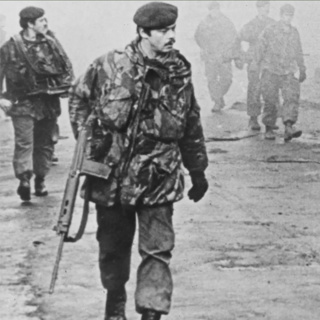
252. Iron Lady

252. Iron Lady

Mrs Thatcher’s first term in office was one of the great get out of jail events. She came into office intent on braking with the Keynesianism and social democracy of the postwar consensus. She drew on...

20 Jul 202514min
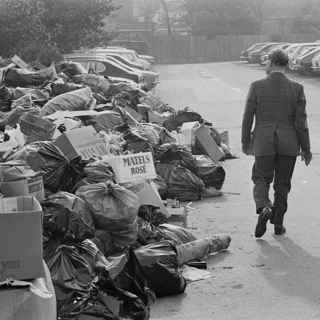
251. Unlucky Jim

251. Unlucky Jim

In 1976, Jim Callaghan took over from Harold Wilson as leader of the Labour Party and British Prime Minister. He was a competent politician, though not an outstanding one. He did his job well, but he ...

13 Jul 202514min
250. Return of the crisis man

250. Return of the crisis man

When Harold Wilson formed his second government, he immediately faced a major crisis inherited from Heath’s administration: the coalminers were on strike, a state of Emergency (Heath’s fifth in four y...

6 Jul 202514min

Populært innen Historie

rss-dette-ma-aldri-skje-igjen
historier-som-endret-norge
rss-katastrofe
henrettelsespodden
sektledere
aftenposten-historie
rss-benadet
rss-nadelose-nordmenn-gestapo
historier-som-endret-verden
med-egne-oyne
rss-strid-de-norske-borgerkrigene
rss-frontkjemperne
rss-gamle-greier
taakeprat
historiepodden
historiepodden-ww2
liberal-halvtime
rss-historier-fra-gudbrandsdalen
vare-historier
rss-politisk-preik