
032. How to rehabilitate ACL injuries with Enda King

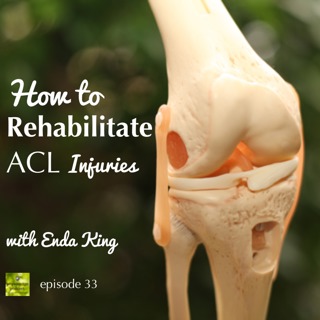
032. How to rehabilitate ACL injuries with Enda King

ACL injuries can be career ending, or they can be an opportunity to sort out movement efficiency, motor control and and technical skills, coming back from the rehabilitation process with more power, speed and efficiency than they had before they injured their ACL.

In this podcast, Enda King from the Sports Surgery Clinic in Dublin currently completing his PhD in 3D biomechanical analysis after ACL reconstruction, with the aim to assist in RTP decision making and identifying fully rehabilitated athletes, and David Pope discuss ACL injuries, and the most important factors in pre-operative management and post-operative exercise programming to get your patients back to sport with improved sporting performance.

Going deep on the details involved in ACL Rehabilitation, including:

  • 01:20 Enda King and SSC, and working with ACL athletes PhD in 3D biomechanical analysis after ACL reconstruction, aim to assist in RTP decision making and what a fully rehabilitated athlete looks like

  • What does a fully rehabilitated athlete look like?

  • Incorporating performance goals into the rehab process

  • Can athletes achieve better performance post ACL rehab than they were pre-injury

  • Types of ACL grafts

  • Preoperative ACL Physiotherapy, helping your patient to prepare for the surgery

  • Preoperative education

  • Restoring knee extension, balancing pain and improved range of movement, empowering your patient

  • Guidelines for pain, swelling when restoring range of movement

  • Restoring quadriceps activation, normalising gait patterns

  • Clinical Edge

  • Clinical Edge's free webinar program

  • Preoperative length of time

  • Post-op - initial management

  • To use or not use co-contraction exercises of quads and hamstrings

  • Should you use squatting style exercises Week 1 post op

  • Activating quadriceps - internal quadriceps cues or external exercise focus

  • How much pain should a patient experience during or after an exercise

  • Week 2 post-op

  • When can heavy gym training commence

  • Changing movement patterns throughout the kinetic chain

  • Advice for patients in the early stages of rehab

  • Frequency of exercise

  • Week 2 onwards - exercises incorporating balance and proprioception

  • Open vs closed chain exercises

  • Advice for patients in weeks 2–6

  • Nutrition and dietary advice for patients

  • Gym based rehabilitation

  • Choosing and modifying exercises for middle stages of the rehabilitation process

  • Various types of squatting movement, and progressing the types of squats

  • Goblet squats

  • Retraining ideal squat patterns

  • Progressing squats, deadlifts and lunges

  • Front squats

  • Front squats and trap bar deadlifts vs back squats during rehabilitation

  • When can an athlete start cycling

  • Disadvantages of using cycling as the main part of a rehabilitation program

  • Hamstring rehabilitation after semitendinosis/gracilis graft

  • Strength and power development

  • Strength testing - mid thigh pull, leg press

  • Should we use open chain strength tests

  • When to perform strength tests

  • Strength vs power and rate of force development

  • Running - incorporating into the program. When can your patient start running?

  • Preparation for running

  • Running drills

  • Ideal movement patterns in running

  • Enda King and SSC, and working with ACL athletes

Podcast timeline

  • 3:35 What does a fully rehabilitated athlete look like?

  • 5:40 Incorporating performance goals into the rehab process

  • 6:50 Can athletes achieve better performance post ACL rehab than they were pre-injury

  • 8:20 Types of ACL grafts

  • 11:10 Preoperative ACL Physiotherapy, helping your patient to prepare for the surgery - an opportunity to prepare your patients knee, ROM, strength and educate them on the rehabilitation process

  • 14:20 Preoperative education

  • 14:40 Restoring knee extension, balancing pain and improved range of movement, empowering your patient with

  • 15:40 Guidelines for pain, swelling when restoring range of movement

  • 16:15 Restoring quadriceps activation, normalising gait patterns

  • 17:10 Clinical Edge

  • 18:45 Clinical Edge's free webinar program

  • 19:30 Preoperative length of time

  • 20:35 Post-op - initial management

  • 23:20 To use or not use co-contraction exercises of quads and hamstrings

  • 24:50 Should you use squatting style exercises Week 1 post op

  • 25:25 Activating quadriceps - internal quadriceps cues or external exercise focus

  • 26:30 How much pain should a patient experience during or after an exercise

  • 27:30 Week 2 post-op

  • 28:30 When can heavy gym training commence

  • 29:30 Changing movement patterns throughout the kinetic chain

  • 31:00 Advice for patients in the early stages of rehab

  • 32:10 Frequency of exercise

  • 32:55 Week 2 onwards - exercises incorporating balance and proprioception

  • 34:10 Open vs closed chain exercises

  • 35:40 Advice for patients in weeks 2–6

  • 37:15 Nutrition and dietary advice for patients

  • 37:45 Gym based rehabilitation

  • 38:50 Choosing and modifying exercises for middle stages of the rehabilitation process

  • 41:00 Various types of squatting movement, and progressing the types of squats

  • 41:45 Goblet squats

  • 42:30 Retraining ideal squat patterns

  • 43:25 Progressing squats, deadlifts and lunges

  • 44:00 Front squats

  • 46:00 Front squats and trap bar deadlifts vs back squats during rehabilitation

  • 47:25 When can an athlete start cycling

  • 48:00 Disadvantages of using cycling as the main part of a rehabilitation program

  • 48:30 Hamstring rehabilitation after semitendinosis/gracilis graft

  • 49:45 Strength and power development

  • 51:00 Strength testing - mid thigh pull, leg press

  • 53:15 Should we use open chain strength tests

  • 54:20 When to perform strength tests

  • 55:00 Strength vs power and rate of force development

  • 55:50 Running - incorporating into the program. When can your patient start running?

  • 57:30 Preparation for running

  • 58:35 Running drills

  • 1:00:30 Ideal movement patterns in running

Links:

Denne episoden er hentet fra en åpen RSS-feed og er ikke publisert av Podme. Den kan derfor inneholde annonser.

Episoder(179)

180. Patellofemoral pain 4 - How to get runners back on track (and trails, hills and anywhere else they run!) with Tom Goom

180. Patellofemoral pain 4 - How to get runners back on track (and trails, hills and anywhere else they run!) with Tom Goom

Patellofemoral pain (PFP) rehabilitation doesn't end when your patient gets stronger. The real challenge is getting them back to running, training and racing without triggering another flare-up. In th...

10 Jul 23min
179. Patellofemoral pain 3 - Effective rehab that won't flare their symptoms with Tom Goom

179. Patellofemoral pain 3 - Effective rehab that won't flare their symptoms with Tom Goom

Strengthening exercises are a key part of successful patellofemoral pain (PFP) rehabilitation. Squats, lunges and single leg squats are often painful early on and can aggravate your patients pain, but...

8 Jul 32min
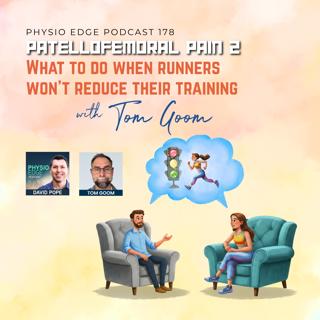
178. Patellofemoral pain 2 - What to do when runners won't reduce their training with Tom Goom

178. Patellofemoral pain 2 - What to do when runners won't reduce their training with Tom Goom

Many runners patellofemoral pain (PFP) is aggravated by the activity they love. They either stop running to let their pain settle, and then it returns as soon as they start back up again, or keep runn...

3 Jul 33min
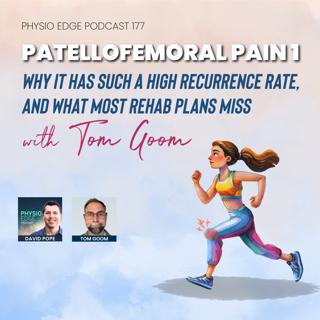
177. Patellofemoral pain 1 - Why it has such a high recurrence rate, and what most rehab plans miss with Tom Goom

177. Patellofemoral pain 1 - Why it has such a high recurrence rate, and what most rehab plans miss with Tom Goom

Patellofemoral pain (PFP) is one of the most common running injuries, and the high recurrence rate can make it a frustrating injury for patients to experience and clinicians to treat. In this episode,...

29 Jun 37min
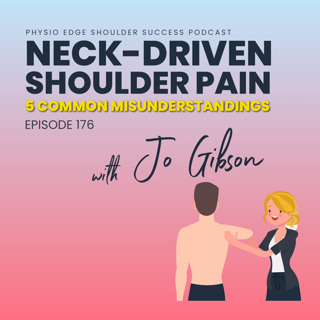
176. Neck-driven shoulder pain - 5 common misunderstandings. Physio Edge Shoulder Success podcast with Jo Gibson

176. Neck-driven shoulder pain - 5 common misunderstandings. Physio Edge Shoulder Success podcast with Jo Gibson

When is your patient's shoulder pain from their neck? Are you missing a cervical spine component in your shoulder patients? After a day in clinic reviewing patients with years of unresolved shoulder p...

4 Mar 11min

175. Tendinopathy treatment: Your guide to isometrics, isotonics & plyometrics with Dr Ebonie Rio

175. Tendinopathy treatment: Your guide to isometrics, isotonics & plyometrics with Dr Ebonie Rio

Should you prescribe isometric or isotonic exercises for your patient's lower limb tendinopathy? When is it safe to add plyometric loading, and how do you progress running or jumping without flaring y...

18 Feb 53min

174. ACJ - The hidden culprit behind stubborn shoulder pain? Physio Edge Shoulder Success podcast with Jo Gibson

174. ACJ - The hidden culprit behind stubborn shoulder pain? Physio Edge Shoulder Success podcast with Jo Gibson

Have any of your shoulder patients improved and then plateaued, unable to regain their full range of movement, or get rid of their painful arc? Sometimes it's not the cuff, capsule, nerves or neck—it'...

4 Sep 202517min

173. Hip flexor pain in runners: Diagnosis, myths, and rehab. Physio Edge Track record: Running repairs podcast with Tom Goom

173. Hip flexor pain in runners: Diagnosis, myths, and rehab. Physio Edge Track record: Running repairs podcast with Tom Goom

Anterior hip pain is often blamed on the hip flexors, but in runners, that's rarely the diagnosis. So how can you identify the real cause and guide patients to a safe, effective recovery? In this epis...

6 Aug 202519min

Populært innen Vitenskap

fastlegen
tingenes-tilstand
rss-nysgjerrige-norge
romkapsel
jss
villmarksliv
rekommandert
liberal-halvtime
rss-paradigmepodden
tomprat-med-gunnar-tjomlid
dekodet-2
sinnsyn
fjellsportpodden
vett-og-vitenskap-med-gaute-einevoll
abels-tarn
rss-rekommandert
rss-overskuddsliv
diagnose
nordnorsk-historie
rss-lundqvist-podden