243: Saving Lives Before Disaster Strikes - Ron Harris on Proactive Risk Reduction
Seismic Soundoff21 Nov 2024

243: Saving Lives Before Disaster Strikes - Ron Harris on Proactive Risk Reduction

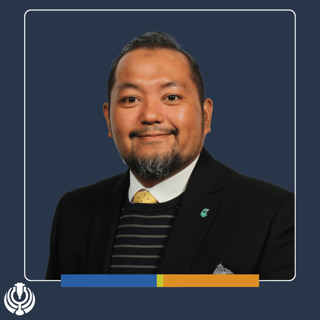
"The 2004 Indian Ocean tsunami was a wake-up call. It showed me that even the best science fails without effective communication and proactive strategies to save lives." In this episode, host Andrew Geary talks with Ron Harris, Geological Sciences Professor at Brigham Young University, about his groundbreaking work in disaster preparedness. Ron shares insights from his Global Sustainability lecture (supported by the Baker Hughes Foundation) and the Geoscientists without Borders Java WAVES project, which focuses on how scientific research can save lives in disaster-prone regions. KEY POINTS & TAKEAWAYS > Proactive Disaster Preparedness: Ron champions moving beyond reactive approaches, using community-based education to prepare for potential hazards before they occur. > The "20-20-20" Evacuation Principle: This innovative rule helps communities quickly self-evacuate after earthquakes. By combining scientific data with simple messaging, Ron created a lifesaving tool anyone can understand and implement. > Science Meets Community Action: Through his WAVES team, Geoscientists without Borders, and In Harm's Way, Ron proves that bridging scientific insights with local leadership can dramatically reduce disaster risks. > Cultural Engagement: Ron has found powerful ways to boost community preparedness by collaborating with Indonesian scouting groups and integrating local heroes into disaster messaging. > A Challenge to Future Geoscientists: Ron encourages young researchers to align their skills with societal needs, demonstrating how scientific expertise can create real-world impact. LINKS * Support GWB - https://seg.org/programs/geoscientists-without-borders/ * Register for Ron's talk - https://seg.org/education/lectures/seg-global-sustainability-lectures-ron-harris/ * Visit https://seg.org/podcasts/episode-243-saving-lives-before-disaster-strikes-ron-harris-on-proactive-risk-reduction/ to discover past podcasts on humanitarian geophysics and all the links for this episode. GUEST BIO Professor Ron Harris specializes in plate tectonics and associated geophysical hazards. He received his BSc. in Geology from the University of Oregon, an MSc. in Geophysics from the Geophysical Institute of Alaska, and a Ph.D. in Geodynamics from University College London, UK. Ron has worked for oil, mining, and environmental companies, for the U.S. Geological Survey, and with the governments of several developing countries threatened by natural hazards. Dr. Harris has taught at universities in the U.S., Great Britain, Oman, Taiwan, and Indonesia. He has been invited to make over 200 presentations, has 95 peer-reviewed publications, written books and garnered several research grants and awards. Dr. Harris’ research integrates many sub-disciplines, but the common thread is applying geoscience to societal needs. He founded the nonprofit organization In Harm's Way, which identifies areas most vulnerable to natural disasters and helps community-based organizations communicate risk and implement effective risk-reduction strategies that save thousands of lives. SHOW CREDITS Andrew Geary at TreasureMint hosted, edited, and produced this episode. The SEG podcast team comprises Jennifer Cobb, Kathy Gamble, and Ally McGinnis. If you have episode ideas or feedback for the show or want to sponsor a future episode, email the show at podcast@seg.org.

Denne episoden er hentet fra en åpen RSS-feed og er ikke publisert av Podme. Den kan derfor inneholde annonser.

Episoder(307)

Why SEG Is Building a Home for Mining Geophysics

Why SEG Is Building a Home for Mining Geophysics

"That’s what we’re trying to achieve with this forum: bringing all the people together with different backgrounds and create this community, which I don’t think fully exists right now.” Jiajia Sun an...

18 Jun 30min

The Human Side of Volcano Monitoring

The Human Side of Volcano Monitoring

"I feel like we are making a change in the way that people now see the volcanoes and see the earthquakes in El Salvador. So in that sense, I think we are making a a big change.” Adonay Martinez Coto ...

11 Jun 33min

How Geophysics Connects Curiosity, Science, and Career Opportunity

How Geophysics Connects Curiosity, Science, and Career Opportunity

“If you're curious about geophysics, there's definitely a place in geophysics for you. The field is so interdisciplinary.” Johanna Villagomez joins Andrew Geary to share how curiosity, fieldwork, stu...

4 Jun 23min

What Geophysicists Gain by Attending URTeC

What Geophysicists Gain by Attending URTeC

"Integration, literally, that's why the URTeC is successful.” Marianne Rauch joins Andrew Geary to explain why URTeC 2026 matters for geophysicists who want their work to shape real field decisions. ...

21 Mai 25min

Why Geophysicists Are Paying More Attention to Groundwater

Why Geophysicists Are Paying More Attention to Groundwater

“The concept of mapping the aquifer from the sky, that’s gigantic. It could change how aquifers are managed around the world.” Seogi Kang and Mike Wilt explain why groundwater is becoming one of the ...

14 Mai 28min

The Hidden Opportunity in Critical Minerals That Geophysicists Can’t Ignore

The Hidden Opportunity in Critical Minerals That Geophysicists Can’t Ignore

“We all realize that we need a lot more mineral resources in the next two decades. And we realized that geophysics can play a critical role.” Sarah Devriese and Jiajia Sun explain why demand for crit...

7 Mai 26min

OTC 2026 Emerging Leaders on the Future of Offshore Energy Collaboration

OTC 2026 Emerging Leaders on the Future of Offshore Energy Collaboration

“Nothing can happen in a vacuum anymore. We need to have the developers talking to the geoscientists, talking to the environmental professionals.” Two OTC 2026 Emerging Leaders share why the future o...

23 Apr 28min

Why Seismic Acquisition Is Making a Quiet Comeback

Why Seismic Acquisition Is Making a Quiet Comeback

"What has happened in the last few years is exploration overall has taken a little bit of a backseat. So they are starting to relook at seismic acquisition to explore new areas and solve more complex ...

16 Apr 27min

Populært innen Vitenskap

fastlegen
tingenes-tilstand
jss
forskningno
liberal-halvtime
rekommandert
sinnsyn
smart-forklart
dekodet-2
fjellsportpodden
villmarksliv
rss-nysgjerrige-norge
rss-rekommandert
noen-har-snakket-sammen
rss-paradigmepodden
rss-overskuddsliv
nevropodden
rss-kunstig-intelligens-med-elisabeth-maren-og-morten
vett-og-vitenskap-med-gaute-einevoll
rss-inn-til-kjernen-med-sunniva-rose