
A look at Long Covid, and why researchers and police shouldn’t use the same DNA kits

A look at Long Covid, and why researchers and police shouldn’t use the same DNA kits

On this week’s show: Tracing the roots of Long Covid, and an argument against using the same DNA markers for suspects in law enforcement and in research labs for cell lines Two years into the pandemic, we’re still uncertain about the impact of Long Covid on the world—and up to 20% of COVID-19 patients might be at risk. First on the podcast this week, Staff Writer Jennifer Couzin-Frankel joins host Sarah Crespi to share a snapshot of the current state of Long Covid research, particularly what researchers think are likely causes. Also this week, Debra Mathews, assistant director for science programs in the Berman Institute of Bioethics and associate professor of genetic medicine at Johns Hopkins University, talks with Sarah about why everyone using the same DNA kits—from FBI to Interpol to research labs—is a bad idea. Finally, in a sponsored segment from the Science/AAAS Custom Publishing Office, Sean Sanders, director and senior editor for custom publishing, interviews Bobby Soni, chief business officer at the BioInnovation Institute (BII), about what steps scientists can take to successfully commercialize their ideas. This segment is sponsored by BII. This week’s episode was produced with help from Podigy. [Image: A. Mastin/Science; Music: Jeffrey Cook] [alt: illustration of potential causes for Long Covid ] Authors: Sarah Crespi; Jennifer Couzin-Frankel Episode page: https://www.science.org/doi/10.1126/science.add4887 About the Science Podcast: https://www.science.org/content/page/about-science-podcast Learn more about your ad choices. Visit megaphone.fm/adchoices

Denne episoden er hentet fra en åpen RSS-feed og er ikke publisert av Podme. Den kan derfor inneholde annonser.

Episoder(652)

Death in a gene-editing trial, and insect larvae surviving in deep waters

Death in a gene-editing trial, and insect larvae surviving in deep waters

First up on the podcast, freelance science journalist Brendan Borrell talks about his work reporting on the previously undisclosed death of a 6-year-old girl in a gene-editing clinical trial in China ...

23 Jul 0s
Health care in Malawi after USAID’s end, and a rocky exoplanet with an atmosphere

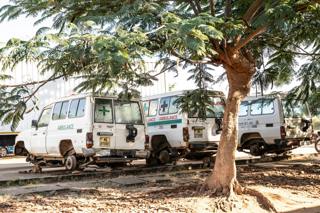
Health care in Malawi after USAID’s end, and a rocky exoplanet with an atmosphere

First up on the podcast, we continue our coverage of the fallout from cuts to the U.S. Agency for International Development (USAID), this time focusing on how one of the largest recipients of aid is c...

16 Jul 41min
Owl wars and the immune system’s memory

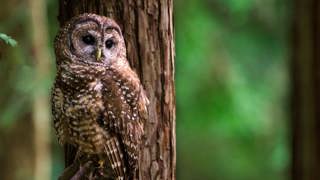
Owl wars and the immune system’s memory

First up on the podcast, Contributing Correspondent Warren Cornwall goes on an owl hunt in the woods of Northern California. After surviving logging and habitat destruction in the 1990s, the endangere...

9 Jul 35min
How Antarctica got its ice sheets, and what happens when geopolitical relationships turn chilly in the Arctic

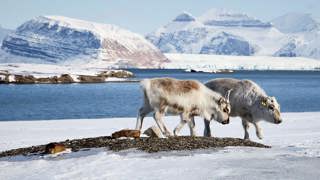
How Antarctica got its ice sheets, and what happens when geopolitical relationships turn chilly in the Arctic

First up on the podcast, relationships turn chilly in the polar research haven of Svalbard in Norway. Senior International Correspondent Richard Stone joins host Sarah Crespi to discuss the impacts of...

2 Jul 32min
Cracking color vision, U.S. science policy changes, and a trailblazing biography

Cracking color vision, U.S. science policy changes, and a trailblazing biography

First up on the podcast, ScienceInsider editor Jocelyn Kaiser joins host Sarah Crespi to discuss big policy stories from the past month, including a proposal from President Donald Trump’s administrati...

25 Jun 45min

An electronic nose that detects spoiled chicken, and wolves make a spectacular comeback in Europe

An electronic nose that detects spoiled chicken, and wolves make a spectacular comeback in Europe

First up on the podcast, wrangling wolves in Europe. After near extermination in much of the continent, wolf numbers have surged up to about 20,000 individuals. Contributing Correspondent Gretchen Vog...

18 Jun 46min
How childhood environments shape the brain, and how susceptible is the Atlantic Ocean’s current to climate change?

How childhood environments shape the brain, and how susceptible is the Atlantic Ocean’s current to climate change?

First up on the podcast, producer Kevin McLean talks with Staff Writer Paul Voosen about the latest on the Atlantic Meridional Overturning Circulation, or AMOC. Researchers have long been concerned th...

11 Jun 31min

Will AI replace astronomers, how healthy are ultraprocessed foods, and a peek behind the scenes of ‘The Normals’

Will AI replace astronomers, how healthy are ultraprocessed foods, and a peek behind the scenes of ‘The Normals’

First up on the podcast, freelance science journalist Joshua Sokol talks about the intense discussion happening in the astrophysics community as artificial intelligence and machine learning become inc...

4 Jun 50min

Populært innen Politikk og nyheter

giver-og-gjengen-vg
aftenpodden
forklart
fotballpodden-2
aftenpodden-usa
stopp-verden
popradet
rss-gukild-johaug
hanna-de-heldige
det-store-bildet
dine-penger-pengeradet
rss-ness
nokon-ma-ga
lydartikler-fra-aftenposten
bt-dokumentar-2
aftenbla-bla
e24-podden
unitedno
rss-penger-polser-og-politikk
rss-utenrikskomiteen-med-bogen-og-grasvik