More precise radiocarbon dating, secrets of hibernating bear blood, and a new book series

More precise radiocarbon dating, secrets of hibernating bear blood, and a new book series

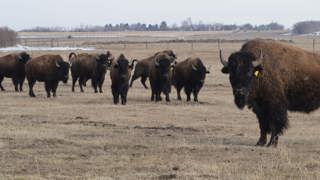
Anchoring radiocarbon dates to cosmic events, why hibernating bears don't get blood clots, and kicking off a book series on sex, gender, and science First up this week, upping the precision of radiocarbon dating by linking cosmic rays to isotopes in wood. Producer Meagan Cantwell talks with Online News Editor Michael Price about how spikes in cosmic rays—called Miyake events—are helping archaeologists peg the age of wooden artifacts to a year rather than a decade or century. Next on the show, we have a segment on why bears can safely sleep during hibernation without worrying about getting clots in their blood. Unlike bears, when people spend too much time immobilized, such as sitting for a long time on a flight, we risk getting deep vein thrombosis—or a blood clot. Johannes Müller-Reif of the Max Planck Institute of Biochemistry talks with host Sarah Crespi about what we can learn from bears about how and why our bodies decide to make these clots and what we can do to prevent them. Stay tuned for an introduction to our new six-part series on books exploring science, sex, and gender. Guest host Angela Saini talks with scholar Anne Fausto-Sterling about the books in this year's lineup and how they were selected. We’ve been nominated for a Webby! Please support the show and vote for us by 20 April. This week’s episode was produced with help from Podigy. About the Science Podcast [Image: Thomas Zsebok/iStock/Getty; Music: Jeffrey Cook] [alt: brown bear lying in a cave with podcast overlay] Authors: Sarah Crespi; Meagan Cantwell; Mike Price; Angela Saini Episode page: https://www.science.org/doi/10.1126/science.adi2236 Learn more about your ad choices. Visit megaphone.fm/adchoices

Denne episoden er hentet fra en åpen RSS-feed og er ikke publisert av Podme. Den kan derfor inneholde annonser.

Episoder(641)

A team effort to save a giant fish, the power of moonlight, and how scientists can navigate a tough political environment

A team effort to save a giant fish, the power of moonlight, and how scientists can navigate a tough political environment

First up on the podcast, along Brazil’s Juruá River, local residents have been working with scientists to manage a giant fish called the arapaima—affecting the land, the people, and the economy. Contr...

7 Mai 53min

Watching a spiders’ heart beat, epigenetic ethics, and what science biographies reveal about fame

Watching a spiders’ heart beat, epigenetic ethics, and what science biographies reveal about fame

First up on the podcast, Online News Editor David Grimm shares a batch of fun stories with podcast host Sarah Crespi—from spider hearts racing when traffic gets loud to a disease-preventing house. Sta...

30 Apr 46min

Cleaning up uranium mining, and how the heart avoids cancer

Cleaning up uranium mining, and how the heart avoids cancer

First up on the podcast, freelance science and environmental journalist Quentin Septer joins host Sarah Crespi to talk about a controversial uranium mine getting fast-tracked in South Dakota. Septer c...

23 Apr 30min

The normals | Episode 3

The normals | Episode 3

The final of a three-part limited Science Podcast series that looks at the history of normal human subjects in research In episode two, we heard what happened to the normals program after church volu...

21 Apr 33min

How to keep quantum computers cool, whether prediction markets harm public health, and podcasting on podcasting

How to keep quantum computers cool, whether prediction markets harm public health, and podcasting on podcasting

First up on the podcast, quantum computers require extremely low temperatures—less than 1°C away from absolute zero. But getting down to those temperatures has usually required dilution fridges using ...

16 Apr 50min

The Normals | Episode 2

The Normals | Episode 2

Last time on The Normals, we learned that in the 1950s, the National Institutes of Health (NIH) wanted to recruit many healthy volunteers for basic research. Two peace churches, the Mennonites and the...

14 Apr 27min

A chimpanzee ‘civil war,’ and NASA plans for nuclear propulsion

A chimpanzee ‘civil war,’ and NASA plans for nuclear propulsion

First up on the podcast, freelance science journalist Hannah Richter joins host Sarah Crespi to discuss NASA’s plans to send a nuclear-powered spacecraft to Mars in less than 3 years. Having not launc...

9 Apr 42min

The Normals | Episode 1

The Normals | Episode 1

How do we know what's normal in a person? In the early 1950s, the National Institutes of Health (NIH) set out to do something unprecedented. It wanted to start studying normal humans on a grand scale....

7 Apr 23min

Populært innen Politikk og nyheter

giver-og-gjengen-vg
aftenpodden
forklart
aftenpodden-usa
popradet
stopp-verden
fotballpodden-2
nokon-ma-ga
det-store-bildet
dine-penger-pengeradet
rss-gukild-johaug
hanna-de-heldige
rss-espen-lee-usensurert
lydartikler-fra-aftenposten
rss-ness
aftenbla-bla
rss-dannet-uten-piano
e24-podden
rss-utenrikskomiteen-med-bogen-og-grasvik
rss-gilbrantsuvatne