#191 Understanding ESG Reporting – ISSB S2
The ISO Show17 Sep 2024

#191 Understanding ESG Reporting – ISSB S2

Businesses are coming under increasing pressure to monitor, report and reduce their energy use and carbon emissions to meet net zero targets.

As a result, we're seeing an increase in both mandatory and voluntary regulations that require carbon emissions reporting to verify your net zero claims.

In this episode, Mel continues the ESG Reporting Disclosures series by explaining what The International Sustainability Standards Board Climate-related Disclosures (ISSB S2) are, the emissions reporting and verification requirements and who qualifies for ISSB S2.

You'll learn

· What is ISSB S2?

· What is the scope of ISSB S2

· What are the emissions reporting requirements for ISSB S2?

· Emissions verification requirements

· Who qualifies for ISSB S2?

Resources

· Carbonology

· ISSB S2

In this episode, we talk about:

[00:30] Join the isologyhub – To get access to a suite of ISO related tools, training and templates. Simply head on over to isologyhub.com to either sign-up or book a demo.

[02:10] Episode summary: Over the course of September, Mel will be exploring the latest climate change regulations that may affect your organisation. In this episode she dives into The International Sustainability Standards Board Climate-related Disclosures (ISSB S2).

[03:20] What is ISSB S2? – The International Sustainability Standards Board Climate-related Disclosures (ISSB S2) is a new global standard that mandates entities to provide comprehensive information about climate-related risks and opportunities.

The ISSB S2 was issued by the International Sustainability Standards Board on the 26th of June 2023 and is effective for annual reporting periods beginning on or after the 1st January 2024. The new standard ensures that companies disclose physical and transition risks and their potential impact on the move towards a low carbon economy.

[04:20] Further learning with Carbonology: Carbonology have created a half-day course which walks you through all of the various carbon reporting disclosures and sustainability disclosure reporting requirements.

If you would like to learn more, get in touch with Carbonology.

[07:00] What does 'Acute and Chronic Physical risks' mean in the context of ISSB S2? Climate related physical risks are risks resulting from climate change that could be event driven, so an example of an acute physical risk could arise from weather related events like storms, floods and heatwaves, which are increasing in frequency.

These could have a knock-on effect to businesses, taking a heat wave as the example, you will need to consider:

· Can your IT systems and datacentres cope with it?

· Have you got resilience built in to your operations to be able to deal with that sort of disruption to your organisation?

Chronic physical risks arise from longer term shifts in climatic patterns, including changes in precipitation and temperature, which could lead to sea level rises and reduced water availability and changes in soil productivity.

These risks could carry a weighty financial burden either through direct damage to assets, or indirectly through supply chain disruption.

[09:35] Join the isologyhub and get access to limitless ISO resources – From as little as £99 a month, you can have unlimited access to hundreds of online training courses and achieve certification for completion of courses along the way, which will take you from learner to practitioner to leader in no time. Simply head on over to the isologyhub to sign-up or book a demo.

[11:43] What does 'Transition risk' mean in the context of ISSB S2? This is looking for a climate related transition plan, which should include targets, actions and resources for the transition towards a lower carbon economy.

This would include actions such as reducing greenhouse gas emissions.

[12:30] What is the scope of ISSB S2? This Standard applies to:

· climate-related risks to which the organisation is exposed, which are:

· climate-related physical risks; and (ii) climate-related transition risks; and

· climate-related opportunities available to the entity.

Climate-related risks and opportunities that could not reasonably be expected to affect an organisation's prospects are outside the scope of this Standard.

· The Standard covers:-

· Governance

· Strategy

· Climate related risks and opportunities

· Business Model and Value Chain

· Financial position, financial performance and cash flows

· Climate resilience

· Risk Management

[14:10] What are the emissions reporting requirements for ISSB S2? - Under ISSB S2, companies are required to measure and disclose their greenhouse gas (GHG) emissions across three scopes:

· Scope 1 Emissions: Direct emissions from owned or controlled sources. For example, emissions from combustion in owned or controlled boilers, furnaces, vehicles, etc.

· Scope 2 Emissions: Indirect emissions from the generation of purchased energy. This includes emissions from the production of electricity, steam, heating, and cooling consumed by the company.

· Scope 3 greenhouse gas emissions: Indirect greenhouse gas emissions (not included in Scope 2 greenhouse gas emissions) that occur in the value chain of an entity, including both upstream and downstream emissions. Scope 3 greenhouse gas emissions include the Scope 3 categories in the Greenhouse Gas Protocol Corporate Value Chain (Scope 3) Accounting and Reporting Standard (2011).

[16:20] Emissions verification requirements - Under ISSB S2, companies are required to have their reported greenhouse gas (GHG) emissions data verified.

Verification can provide users of financial reports confidence that the information is complete, neutral and accurate.

Disclosure of inputs to Scope 3 greenhouse gas emissions needs to disclose information about the measurement approach, inputs and assumptions it uses.

[18:30] Who qualifies for ISSB S2? - ISSB S2 applies to all entities that are required by law, regulation, or administrative provision to prepare financial statements. This includes, but is not limited to:

· Publicly listed companies

· Large private companies

· Financial institutions such as banks and insurance companies

· State-owned enterprises

Entities are encouraged to adopt the ISSB S2 voluntarily, even if they are not mandated by law or regulation. Early adoption is permitted and encouraged to enhance transparency and accountability in climate-related disclosures.

If you would like some help with your carbon emissions reporting, please get in touch with Carbonology.

We'd love to hear your views and comments about the ISO Show, here's how:

Share the ISO Show on Twitter or Linkedin

Leave an honest review on iTunes or Soundcloud. Your ratings and reviews really help and we read each one.

Subscribe to keep up-to-date with our latest episodes:

Stitcher | Spotify | YouTube |iTunes | Soundcloud | Mailing List

Denne episoden er hentet fra en åpen RSS-feed og er ikke publisert av Podme. Den kan derfor inneholde annonser.

Episoder(200)

#258 What is BS 99001? Quality Management For The Built Environment

#258 What is BS 99001? Quality Management For The Built Environment

Many of you will be familiar with ISO 9001, the leading Quality Management Standard, which provides a solid foundation for managing any business. However, for certain industries, ISO 9001 alone is not...

16 Sep 44min
#257 How to meet legislative and ISO requirements in leasehold properties

#257 How to meet legislative and ISO requirements in leasehold properties

Many businesses do not own the property they operate in, this can lead to complex questions over who has ownership over certain property and facility related legal obligations. Managing areas such as...

19 Aug 33min

#256 BedX – Supporting Businesses Looking To Tender For Universal Bedfordshire and Beyond

#256 BedX – Supporting Businesses Looking To Tender For Universal Bedfordshire and Beyond

There has been a lot of buzz around the upcoming Universal Project currently in development in Bedfordshire. It's estimated to generate around £50 billion in economic benefit, along with the creation ...

5 Aug 45min
#255 AI Due Diligence - Information Security Checks Before You Integrate AI

#255 AI Due Diligence - Information Security Checks Before You Integrate AI

AI can be fantastic for relieving a lot of administrative burdens, allowing individuals to focus on more complex tasks that need a human touch. However, many are all too quick to install and integrate...

22 Jul 19min
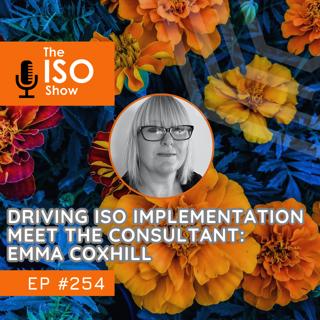
#254 Driving ISO Implementation – Meet the Consultant: Emma Coxhill

#254 Driving ISO Implementation – Meet the Consultant: Emma Coxhill

The path towards becoming an ISO consultant is often a meandering one. It's not often a career that many aspire to, yet despite that, there are still thousands of ISO professionals worldwide. We're c...

1 Jul 25min
#253 Building The Case For Health & Safety Regulations & Standards

#253 Building The Case For Health & Safety Regulations & Standards

Everyone who goes to work should have the right to go home after work. This is a sentiment that wasn't necessarily formally recognised until the 1970's here in the UK.   Health & Safety often gets mo...

24 Jun 27min
#252 Wavenet's On-going Commitment to Best Practice – Successfully Maintaining Seven ISO Standards

#252 Wavenet's On-going Commitment to Best Practice – Successfully Maintaining Seven ISO Standards

Anyone that has undergone the ambitious task of Implementing an ISO Standard will know how much work goes into creating and maintaining a single ISO certification. Now imagine juggling seven ISO certi...

17 Jun 33min
#251 Driving The Demand For GHG Emissions - How Davies Group Tackled Carbon Verification

#251 Driving The Demand For GHG Emissions - How Davies Group Tackled Carbon Verification

Watch the video interview here Carbon verification is quickly becoming a necessary step for many businesses, whether due to regulatory compliance, market demand or as part of a voluntary scheme. The...

10 Jun 34min

Populært innen Business og økonomi

stopp-verden
dine-penger-pengeradet
rss-penger-polser-og-politikk
e24-podden
rss-borsmorgen-okonominyhetene
rss-pa-konto
rss-skravla-gar
pengepodden-2
utbytte
finansredaksjonen
tid-er-penger-en-podcast-med-peter-warren
stormkast-med-valebrokk-stordalen
rss-orjasater
lederpodden
livet-pa-veien-med-jan-erik-larssen
pengesnakk
morgenkaffen-med-finansavisen
lydartikler-fra-aftenposten
liberal-halvtime
rss-markedspuls-2