#132 Classic episode – Nova DasSarma on why information security may be critical to the safe development of AI systems

#132 Classic episode – Nova DasSarma on why information security may be critical to the safe development of AI systems

If a business has spent $100 million developing a product, it’s a fair bet that they don’t want it stolen in two seconds and uploaded to the web where anyone can use it for free.

This problem exists in extreme form for AI companies. These days, the electricity and equipment required to train cutting-edge machine learning models that generate uncanny human text and images can cost tens or hundreds of millions of dollars. But once trained, such models may be only a few gigabytes in size and run just fine on ordinary laptops.

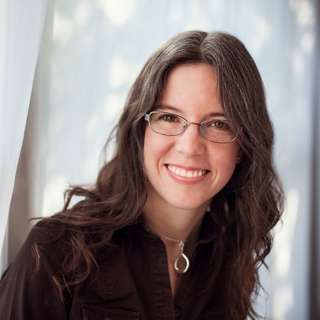
Today’s guest, the computer scientist and polymath Nova DasSarma, works on computer and information security for the AI company Anthropic with the security team. One of her jobs is to stop hackers exfiltrating Anthropic’s incredibly expensive intellectual property, as recently happened to Nvidia.

Rebroadcast: this episode was originally released in June 2022.

Links to learn more, highlights, and full transcript.

As she explains, given models’ small size, the need to store such models on internet-connected servers, and the poor state of computer security in general, this is a serious challenge.

The worries aren’t purely commercial though. This problem looms especially large for the growing number of people who expect that in coming decades we’ll develop so-called artificial ‘general’ intelligence systems that can learn and apply a wide range of skills all at once, and thereby have a transformative effect on society.

If aligned with the goals of their owners, such general AI models could operate like a team of super-skilled assistants, going out and doing whatever wonderful (or malicious) things are asked of them. This might represent a huge leap forward for humanity, though the transition to a very different new economy and power structure would have to be handled delicately.

If unaligned with the goals of their owners or humanity as a whole, such broadly capable models would naturally ‘go rogue,’ breaking their way into additional computer systems to grab more computing power — all the better to pursue their goals and make sure they can’t be shut off.

As Nova explains, in either case, we don’t want such models disseminated all over the world before we’ve confirmed they are deeply safe and law-abiding, and have figured out how to integrate them peacefully into society. In the first scenario, premature mass deployment would be risky and destabilising. In the second scenario, it could be catastrophic — perhaps even leading to human extinction if such general AI systems turn out to be able to self-improve rapidly rather than slowly, something we can only speculate on at this point.

If highly capable general AI systems are coming in the next 10 or 20 years, Nova may be flying below the radar with one of the most important jobs in the world.

We’ll soon need the ability to ‘sandbox’ (i.e. contain) models with a wide range of superhuman capabilities, including the ability to learn new skills, for a period of careful testing and limited deployment — preventing the model from breaking out, and criminals from breaking in. Nova and her colleagues are trying to figure out how to do this, but as this episode reveals, even the state of the art is nowhere near good enough.

Chapters:

  • Cold open (00:00:00)
  • Rob's intro (00:00:52)
  • The interview begins (00:02:44)
  • Why computer security matters for AI safety (00:07:39)
  • State of the art in information security (00:17:21)
  • The hack of Nvidia (00:26:50)
  • The most secure systems that exist (00:36:27)
  • Formal verification (00:48:03)
  • How organisations can protect against hacks (00:54:18)
  • Is ML making security better or worse? (00:58:11)
  • Motivated 14-year-old hackers (01:01:08)
  • Disincentivising actors from attacking in the first place (01:05:48)
  • Hofvarpnir Studios (01:12:40)
  • Capabilities vs safety (01:19:47)
  • Interesting design choices with big ML models (01:28:44)
  • Nova’s work and how she got into it (01:45:21)
  • Anthropic and career advice (02:05:52)
  • $600M Ethereum hack (02:18:37)
  • Personal computer security advice (02:23:06)
  • LastPass (02:31:04)
  • Stuxnet (02:38:07)
  • Rob's outro (02:40:18)

Producer: Keiran Harris
Audio mastering: Ben Cordell and Beppe Rådvik
Transcriptions: Katy Moore

Episoder(320)

#204 – Nate Silver on making sense of SBF, and his biggest critiques of effective altruism

#204 – Nate Silver on making sense of SBF, and his biggest critiques of effective altruism

Rob Wiblin speaks with FiveThirtyEight election forecaster and author Nate Silver about his new book: On the Edge: The Art of Risking Everything.Links to learn more, highlights, video, and full transc...

16 Okt 20241h 57min

#203 – Peter Godfrey-Smith on interfering with wild nature, accepting death, and the origin of complex civilisation

#203 – Peter Godfrey-Smith on interfering with wild nature, accepting death, and the origin of complex civilisation

"In the human case, it would be mistaken to give a kind of hour-by-hour accounting. You know, 'I had +4 level of experience for this hour, then I had -2 for the next hour, and then I had -1' — and you...

3 Okt 20241h 25min

Luisa and Keiran on free will, and the consequences of never feeling enduring guilt or shame

Luisa and Keiran on free will, and the consequences of never feeling enduring guilt or shame

In this episode from our second show, 80k After Hours, Luisa Rodriguez and Keiran Harris chat about the consequences of letting go of enduring guilt, shame, anger, and pride.Links to learn more, highl...

27 Sep 20241h 36min

#202 – Venki Ramakrishnan on the cutting edge of anti-ageing science

#202 – Venki Ramakrishnan on the cutting edge of anti-ageing science

"For every far-out idea that turns out to be true, there were probably hundreds that were simply crackpot ideas. In general, [science] advances building on the knowledge we have, and seeing what the n...

19 Sep 20242h 20min

#201 – Ken Goldberg on why your robot butler isn’t here yet

#201 – Ken Goldberg on why your robot butler isn’t here yet

"Perception is quite difficult with cameras: even if you have a stereo camera, you still can’t really build a map of where everything is in space. It’s just very difficult. And I know that sounds surp...

13 Sep 20242h 1min

#200 – Ezra Karger on what superforecasters and experts think about existential risks

#200 – Ezra Karger on what superforecasters and experts think about existential risks

"It’s very hard to find examples where people say, 'I’m starting from this point. I’m starting from this belief.' So we wanted to make that very legible to people. We wanted to say, 'Experts think thi...

4 Sep 20242h 49min

#199 – Nathan Calvin on California’s AI bill SB 1047 and its potential to shape US AI policy

#199 – Nathan Calvin on California’s AI bill SB 1047 and its potential to shape US AI policy

"I do think that there is a really significant sentiment among parts of the opposition that it’s not really just that this bill itself is that bad or extreme — when you really drill into it, it feels ...

29 Aug 20241h 12min

#198 – Meghan Barrett on upending everything you thought you knew about bugs in 3 hours

#198 – Meghan Barrett on upending everything you thought you knew about bugs in 3 hours

"This is a group of animals I think people are particularly unfamiliar with. They are especially poorly covered in our science curriculum; they are especially poorly understood, because people don’t s...

26 Aug 20243h 48min

Populært innen Fakta

fastlegen
dine-penger-pengeradet
relasjonspodden-med-dora-thorhallsdottir-kjersti-idem
treningspodden
rss-strid-de-norske-borgerkrigene
foreldreradet
jakt-og-fiskepodden
rss-sunn-okonomi
merry-quizmas
fryktlos
gravid-uke-for-uke
rss-mann-i-krise-med-sagen
sinnsyn
hverdagspsyken
generasjonspodden
rss-kunsten-a-leve
dopet
teknologi-og-mennesker
rss-adhd-i-klasserommet
hr-podden-2