

Reinventing the Chinese language

Reinventing the Chinese language

After defeat in the Second Opium War, Chinese intellectuals wracked their minds for how the Chinese nation can survive in the new industrialised world. It’s a topic that has been discussed on this podcast before – listeners may remember the episode with Bill Hayton, author of The Invention of China, where we discussed the reformers and revolutionaries like Liang Qichao and Kang Youwei. But for some reformers, the problem with China wasn’t just feudal politics or Confucian staleness, but its ancient language.

Spoken Chinese could be any of a vast number of regional dialects which were too often mutually unintelligible. Meanwhile, written Chinese was extremely complicated, not helping the rock bottom literacy rates of the common people (30 per cent for men and 2 per cent for women). Literary and official writing were also uniformly written in 'classical Chinese', a concise poetic form of the language which was not the way that people spoke (the vernacular). The difference can be thought of as the difference between Latin and English pre-Reformation. Of even more concern was the fact that Chinese wasn’t easily adaptable to the new communication technologies that were revolutionising the world at the time, like telegraphy and typewriters (above, a picture of a 1986 model of the Chinese typewriter). These western-invented methods were based on alphabetic languages – which Chinese simply isn't.

Earlier this year, I reviewed Kingdom of Characters, the new book from Jing Tsu, who is Professor of East Asian Languages and Literatures at Yale. Jing’s book is an excellent account of the efforts to simplify, modernise and adapt this ancient language from Chinese and westerners alike. She joins me on this episode to talk through all of the problems outlined briefly here, and how a series of reformers, politicians and linguists throughout the 20th century tried to resolve these problems – sometimes with solutions nothing short of extraordinary. Of her mission, Jing says: 'I wanted to put a western reader in the shoes of these adorable, curmudgeonly, hard to take but utterly human Chinese characters'.

We discuss the different upbringings we had – me in the People's Republic of China and Jing in the Republic of China (Taiwan) – and how that impacts our relationship to the traditional and simplified versions of the Chinese script and how important that script is to the Chinese national identity. We talk about the incredible and often positive influence westerners had on this language revolution (a narrative to do with that century of humiliation I didn't hear much about in a traditional Chinese upbringing). And explore whether Chinese could ever be the lingua franca that English is.

Become a Spectator subscriber today to access this podcast without adverts. Go to spectator.co.uk/adfree to find out more.


For more Spectator podcasts, go to spectator.co.uk/podcasts.


Contact us: podcast@spectator.co.uk

Hosted on Acast. See acast.com/privacy for more information.

Episoder(122)

Eva Dou on the 'House of Huawei'

Eva Dou on the 'House of Huawei'

** Chinese Whispers is nominated in the Political Podcast Awards 2025. Vote for it to win the People's Choice category here **Among the casualties of Donald Trump’s trade war with China in his first p...

13 Jan 202549min

What’s in a name? Peter Hessler on what English names can reveal about China

What’s in a name? Peter Hessler on what English names can reveal about China

Why do so many Chinese people choose such curious English names? You must have come across this phenomenon – whether they are names from a past century, or surnames, nouns or even adjectives used as f...

23 Des 202434min
Xi Jinping's PLA purges

Xi Jinping's PLA purges

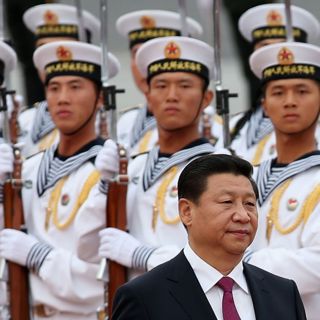
More than a year after Xi Jinping purged two senior generals in the People’s Liberation Army Rocket Force unit, China’s investigation into its military seems to be ongoing, with more scalps taken. In ...

9 Des 202435min

What's behind the Chinese migrant surge at the Darien Gap?

What's behind the Chinese migrant surge at the Darien Gap?

The Darien Gap is a 60 mile stretch of jungle that hundreds of thousands of migrants from all over South America trek through in order to reach the US-Mexico border. From there, they enter America in ...

25 Nov 202422min

Why Beijing is wary of a Russo-North Korean alliance

Why Beijing is wary of a Russo-North Korean alliance

There have been reports that some 11,000 North Korean troops are present in Russia and preparing to take part in the Russian invasion. While not acknowledged by either country, if true, this would mar...

11 Nov 202455min
Battle of Ideas – is China in decline?

Battle of Ideas – is China in decline?

** This episode of Chinese Whispers was recorded in front of a live audience as a part of the Battle of Ideas Festival 2024. **Is China in decline?I was born in China in the 90s, and growing up it fel...

28 Okt 20241h 35min

Corruption, power and the truth about my wife’s disappearance – with Desmond Shum

Corruption, power and the truth about my wife’s disappearance – with Desmond Shum

** On October 19, Cindy Yu and a panel of special guests will be recording a live Chinese Whispers at London's Battle of Ideas festival, talking the latest on China’s economic slowdown and asking – wh...

14 Okt 202443min
Will AI be the next arms race?

Will AI be the next arms race?

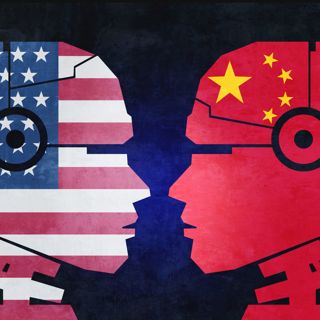
** On October 19, Cindy Yu and a panel of special guests will be recording a live Chinese Whispers at London's Battle of Ideas festival, talking the latest on China’s economic slowdown and asking – wh...

30 Sep 202448min

Populært innen Politikk og nyheter

giver-og-gjengen-vg
aftenpodden
aftenpodden-usa
forklart
lydartikler-fra-aftenposten
popradet
fotballpodden-2
stopp-verden
dine-penger-pengeradet
det-store-bildet
rss-gukild-johaug
nokon-ma-ga
hanna-de-heldige
rss-ness
e24-podden
aftenbla-bla
i-retten
frokostshowet-pa-p5
rss-dannet-uten-piano
grasoner-den-nye-kalde-krigen