Algorithms and lockdowns: how China's gig economy works
Chinese Whispers18 Apr 2022

Algorithms and lockdowns: how China's gig economy works

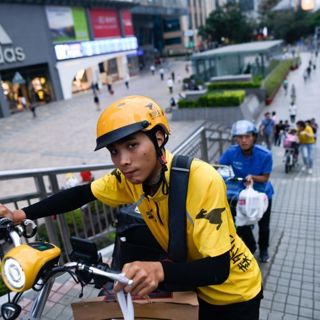
‘One Shanghai courier uses own 70,000 yuan to buy necessities for people’, one Weibo hashtag trended last week. Instead of being seen as a damning indictment on what the state’s strict lockdown has induced people to do, the courier was lauded as a community hero and the story promoted by the censored platform. These kuaidi xiaoge (‘delivery bros’) are most likely gig economy workers. The industry was already an integral part to the Chinese urbanite’s life before the pandemic, but Covid has consolidated that role, as low-paid and hardworking gig economy drivers literally became critical to the survival of millions.
The Chinese gig economy is in many ways more advanced. The services are more extensive (grocery shopping and even designated drivers – a stranger to drive your car home on drinking nights – have been the norm for years) and the algorithms are more ruthless (closely monitoring and continuously shaving off delivery times. ‘The pandemic really brought the plight of these workers into the mainstream consciousness for the first time’, Viola Rothschild, my guest on this episode, tells me.
She is a PhD candidate at Duke University, and one of the few people – academics and journalists alike – who have looked into the Chinese gig economy. I’ve known Viola for years – we first met when we read for a masters in contemporary Chinese studies together.
On the episode, we discuss what working conditions are like (she recommends this article), the interactions between the state and the private sector (the largest players in the field are Alibaba and Didi Chuxing, both companies that have been penalised by the Chinese government in recent years), and what the pandemic – and particularly the Shanghai lockdown – has done to workers. We discuss the government’s efforts to improve working environments, but Viola tells me:
‘What workers get through unionisation is really about what the state wants to give them, if their goals align with the state’s at any given time in terms of pressuring these companies. This is especially thrown into clear relief when we see how the state treats workers who try to organise outside of this apparatus’
By that, Viola is referring to the kuaidi xiaoge who’ve been arrested for organising their own unions – it’s still deeply ironic that the most successful purportedly Marxist state in the world today is deeply suspicious of workers creating their own unions.
But fundamentally, as I push back at Viola, the problem is not only the private companies or the communist state, but also the consumers who demand faster and cheaper services. In that, ‘I think that the Chinese gig economy has a tonne in common with its American and British, and worldwide, counterparts’, Viola says. I totally agree.

Become a Spectator subscriber today to access this podcast without adverts. Go to spectator.co.uk/adfree to find out more.


For more Spectator podcasts, go to spectator.co.uk/podcasts.


Contact us: podcast@spectator.co.uk

Hosted on Acast. See acast.com/privacy for more information.

Episoder(122)

Baby bust: what happens when China's population shrinks?

Baby bust: what happens when China's population shrinks?

China’s population is ageing. It’s estimated that a quarter of Chinese people will be elderly within three decades. The relaxing of its one child policy – first to two children in 2016 and then to thr...

21 Feb 202245min
The Xi-Putin alliance: how China and Russia are getting ever closer

The Xi-Putin alliance: how China and Russia are getting ever closer

In 2008, President George Bush was the star guest at Beijing’s opening ceremony. Fourteen years later, under a cloud of diplomatic boycotts led by the US, the guest of honour spot was filled instead b...

7 Feb 202241min
Politics and language: decoding the CCP

Politics and language: decoding the CCP

All political parties have weaknesses for jargon and buzzwords, and the Chinese Communist Party more than most. It's why Party documents – whether they be speeches, Resolutions or reports – can be har...

24 Jan 202259min
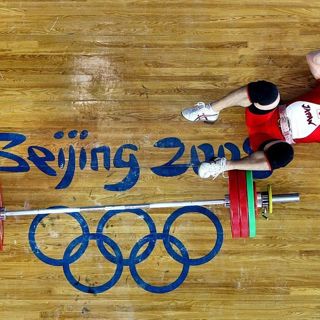
Why does China care about the Olympics?

Why does China care about the Olympics?

'If table tennis set the stage for China’s international diplomacy, then volleyball rebuilt the nation’s confidence', ran one article in the People's Daily around the time of the 2016 Rio Olympics. Sp...

10 Jan 202241min

The power of Weibo

The power of Weibo

When the tennis star Peng Shuai had a row with her former lover, the retired Party cadre Zhang Gaoli, she took to Weibo, the Chinese social media platform, where she had half a million followers. It w...

13 Des 202139min

What is it to be 'Chinese'?

What is it to be 'Chinese'?

Sun Yat-sen was the founding father of China's first republic, when the Qing dynasty was overthrown. Here he sits, with his successor Chiang Kai-Shek standing behind. They were two among many intellec...

29 Nov 202141min
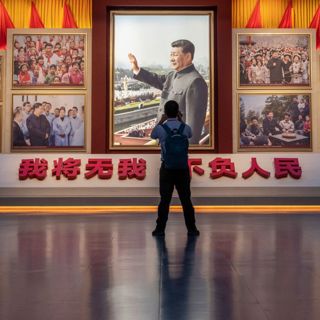
Is 'common prosperity' the road to common poverty?

Is 'common prosperity' the road to common poverty?

Deng Xiaoping used to say, 'let some people get rich first'. Four decades on from the start of his economic experiment with marketisation, Xi Jinping is, these days, talking about 'common prosperity' ...

15 Nov 202131min
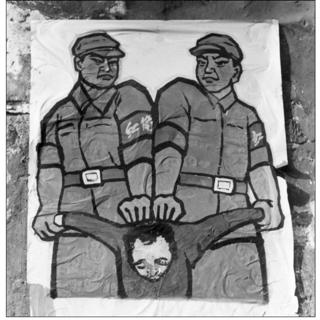
Healing the 'cancer' of the Cultural Revolution

Healing the 'cancer' of the Cultural Revolution

It's not easy to talk about the Cultural Revolution inside China - let alone teach it. In recent years, one of the last professors to have taught the period has been hounded out of her role at a top u...

1 Nov 202137min

Populært innen Politikk og nyheter

giver-og-gjengen-vg
aftenpodden
aftenpodden-usa
forklart
stopp-verden
popradet
nokon-ma-ga
rss-gukild-johaug
fotballpodden-2
lydartikler-fra-aftenposten
det-store-bildet
dine-penger-pengeradet
aftenbla-bla
hanna-de-heldige
rss-ness
rss-espen-lee-usensurert
rss-dannet-uten-piano
rss-utenrikskomiteen-med-bogen-og-grasvik
e24-podden
frokostshowet-pa-p5