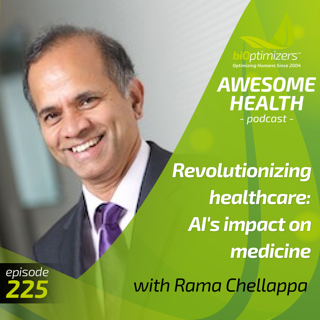

225: Revolutionizing healthcare: AI's impact on medicine - with Rama Chellappa

225: Revolutionizing healthcare: AI's impact on medicine - with Rama Chellappa

Artificial Intelligence (AI) has become an integral part of modern medicine, with its potential for helping diagnose and treat diseases and improve patient outcomes.

AI can be used in a variety of ways to improve medical care, from providing personalized medical advice to detecting medical errors.

Rama Chellappa, a computer vision researcher and professor at the University of Maryland, has been studying AI for nearly 40 years. He believes that AI can be used to provide better healthcare, with its ability to analyze vast amounts of data and make more accurate diagnoses.

AI can also be used to monitor and detect changes in patient health and alert doctors when changes occur.

For example, it can be used to monitor a patient's vital signs, such as pulse and blood pressure, and alert medical personnel if changes are detected.

It can also be used to analyze medical imaging, such as MRI and CT scans, for potential health issues.

In general, AI can be used to:

  • Detect tumors or other abnormalities in imaging.
  • Help with drug development and clinical trials, by monitoring patients and providing feedback to researchers.
  • Prevent and treat diseases, by providing personalized advice and recommendations to patients.
  • Track a patient's diet, exercise, and medication, and provide suggestions on how to improve their health.
  • Provide virtual counseling and therapy to patients, as well as provide support and resources to those in need.

AI can also be used to reduce medical errors, by providing more accurate diagnoses and monitoring patient health more closely.

In summary, AI is becoming increasingly important in the medical field, and its potential is only beginning to be realized.

As it continues to improve, it can provide medical professionals with more accurate diagnoses and provide patients with better care.

Can AI prevent pandemics in the future?

In today's world, the unpredictability of pandemics has become a major concern for many. AI has emerged as a potential solution to this problem, with many believing that it can be used to predict and prevent pandemics.

According to Rama Chellappa, when faced with a pandemic, it is difficult to expect that all decisions will be purely rational and perfect.

This is especially true in the case of the recent Covid-19 pandemic, where the full story and consequences were unclear.

Chellappa suggests that post-pandemic analysis is important in order to be better prepared for future pandemics. AI can be used to help with this analysis, by providing data-driven insights into the causes of pandemics and their effects.

AI can also be used to analyze data from social media sources, helping to identify potential pandemic-related trends and outbreaks.

AI can also be used to help with ethical considerations during pandemics. AI can be used to help ensure that decisions made by governments and private entities are fair and unbiased.

Additionally, AI can be used to monitor medical data and ensure that it is kept private and secure.

Finally, AI can also be used to help with the prevention of pandemics. AI can be used to analyze data on potential pandemic-causing agents, helping to identify and eliminate risks before they become a problem. AI can also be used to monitor health conditions and alert authorities to potential pandemic threats.

How AI can create harmony between Doctors and Patients

According to Chellappa, AI technology can help doctors provide more personalized care by continuously monitoring patient health data and providing reminders to take medications or exercise.

It can also help doctors remember important details about a patient's health by storing electronic health records, diagnostic images, and conversations between doctors and patients.

Chellappa believes that AI can help bridge the gap between patient and doctor by providing the doctor with quantitative data that can help inform decisions.

For example, AI can be used to analyze motion-related disorders or to determine how many calories are in a meal.

Chellappa also believes that AI can help foster trust between a doctor and patient by providing an impartial source of information.

On this podcast, you will learn about:

  • How can AI be used in medicine?
  • What is the difference between specific and general AI?
  • How can AI help doctors provide better care for their patients?
  • How can AI be used to create harmony?
    And so much more

EPISODE RESOURCES:

https://engineering.jhu.edu

https://www.press.jhu.edu

https://www.linkedin.com

https://scholar.google.com

Episoder(304)

288: Heal Fascia, Recharge Your Energy - with Cathy Goldstein

288: Heal Fascia, Recharge Your Energy - with Cathy Goldstein

In the wellness world, many chase surface-level fixes, like creams, cleanses, and crash diets, while ignoring the internal systems that actually drive energy, detoxification, and glow. Cathy Goldstein...

26 Jun 202553min

287: Thyroid & Liver: Key to Health - with Sara Banta

287: Thyroid & Liver: Key to Health - with Sara Banta

In today's world, many people struggle with weight gain, a slow metabolism, brain fog, and difficulty building muscle, despite healthy diets and exercise. Health expert Sarah Banta says the cause is o...

19 Jun 202558min
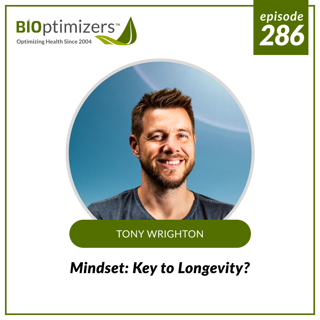
286: Mindset: Key to Longevity? - with Tony Wrighton

286: Mindset: Key to Longevity? - with Tony Wrighton

The high-tech world of biohacking often focuses on physical factors for longevity, like supplements and cold plunges. However, author and biohacker Tony Wrighton suggests that mindset plays a more sig...

12 Jun 20251h 10min
285: Hair Restoration: Myths and Advances - with Dr. Alan J. Bauman

285: Hair Restoration: Myths and Advances - with Dr. Alan J. Bauman

Hair plays a crucial role in our identity, often symbolizing youth and confidence. Dr. Alan Bauman, with nearly 30 years in hair restoration, has seen the profound impact of hair loss and emphasizes d...

22 Mai 20251h
284: Healing Addiction Now - with Jason Giles

284: Healing Addiction Now - with Jason Giles

Dr. Jason Giles, a board-certified addiction medicine expert, former anesthesiologist, and a person who has personally battled and overcome substance addiction, recently appeared on the *Awesome Healt...

16 Mai 20251h 43min
283: Slowing Aging, Mastering Health - with Chris Mirabile

283: Slowing Aging, Mastering Health - with Chris Mirabile

Chris Mirabile's journey to achieving a biological age 13.6 years younger than his chronological age is not a tale of luck but of deliberate action and deep scientific understanding. His transformatio...

8 Mai 202557min
281: Health Revolution - with Joe Cohen

281: Health Revolution - with Joe Cohen

Joe Cohen's journey to optimal health is a story of self-discovery and a drive to find answers beyond conventional medicine. Struggling with chronic health issues like fatigue, inflammation, and brain...

24 Apr 20251h 14min
280: Medical Errors: A Critical Issue - with Julie Siemers

280: Medical Errors: A Critical Issue - with Julie Siemers

Medical errors rank as the third leading cause of death in the United States, following heart disease and cancer. These preventable mistakes, including misdiagnoses, medication errors, and communicati...

20 Mar 202552min

Populært innen Helse

fastlegen
rss-gukild-johaug
lydartikler-fra-aftenposten
hvordan-har-du-det-mann
psykodrama
relasjonspodden-med-dora-thorhallsdottir-kjersti-idem
leger-om-livet
rss-garne-damer
hormonelle-frida
foreldreradet
morten-ramm-lar-kakla-ga-til-du-sovner
bak-fasaden-en-reise-i-livet-med-sykepleier-ine
hjernesterk
rss-lopedrommen
klimaks
g-punktet
rss-kull
helsetipspodden
treningsprat
rss-kunsten-a-leve