Exploring Custom Livestock Options

Exploring Custom Livestock Options

Introduction (Recording 9/14) (Airing 10/4)

  • Thank you for listening
  • Farm4Profit episode vs Farm4Fun Episode
  • Thank you again for suggesting topics for us to talk about on the podcast and keep them coming. Send those to farm4profitllc@gmail.com or find us all over social media.
  • We greatly appreciate your help in growing our audience.
  • The listener review today is brought to you by BW Fusion. They are focused on bringing innovative Fertility, Nutritional and Technology to the Ag marketplace. They combine their best-in-class products along with the 365 soil and tissue program to provide growers the tools necessary to address limiting factors in real time. Just like 365 Your reviews are how we monitor our podcast in real time.
    • Bigzac0627 – Love the podcast. Still catching up on it, keep up the great work guys!

What’s Working in AG – www.fieldpocket.com

helping the farming be more organized with record keeping

INSERT Brandt 30 second AD

Main topic – Breaking down the value of contract raising livestock.

  • Guest – Travis from Circle “U” Farms
    • Cattle and poultry farmer who is here today to help us provide an episode with straight forward information around custom raising livestock.
    • Where do you farm and tell us a little about yourself Travis!

  • Definition of contract growing livestock or custom raising livestock.
    • Production contracts specify services provided by a farmer for a contractor who owns the commodity while it is being produced. The contract covers (1) the services provided by the farmer, (2) the way the farmer is to be compensated for the services, and (3) the specific contractor responsibilities for provision of inputs. For example, farmers provide labor, housing, and equipment under livestock and poultry production contracts, while contractors provide such other inputs as feed, veterinary and livestock transportation services, and young animals.”
  • Livestock Integrator
    • Owner of the livestock placed for custom raising
  • Today we will try to provide perspective from 3 types of livestock.
    • Corey/Tanner – Pigs
    • Tanner/David – Cattle
    • Travis – Poultry
  • What does it take to get started?
    • Facilities
      • Size of building, amount of land
      • Costs to build or remodel
      • Ongoing maintenance
      • Storing Feed
    • Labor
      • Tasks frequently done
      • Hired?
      • Contractors?
      • Regular Hours?
    • Equipment
      • Tractor
      • Mower
      • Handling
      • Etc….
    • Contract
      • How do we get paid?
      • What are normal expectations?
        • Farmers Responsibilities
        • Integrators Responsibilities
      • Length?
        • Flock by flock, group by group, years
  • Is it profitable?
    • Hogs
    • Cattle
    • Poultry - Depending on the size of bird produced, five to seven flocks per year may be grown per house with flock sizes ranging between 22,000 and 26,000. Gross income per house will generally range from $28,000 to $35,000 annually. Thus, net returns per house are generally minimal ($3,000 to $10,000) during the 10- to 15-year payback period. Returns per house are much more substantial once the house is paid for.
  • Advantages
    • Reduced management responsibilities.
      • Still requires intense herd/flock management & record keeping, but less accounting
    • Less risk for production and less risk for loss of income
      • Also limits upside potential – poultry gets bonuses
    • Relatively fixed income; some insulation from price changes.
      • Utilities, fuel, labor, etc….not fixed costs
    • Less operating capital necessary
      • Still requires substantial capital at initial investment
    • Opportunity to participate in livestock production.
    • Opportunity to obtain additional income from the farm.
    • Borrowing capacity
      • Typically having a contract provides financial institutions more comfort when approving loans
    • Manure/Fertilizer
      • There is one sentence in the Clean Water Act that says "if you dictate the growing conditions, all the byproducts are yours" yet they cast the responsibility on the grower, so I don't know that I would consider the litter/manure to be a Pro for the grower.
    • Other personal advantages?
  • Disadvantages
    • Possibility of limited opportunity for growth.
      • New building and expansion are dictated by integrators' plans.
    • High fixed investment.
    • Pressure to keep up with technological changes in management, housing, and equipment.
    • Possible lack bargaining power.
    • You might have higher production costs in order to comply with contract terms, for example, because you must use higher priced inputs or special equipment
    • You may have less flexibility in how you farm if the contract provides guidelines on what practices must be followed
      • play by their rules or move on
    • Other disadvantages from personal experience?
  • Why Do Companies/Integrators Want to Use Production Contracts?
    • Quality Control –genetic technology, production methods, and inputs used, and help ensure uniformity and quality of the commodity produced.
    • Intellectual Property Protections –can control access to new technologies, thus serving as a form of intellectual property protection.
    • Confidential Arrangements –preserve the confidentiality of their marketing arrangements and even the identity of end-users.
    • Pricing Confidentiality –often use non-public pricing which conceals the premium earned for any special trait or the amount paid for performing services. This can create higher profits for the contractor and may limit the ability of producers to bargain for higher payments.
    • Lower Risks and Higher Profits – offers companies a way to invest in technologies like improved breeding & extend operations into production without having to own farmland or production facilities.
    • Move Capital Requirements from the Company to Farmers –allow companies to move the financial risk of building barns and buying equipment from their balance sheet to that of farmers. This reduces their financial risk in case market conditions call for reduced production
    • Lower Environmental Risk – Contracts allow companies to ensure the responsibility for manure and other waste, such as dead animals, remains with the farmer. Disposal of waste can be subject to local, state, and federal law
  • Things to consider
    • Remember the first rule of contracts: whoever writes the contract benefits most. Don’t assume a contract protects you. It might, but you shouldn’t assume so. The contractor who wrote the contract protected its interests. You must protect your own interests
    • Be sure any changes to a contract are made in writing. Never rely on oral communications to amend an agreement. Just because you believe a contract was changed by a conversation with the contractor or its representative, doesn’t make it true. If you and the other party agree to amend the terms of a contract, get the new terms in writing, and have the other party sign them
    • Keep good records of your performance under the contract. It is helpful to keep records and documents concerning your performance. Also, keep notes about any communications with the contractor. If a dispute arises, your records may provide the answers a court will need in order to resolve it.
  • What worked for the neighbor might not work for you
    • Is there anything else you would like our listeners to learn from our conversation today?
  • Summary
  • Challenge
  • Submit questions and topic suggestions - Like, Rate, Review, Share

Want Farm4Profit Merch? Custom order your favorite items today!

https://farmfocused.com/farm-4profit/

Don’t forget to like the podcast on all platforms and leave a review where ever you listen!

Website: www.Farm4Profit.com

Shareable episode link: https://intro-to-farm4profit.simplecast.com

Email address: Farm4profitllc@gmail.com

Call/Text: 515.207.9640

Subscribe to YouTube: https://www.youtube.com/channel/UCSR8c1BrCjNDDI_Acku5Xqw

Follow us on TikTok: https://www.tiktok.com/@farm4profitllc

Connect with us on Facebook: https://www.facebook.com/Farm4ProfitLLC/

Farm4Profit Media is not a financial, legal, or tax advisor. Content is provided for informational purposes only, and we serve solely as a platform for third-party opinions. Any actions taken based on this content are at your own risk.


Hosted by Simplecast, an AdsWizz company. See pcm.adswizz.com for information about our collection and use of personal data for advertising.

Denne episoden er hentet fra en åpen RSS-feed og er ikke publisert av Podme. Den kan derfor inneholde annonser.

Episoder(621)

Every Pass Has to Pay: Smarter Tillage & Fertilizer

Every Pass Has to Pay: Smarter Tillage & Fertilizer

Does tillage make money? The answer isn't simply yes or no. The KUHN team explains why the industry is moving away from “recreational tillage” toward more calculated, specialized passes designed to so...

14 Sep 53min
Beyond the Farm: How Regan & Andrea Are Building Their Own Path

Beyond the Farm: How Regan & Andrea Are Building Their Own Path

Andrea Fleming and Regan Bieber return to Farm4Fun to share how their lives and operations have changed since their previous appearances. Regan talks about stepping back into her South Dakota family f...

10 Sep 49min
How Do You Move 23,000 Bushels of Grain Per Hour

How Do You Move 23,000 Bushels of Grain Per Hour

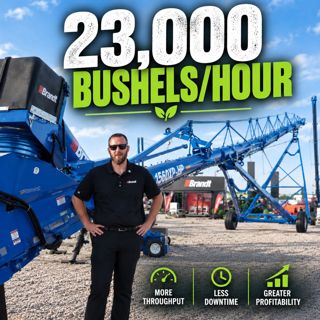
In this What’s Working in Ag segment, Tanner gets an up-close look at Brandt’s 16125 HP Swingaway Auger. With bins continuing to get taller and wider, Brandt says demand is growing for equipment capab...

9 Sep 8min
Thin Margins, Expensive Nitrogen & the Agronomy Decisions That Pay

Thin Margins, Expensive Nitrogen & the Agronomy Decisions That Pay

Dr. Eric Scherder of Corteva Agriscience returns to Farm4Profit to look back at the 2026 growing season and help farmers start building their 2027 agronomy plan. The conversation begins with cover cro...

7 Sep 59min
Farm Accidents, Family & Ranching with Calli Williams of TW Angus

Farm Accidents, Family & Ranching with Calli Williams of TW Angus

Calli Williams, the Millennial Rancher, joins Farm4Fun to share the story behind TW Angus and what it takes to build a first-generation cattle operation in South Dakota. Calli grew up around cattle, 4...

3 Sep 56min
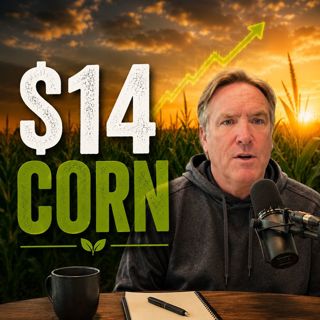
200-Bushel Corn at $14? Understanding the Opportunity

200-Bushel Corn at $14? Understanding the Opportunity

Greg Schreiner of Quick Organics returns with some major updates, including collaboration with USDA around the Common Organic System Plan and new tools designed to simplify one of the biggest headache...

2 Sep 10min

From Farm Trials to Equity: A Different Way to Build AgTech

From Farm Trials to Equity: A Different Way to Build AgTech

How does an agricultural idea go from someone's garage or university lab to something farmers actually want to use? AgLaunch's Margaret Oldham and North Central Iowa farmer Mark take Farm4Profit behin...

31 Aug 58min
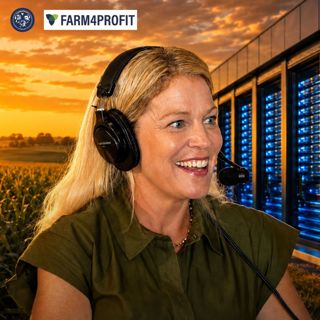
AI, Data & Trust with Amazon Exec Dr. Karen Hildebrand

AI, Data & Trust with Amazon Exec Dr. Karen Hildebrand

What does Amazon Web Services (one of the worlds largest companies) have to do with agriculture? A lot more than most farmers probably realize. Dr. Karen Hildebrand joins Farm4Profit at Tech Hub LIVE ...

27 Aug 57min

Populært innen Business og økonomi

stopp-verden
dine-penger-pengeradet
e24-podden
rss-penger-polser-og-politikk
lydartikler-fra-aftenposten
rss-borsmorgen-okonominyhetene
rss-skravla-gar
rss-pa-konto
pengepodden-2
utbytte
rss-orjasater
livet-pa-veien-med-jan-erik-larssen
finansredaksjonen
tid-er-penger-en-podcast-med-peter-warren
pengesnakk
stormkast-med-valebrokk-stordalen
lederpodden
morgenkaffen-med-finansavisen
rss-markedspuls-2
liberal-halvtime