Can philanthropy fill the hole left by USAID?

Can philanthropy fill the hole left by USAID?

Development programmes across the world are still reeling from the swingeing cuts to USAID, whilst other western nations such as the UK and Germany have announced plans to scale back their own aid commitments.


With Mike Bloomberg agreeing to fill the gap in climate funding left by the US's withdrawal from Paris, is it up to wealthy philanthropists to fill the hole of state funding? Is it realistic or appropriate for them to do so? And do competing interests from funders compromise work on the ground?

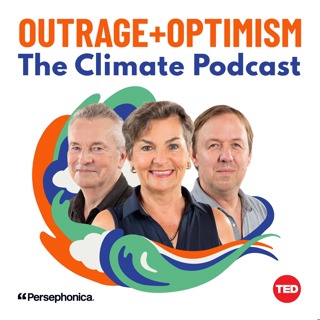
Tom Rivett-Carnac, Christiana Figueres and Paul Dickinson examine the potential for a slippery slope in which governments increasingly abdicate their responsibilities for minimising problems for people and the planet.


To delve into the topic more broadly, Christiana speaks to Helen Mountford, president and CEO of ClimateWorks Foundation, a global platform of researchers, strategists and grantmakers aiming to end the climate crisis by amplifying the power of philanthropy.


Since 2008, ClimateWorks has granted over $2 billion to more than 850 grantees in over 50 countries. Whether electric vehicles or clean cooling for air conditioning units, Helen cites examples of philanthropic programmes that not only tackle climate destruction but also improve standard of living for people. And after expressing some much justified outrage, Christiana and Helen agree on a moment of optimism for bottom-up community coordination.


Learn more:


📖 Read up on the ClimateWorks Clean Cooling programme.


🧑‍🎓Learn more about wider trends of slashing global aid


💬 Let us know whether you think philanthropy can or should fill the gap left by governments by sending us a voice note!


🎟️Be a part of it: We’re very excited to announce we are hosting an event at The Conduit Club in London on the 22nd March and we’d like to invite you, our wonderful listeners, to join us. We’ll have just been to see the West End play Kyoto, an incredible dramatisation of the 1997 Climate Summit and will be hosting an evening of thought-provoking conversations with key insiders who were in the room at this negotiation, plus activists and thought leaders who can help us think about how we shape the next chapter of climate action. Click here to find out how to get your tickets.


Follow us on social media for behind the scenes moments and to watch our videos:


Instagram @outrageoptimism

LinkedIn @outrageoptimism


Or get in touch with us via this form.


Producer: Jarek Zaba

Video Producer: Caitlin Hanrahan

Exec Producer: Ellie Clifford

Commissioning Editor: Sarah Thomas


This is a Persephonica production for Global Optimism and is part of the Acast Creator Network.

Hosted on Acast. See acast.com/privacy for more information.

Denne episoden er hentet fra en åpen RSS-feed og er ikke publisert av Podme. Den kan derfor inneholde annonser.

Episoder(394)

Flooded: Is extreme weather shifting the climate front lines?

Flooded: Is extreme weather shifting the climate front lines?

We used to be shocked by this. Hundreds of thousands displaced, millions affected, whole communities washed out. But somewhere along the way, extreme weather events have become background noise.This w...

26 Mar 36min

The Iran Crisis and the Price of Oil Dependence

The Iran Crisis and the Price of Oil Dependence

War in Iran has triggered another global energy shock. Once again, conflict has exposed the deep instability built into the fossil fuel system. And once again, the world is reminded that these fuels a...

19 Mar 41min

Water, Wildlife, and Climate’s Hidden Trade-Offs

Water, Wildlife, and Climate’s Hidden Trade-Offs

The climate crisis is not one problem. It is a crisis of water, food, energy, language, justice and power - all colliding at once. So how do we respond when climate solutions create new trade-offs of ...

12 Mar 39min
Who Pays? The Unfair Economics of Climate Finance

Who Pays? The Unfair Economics of Climate Finance

This week we acknowledge the US strikes on Iran and the escalation that has followed. The immediate human cost is what matters most right now. But this crisis is unfolding within a global system still...

5 Mar 34min

Catastrophe Apathy: Why understanding the climate crisis isn’t enough

Catastrophe Apathy: Why understanding the climate crisis isn’t enough

Climate concern is not the problem. Most people have it. What's missing is everything that turns concern into action - and understanding that gap turns out to be a lot more complicated than it looks.T...

26 Feb 35min

Trump Moves to Dismantle US Climate Law - Now Comes the Legal Test

Trump Moves to Dismantle US Climate Law - Now Comes the Legal Test

The Trump administration last week announced the repeal of the ‘endangerment finding’ - the 2009 determination that climate change threatens public health and welfare. It may sound arcane, but this pi...

19 Feb 45min

Who Wields Power Now?: Money, Movements and the Future of Climate

Who Wields Power Now?: Money, Movements and the Future of Climate

Who shapes climate action when old systems begin to strain? And where does power really sit - with governments, financial institutions, communities, or individuals?Christiana Figueres, Tom Rivett-Carn...

12 Feb 40min

Power, Money and Influence: The Hidden Forces Shaping Climate Action

Power, Money and Influence: The Hidden Forces Shaping Climate Action

Who really holds power in the climate transition? And how do money, politics, and influence shape the pace of change?In this episode, Christiana Figueres, Tom Rivett-Carnac and Paul Dickinson use some...

5 Feb 32min

Populært innen Politikk og nyheter

giver-og-gjengen-vg
aftenpodden
stopp-verden
forklart
aftenpodden-usa
popradet
fotballpodden-2
det-store-bildet
dine-penger-pengeradet
rss-gukild-johaug
lydartikler-fra-aftenposten
hanna-de-heldige
nokon-ma-ga
rss-ness
rss-espen-lee-usensurert
rss-penger-polser-og-politikk
rss-utenrikskomiteen-med-bogen-og-grasvik
aftenbla-bla
e24-podden
rss-dannet-uten-piano