Quantum-Classical Fusion: Unleashing Hybrid Computing's Power | IBM's QPA & Xanadu's Borealis Revolutionize Tech

Quantum-Classical Fusion: Unleashing Hybrid Computing's Power | IBM's QPA & Xanadu's Borealis Revolutionize Tech

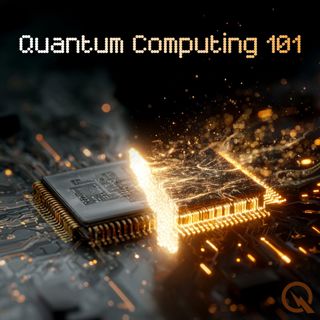
This is your Quantum Computing 101 podcast.

Quantum computing is evolving at breakneck speed, and the latest breakthrough in quantum-classical hybrid solutions is shaking up the industry. Just days ago, IBM unveiled a new hybrid architecture called Quantum Parallel Accelerator (QPA), a system designed to bridge the gap between quantum and classical processing in an unprecedented way.

Here’s why it’s a game-changer: QPA integrates classical high-performance computing (HPC) with fault-tolerant quantum processors, allowing each part of a computation to run on the most efficient system. Classical cores handle optimization tasks, data management, and error correction, while quantum circuits tackle exponential problems like molecular simulations and complex logistic solutions. Unlike previous approaches that treated quantum and classical as loosely connected systems, QPA introduces a real-time execution layer that dynamically shifts workloads as needed.

The breakthrough comes from a novel orchestration framework developed by researchers at IBM’s Zurich lab. It uses a custom-built compiler that optimally distributes tasks between CPUs, GPUs, and quantum processing units (QPUs) instantaneously. This means problem-solving doesn’t just leverage quantum power—it continuously adapts based on computation demands, reducing overall runtime and error rates.

One of the early implementations of QPA is in pharmaceutical research. Merck is already using the system to accelerate drug discovery simulations, cutting down processing times that would have taken months on classical supercomputers. Machine learning applications are also benefiting, particularly in training quantum neural networks for financial modeling and AI-driven cryptography.

Another key player in hybrid computing, Xanadu, has also made strides with its Borealis system, a photonic quantum solution that integrates classical reinforcement learning. Borealis enhances optimization algorithms for supply chain logistics, proving that hybrid solutions aren’t just theoretical—they’re solving real-world problems today.

The industry is moving past quantum supremacy debates. Instead, companies are focusing on quantum advantage—where quantum-classical hybrids are significantly outperforming purely classical computation. QPA and Borealis prove that we don’t need a 100% quantum computer to reap quantum benefits. By strategically fusing today’s most advanced tech, we’re unlocking new levels of computational power sooner than expected.

This shift means quantum computing won’t replace classical systems but rather enhance them. We’re entering an era where businesses, researchers, and developers must rethink how they design computations. The future isn’t fully quantum—but it is undoubtedly hybrid.

For more http://www.quietplease.ai


Get the best deals https://amzn.to/3ODvOta

This content was created in partnership and with the help of Artificial Intelligence AI

Episoder(281)

Quantum-Classical Hybrid Computing: The 303-Atom Protein That Changed Everything

Quantum-Classical Hybrid Computing: The 303-Atom Protein That Changed Everything

This is your Quantum Computing 101 podcast.# Quantum Computing 101: The Hybrid RevolutionGood afternoon, and welcome back to Quantum Computing 101. I'm Leo, and today we're talking about something tha...

30 Mar 3min

Quantum Hybrid Revolution: How IBM and NVIDIA Merged Qubits with GPUs to Crack Impossible Chemistry Problems in 2026

Quantum Hybrid Revolution: How IBM and NVIDIA Merged Qubits with GPUs to Crack Impossible Chemistry Problems in 2026

This is your Quantum Computing 101 podcast.Imagine this: just days ago, on March 26, 2026, IBM's quantum team at Yorktown Heights stunned the world by simulating the magnetic crystal KCuF3 on their He...

29 Mar 3min

Hybrid Quantum Revolution: How NVIDIA and ORCA Fused Light Speed Qubits With GPU Power at GTC 2026

Hybrid Quantum Revolution: How NVIDIA and ORCA Fused Light Speed Qubits With GPU Power at GTC 2026

This is your Quantum Computing 101 podcast.Imagine this: just days ago at NVIDIA's GTC 2026, ORCA Computing's photonic quantum systems fused with NVIDIA's cuTensorNet software right there at Imperial ...

27 Mar 4min

QIAPO Hybrid Revolution: How German Quantum-Classical Fusion Solves Real Logistics and Chip Manufacturing Nightmares

QIAPO Hybrid Revolution: How German Quantum-Classical Fusion Solves Real Logistics and Chip Manufacturing Nightmares

This is your Quantum Computing 101 podcast.Imagine you're deep in a Saarland University lab, the hum of cryostats vibrating like a cosmic heartbeat, lasers slicing through the chill as neutral atoms d...

25 Mar 3min

Quantum Meets GPU: How Hybrid Computing Just Cracked the Drug Discovery Code at GTC 2026

Quantum Meets GPU: How Hybrid Computing Just Cracked the Drug Discovery Code at GTC 2026

This is your Quantum Computing 101 podcast.Imagine this: just days ago, at NVIDIA's GTC 2026 in San Jose, UCL researchers, partnering with NVIDIA, Technical University of Munich, LMU, and IQM Quantum ...

23 Mar 3min

Classiq CUDA-Q Fusion: How 31 Qubits Slashed Options Pricing From 67 Minutes to 2.5 on NVIDIA GPUs

Classiq CUDA-Q Fusion: How 31 Qubits Slashed Options Pricing From 67 Minutes to 2.5 on NVIDIA GPUs

This is your Quantum Computing 101 podcast.Imagine this: just days ago, on March 16th, Classiq unveiled their game-changing integration with NVIDIA's CUDA-Q, slashing a 31-qubit financial options-pric...

22 Mar 4min

Quantum Meets GPU Power: How Classiq and NVIDIA Slashed Computing Time from 67 Minutes to 2.5

Quantum Meets GPU Power: How Classiq and NVIDIA Slashed Computing Time from 67 Minutes to 2.5

This is your Quantum Computing 101 podcast.Imagine standing in a cryogenic chamber, the air humming with the faint chill of liquid helium, as qubits dance in superposition like fireflies in a midnight...

20 Mar 3min

Quantum Meets Silicon: How NVIDIA GPUs Cut Options Pricing from 67 Minutes to 2.5 on 31 Qubits

Quantum Meets Silicon: How NVIDIA GPUs Cut Options Pricing from 67 Minutes to 2.5 on 31 Qubits

This is your Quantum Computing 101 podcast.Imagine this: just days ago, on March 18, 2026, IBM announced that quantum pioneer Charles H. Bennett received the A.M. Turing Award—computing's Nobel Prize—...

18 Mar 3min

Populært innen Politikk og nyheter

giver-og-gjengen-vg
aftenpodden
aftenpodden-usa
forklart
popradet
stopp-verden
det-store-bildet
fotballpodden-2
nokon-ma-ga
dine-penger-pengeradet
rss-gukild-johaug
hanna-de-heldige
lydartikler-fra-aftenposten
rss-ness
aftenbla-bla
rss-dannet-uten-piano
rss-utenrikskomiteen-med-bogen-og-grasvik
chit-chat-med-helle
rss-penger-polser-og-politikk
e24-podden