

#86 Understanding Primary Progressive Aphasia (PPA), An Introduction

#86 Understanding Primary Progressive Aphasia (PPA), An Introduction

In this episode, we talk about primary progressive aphasia (PPA) and its impact on individuals and their families. We cover the three types of PPA, the importance of early intervention and diagnosis, and the role of speech therapy in preserving language abilities.

Top takeaways:

- PPA is a neurodegenerative disorder that affects the brain's language centers, leading to progressive symptoms in speaking, listening, reading, and writing.

- The three types of PPA are agrammatic PPA, logopenic PPA, and semantic PPA, each with its unique challenges.

- Early intervention and diagnosis are crucial for individuals with PPA, and speech therapy plays a significant role in preserving language abilities and exploring new avenues for communication.

- Collaboration and a holistic approach to PPA treatment are essential, addressing emotional, relational, and financial implications, and providing support and resources for individuals and their families.

To uncomplicate aphasia and learn more about PPA, consider reaching out to LIFE Speech Pathology for personalized support and resources. Remember, you're not alone on this journey, and there are ways to build resilience. Check out "The 10 Ways to Build Resilience Checklist" for actionable steps to strengthen your resilience.

Thank you for your support and engagement with LIFE Speech Pathology®. Explore our services and approach at Do LIFE Speech Pathology. Listen to our Listen for LIFE Aphasia Podcast for more resources and inspiring stories.

Stay connected with us on YouTube, Facebook, and Instagram for updates and encouragement.

Together, let's uncomplicate aphasia.

Denne episoden er hentet fra en åpen RSS-feed og er ikke publisert av Podme. Den kan derfor inneholde annonser.

Episoder(216)

Why He Starts Tasks and Never Finishes Them: Executive Dysfunction | #214

Why He Starts Tasks and Never Finishes Them: Executive Dysfunction | #214

He didn't skip the ceiling on purpose. He didn't even know he'd stopped. Book a free connection call here.  That's the difference between disrespect and executive dysfunction, and it's the hardest of ...

10 Sep 15min

He's Not Backsliding. He's Just Out Of Fuel. | #213

He's Not Backsliding. He's Just Out Of Fuel. | #213

He did the whole thing Monday. Wednesday, he couldn't. If stroke recovery looks different every single day, some days willing, some days gone, here's the real reason, and it's not backsliding. If you'...

3 Sep 13min

He Could Say It Himself. He Doesn't. | #212

He Could Say It Himself. He Doesn't. | #212

He can order his coffee just fine at home. In public, something else happens. Understand what's actually going on in addition to aphasia and find the solution. If you've been ordering for him, speakin...

27 Aug 15min

He Hasn't Given Up, Even Though It Looks Like It | 211

He Hasn't Given Up, Even Though It Looks Like It | 211

Not every silence after a stroke means someone's given up.   If your husband has no motivation to do anything since his stroke or aphasia, here are the two most commonly confused reasons why, and the ...

20 Aug 14min

7 Reasons He Won't Get Off the Couch | #210

7 Reasons He Won't Get Off the Couch | #210

The couch isn't the diagnosis. It's the symptom of what's really happening in his brain after a stroke.   If he has no motivation to do anything since his stroke or aphasia, here are the seven real re...

13 Aug 24min

Your Good Intentions May Be Taking Their Aphasia Voice | #209

Your Good Intentions May Be Taking Their Aphasia Voice | #209

Do you finish his sentences or jump in during the pause? If you love someone with aphasia, this explains how rushing takes away his voice.  Although leaving would be easier, you stayed for love. Build...

6 Aug 10min
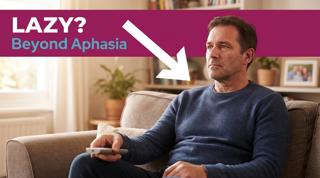
Is He Just Being Lazy After His Stroke? | #208

Is He Just Being Lazy After His Stroke? | #208

Why won't he do his exercises or try to talk anymore? If your husband has aphasia after a stroke, here is why he stopped trying, and it is not laziness.  You thought leaving would be easier. You staye...

30 Jul 15min

She Had a Hemorrhagic Stroke and Became a Super Survivor | #207

She Had a Hemorrhagic Stroke and Became a Super Survivor | #207

Judy Cage had a massive hemorrhagic stroke at 39. She walked out of the rehab hospital two months later. Her colleagues thought she'd been on a leave of absence. What was actually happening: she was ...

23 Jul 20min

Populært innen Helse

fastlegen
rss-gukild-johaug
psykodrama
hvordan-har-du-det-mann
lydartikler-fra-aftenposten
leger-om-livet
relasjonspodden-med-dora-thorhallsdottir-kjersti-idem
rss-skravla-gar
foreldreradet
bak-fasaden-en-reise-i-livet-med-sykepleier-ine
morten-ramm-lar-kakla-ga-til-du-sovner
hjernesterk
klimaks
hormonelle-frida
rss-lopedrommen
g-punktet
rss-kunsten-a-leve
apent-forhold
rss-loping-for-nybegynnere
hverdagspsyken