Episode #56 - The Crossroads Between The Lived Experience and Qualitative Research Methods: A Conversation with Tavistock Scholar Brent Archer

Episode #56 - The Crossroads Between The Lived Experience and Qualitative Research Methods: A Conversation with Tavistock Scholar Brent Archer

Jerry Hoepner, a faculty member in the department of Communication Sciences and Disorders at the University of Wisconsin – Eau Claire, speaks with Tavistock Scholar Dr. Brent Archer about the crossroads between the lived experience and qualitative research methods.

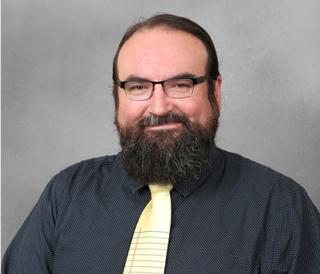
Dr. Brent E. Archer was born in Johannesburg, South Africa. He obtained his Master's degree in speech-language pathology (SLP) in 2006, and practiced in rural hospitals and schools. After immigrating to the US in 2011, he provided SLP services in nursing homes located in central New York state and Louisiana. In 2012, he enrolled in the Applied Speech and Language Sciences doctoral program at the University of Louisiana, Lafayette. Upon graduating in 2016, he assumed a position as an Assistant Professor in Communication Disorders and Sciences at Bowling Green State University. Brent's research interests include facilitated conversations for people with aphasia, the lived experiences of people and families living with aphasia and life participation approaches to treating aphasia.

In today's episode you will:

  • Learn about applications of qualitative research methodologies towards the Life Participation Approach to Aphasia.
    • Consider how we may best examine client values and perspectives.
    • Consider how we may support and reveal the perspectives of individuals with aphasia in guiding the research questions we ask.
    • Consider how qualitative methods like interpretive phenomenological analysis, ethnography, and conversation analysis may help researchers to uncover the lived experience of people with aphasia and their families.
    • Consider how information about the lived experience can help clinicians to better meet the needs of people with aphasia.
    • Hear examples of how community-based programming, such as training docents at the Toledo Museum of Art to provide aphasia-friendly tours, a program that Brent is involved with, can be a mutual platform for meaningful life participation (meeting an authentic need) and research in an authentic environment.
    • Consider opportunities to examine and support the recreational needs and desires of people with aphasia.
    • Consider roles that people with aphasia can play in their own groups and recovery process.

Download the Full Show Notes

Episoder(100)

Episode 135: From Technical Manuals to Poetry: In Conversation with Mark Harder

Episode 135: From Technical Manuals to Poetry: In Conversation with Mark Harder

This episode features Mark Harder, an individual with aphasia who has developed numerous programs to engage individuals with aphasia in returning to meaningful life activities. Mark shared his persona...

9 Des 202540min

Episode 134: Inner Speech and Aphasia with Mackenzie Fama

Episode 134: Inner Speech and Aphasia with Mackenzie Fama

Lyssa Rome talks with Dr. Mackenzie Fama about the experience of inner speech for people with aphasia.

18 Nov 202537min

Episode 133: Diversity Beyond Race with Jose Centeno

Episode 133: Diversity Beyond Race with Jose Centeno

In this episode you will discover: Diversity Means Everyone - Race is just one piece. Consider how age, language, immigration status, religion, sexual orientation, and geography intersect to shape ea...

14 Okt 202554min

Episode 132: Group Treatment with Dr. Liz Hoover

Episode 132: Group Treatment with Dr. Liz Hoover

Lyssa Rome is a speech-language pathologist in the San Francisco Bay Area. She is on staff at the Aphasia Center of California, where she facilitates groups for people with aphasia and their care part...

9 Sep 202540min

Episode 131: Math + Aphasia: A Conversation with Tami Brancamp and Dave Brancamp

Episode 131: Math + Aphasia: A Conversation with Tami Brancamp and Dave Brancamp

In this episode you will discover: Math IS Language - It's in Our Wheelhouse Math has syntax (order of operations), semantics (number meanings), and involves memory and executive function - all areas...

19 Aug 202556min

Episode 130: A tool for sneaky good interprofessional learning and collaboration: In Conversation with Hillary Sample and Dr. Steven Richman

Episode 130: A tool for sneaky good interprofessional learning and collaboration: In Conversation with Hillary Sample and Dr. Steven Richman

Take aways: Learn about Hilary and Steve's journey to enhance care for people with aphasia. Learn about communication access as a health equity issue. Identify systematic gaps and the disconnect betw...

15 Jul 202554min

Episode 129: "Helping myself by helping other people: In Conversation with Cindy "Yee" Lam-Walker"

Episode 129: "Helping myself by helping other people: In Conversation with Cindy "Yee" Lam-Walker"

In this episode you will: Discover how transitioning from participant to facilitator can accelerate personal recovery while creating meaningful support for others living with aphasia, demonstrating t...

24 Jun 202529min

Episode 128: From Participant to Leader: Community Building in Aphasia Recovery – A Conversation with Sherry Lovellette

Episode 128: From Participant to Leader: Community Building in Aphasia Recovery – A Conversation with Sherry Lovellette

Dr. Katie Strong of Central Michigan University has a vibrant conversation with Sherry Lovellette about how transitioning from participant to facilitator can accelerate personal recovery while creatin...

17 Jun 202531min

Populært innen Fakta

fastlegen
dine-penger-pengeradet
relasjonspodden-med-dora-thorhallsdottir-kjersti-idem
treningspodden
foreldreradet
jakt-og-fiskepodden
merry-quizmas
dopet
rss-sunn-okonomi
rss-strid-de-norske-borgerkrigene
hverdagspsyken
podme-bio-3
gravid-uke-for-uke
rss-kull
sovnlos
sinnsyn
tomprat-med-gunnar-tjomlid
dypdykk
rss-var-forste-kaffe
fryktlos