

Michael Kimmelman on Building More Beautiful and Equitable Cities
Time Sensitive7 Aug 2019

Michael Kimmelman on Building More Beautiful and Equitable Cities

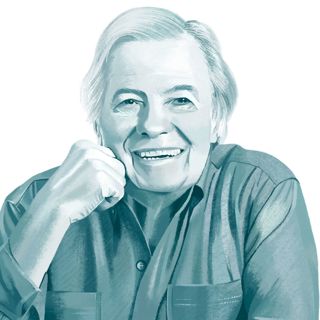
Michael Kimmelman does nothing in half measures. For more than 30 years, he has brought his assertive, culturally astute, historically sensitive perspective to The New York Times, which he has been contributing to since 1987 and joined full-time in 1990. During his tenure, he has written more than 2,000 articles, ranging from art criticism (he was its chief art critic from 1990 to 2007); to reporting from Europe and the Middle East (from 2007 to mid-2011, he was based in Berlin, where he was the “Abroad” columnist); to civically minded coverage of the built world, which has been his focus as the paper’s architecture critic the past seven years.

Throughout Kimmelman has displayed the rare ability to balance his writing in a way that shows him to be more far more level-headed than hot-headed. He is a classically trained pianist who plays with the well-rounded, even-keeled temperament and gentle skill of someone who clearly has done the work and put the hours in, and the same is true of his pieces in The New York Times. Consider his judicious take—note: not takedown—on a 1992 Julian Schnabel show at Pace gallery: “Mr. Schnabel's ambition and ego continue to outstrip his ability to paint. But there's something impressive about his sheer audacity, and just enough talent in him to make it impossible to dismiss his work out of hand. One wants to ignore it but can't.” Or, more recently, in 2014, his view on David Adjaye’s Sugar Hill social-housing complex in Harlem: “Sugar Hill is something of an extravagance and not easily replicable. But it posits a goal for what subsidized housing might look like, how it could lift a neighborhood and mold a generation.” Kimmelman more often than not sees the bigger picture and, at the same time, injects his own shrewd, deeply studied understanding of the subject at hand.

On this episode of Time Sensitive, Spencer Bailey speaks with Kimmelman about his lesser-known talents as a pianist, his three-plus-decade path at The New York Times, and his goal as architecture critic to build a greater discourse around designing cities that are better, healthier, and simply fairer for all.

Denne episoden er hentet fra en åpen RSS-feed og er ikke publisert av Podme. Den kan derfor inneholde annonser.

Episoder(163)

Simon Critchley on Giving Up the Fantasy of Mastery

Simon Critchley on Giving Up the Fantasy of Mastery

Who better to bring remarkable clarity to the density of Martin Heidegger’s Being and Time than the British philosopher and New School professor Simon Critchley? After decades spent studying and teach...

7 Okt 1h 37min
Jacques Pépin on “Taste Memory” and a Life in the Kitchen

Jacques Pépin on “Taste Memory” and a Life in the Kitchen

Jacques Pépin has long found beauty in simplicity—a glass of warm milk, a freshly sliced lemon, a garden-ripe tomato—and in transmitting knowledge from one hand to the next. Now 90, the French chef, a...

30 Sep 1h 14min

Iris van Herpen on Visualizing the Invisible Through Haute Couture

Iris van Herpen on Visualizing the Invisible Through Haute Couture

Iris van Herpen’s boundary-defying, otherworldly work exists somewhere between couture, sculpture, science, technology, architecture, and nature. For nearly two decades, the Dutch fashion designer has...

16 Sep 1h 19min

Dries Van Noten on the Meaning Found in Making

Dries Van Noten on the Meaning Found in Making

Dries Van Noten’s lifelong fascination with craft and making runs deep. He grew up in a multigenerational family of retailers and tailors in Antwerp, and in the 1980s, he was part of the famed avant-g...

24 Jun 59min

Felix Burrichter on Print’s Enduring Power in the Algorithmic Age

Felix Burrichter on Print’s Enduring Power in the Algorithmic Age

Through PIN–UP, the German-born, New York–based editor, curator, and founder Felix Burrichter continues to expand the possibilities of what an architecture magazine can be. He constructs intuitive bri...

17 Jun 1h 20min

Maria Popova on the Role of Chance in Shaping Our Lives

Maria Popova on the Role of Chance in Shaping Our Lives

Through her multifaceted work, the Bulgarian-born, Brooklyn-based writer, reader, and researcher Maria Popova, founder of the “free, ad-free, A.I.-free, fully human” website and newsletter The Margina...

10 Jun 58min

Sheila Hicks on Life as a Series of Portals

Sheila Hicks on Life as a Series of Portals

For our latest “site-specific” episode of Time Sensitive, Spencer meets Sheila Hicks inside her courtyard in Paris’s Saint-Germain-des-Prés neighborhood, where she has called home for more than 60 yea...

27 Mai 1h 4min

Valerie June on Joy as a Form of Resistance

Valerie June on Joy as a Form of Resistance

The singer-songwriter Valerie June has a gift for writing contemporary songs that feel timeless and as though they could also have existed at various points across the past century. Her expansive laye...

13 Mai 1h 13min

Populært innen Business og økonomi

stopp-verden
dine-penger-pengeradet
rss-penger-polser-og-politikk
rss-borsmorgen-okonominyhetene
e24-podden
rss-skravla-gar
rss-pa-konto
pengepodden-2
livet-pa-veien-med-jan-erik-larssen
finansredaksjonen
utbytte
rss-orjasater
tid-er-penger-en-podcast-med-peter-warren
lederpodden
morgenkaffen-med-finansavisen
liberal-halvtime
rss-fa-makro
rss-impressions-2
pengesnakk
okonomiamatorene