
Siri Hustvedt on the Value in Embracing Ambiguity
Time Sensitive1 Des 2021

Siri Hustvedt on the Value in Embracing Ambiguity

When Siri Hustvedt was 12 years old, she began reading 19th-century novels by Jane Austen, the Brontë sisters, Charles Dickens, and Mark Twain that were given to her by her Norwegian mother, and soon developed a passion for literature. She found great satisfaction in how these stories expanded her mind with new ideas and realms beyond. At 13, precociously enough, she decided she wanted to become a writer. Her interest in developing what she calls a “flexibility of mind” led her to eventually reading and studying works in a wide range of disciplines, including art history, philosophy, psychoanalysis, and neuroscience. Through her essays, poems, fiction, and nonfiction over the past five decades, Hustvedt’s aim has become clear: to bring together perspectives that might help her—and those who read her work—see the world differently.

Hustvedt’s efforts to break down barriers and build a diversity of knowledge have steered her toward an array of topics. Upon moving from her hometown of Northfield, Minnesota, to New York City in 1978 to attend Columbia University, from which she earned her Ph.D. in English literature, she worked as a waitress, a researcher for a medical historian, a model, and an artist’s assistant. She went on to write seven novels, including the international bestseller What I Loved (2004) and The Blazing World (2014), the latter of which won the Los Angeles Times Book Prize for Fiction in 2014. Since 1995, Hustvedt has written extensively about art and what comes from looking deeply at it, unpacking works ranging from Johannes Vermeer’s “Woman with a Pearl Necklace” (1662–1664) to the photorealistic paintings of Gerhard Richter​​.

Often, Hustvedt’s subject matter comes to her because it hits close to home. In her 2010 book The Shaking Woman or a History of My Nerves, she investigated the violent tremors that she first experienced in 2006 while delivering her father’s eulogy. Hustvedt (who with her husband, the novelist Paul Auster, has a daughter, the singer-songwriter Sophie Auster) has also long been interested in the peculiarities of motherhood, and more recently, the placenta, a subject she plans to explore at length in a future book.

On this episode, Hustvedt talks with Spencer about the mysteries and misunderstandings around gestation, maternity, and being a mother; books as friends; and the problems with putting up walls between disciplines.

Show notes:

Denne episoden er hentet fra en åpen RSS-feed og er ikke publisert av Podme. Den kan derfor inneholde annonser.

Episoder(163)

Simon Critchley on Giving Up the Fantasy of Mastery

Simon Critchley on Giving Up the Fantasy of Mastery

Who better to bring remarkable clarity to the density of Martin Heidegger’s Being and Time than the British philosopher and New School professor Simon Critchley? After decades spent studying and teach...

7 Okt 1h 37min
Jacques Pépin on “Taste Memory” and a Life in the Kitchen

Jacques Pépin on “Taste Memory” and a Life in the Kitchen

Jacques Pépin has long found beauty in simplicity—a glass of warm milk, a freshly sliced lemon, a garden-ripe tomato—and in transmitting knowledge from one hand to the next. Now 90, the French chef, a...

30 Sep 1h 14min
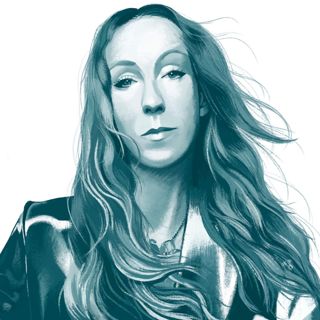
Iris van Herpen on Visualizing the Invisible Through Haute Couture

Iris van Herpen on Visualizing the Invisible Through Haute Couture

Iris van Herpen’s boundary-defying, otherworldly work exists somewhere between couture, sculpture, science, technology, architecture, and nature. For nearly two decades, the Dutch fashion designer has...

16 Sep 1h 19min

Dries Van Noten on the Meaning Found in Making

Dries Van Noten on the Meaning Found in Making

Dries Van Noten’s lifelong fascination with craft and making runs deep. He grew up in a multigenerational family of retailers and tailors in Antwerp, and in the 1980s, he was part of the famed avant-g...

24 Jun 59min

Felix Burrichter on Print’s Enduring Power in the Algorithmic Age

Felix Burrichter on Print’s Enduring Power in the Algorithmic Age

Through PIN–UP, the German-born, New York–based editor, curator, and founder Felix Burrichter continues to expand the possibilities of what an architecture magazine can be. He constructs intuitive bri...

17 Jun 1h 20min

Maria Popova on the Role of Chance in Shaping Our Lives

Maria Popova on the Role of Chance in Shaping Our Lives

Through her multifaceted work, the Bulgarian-born, Brooklyn-based writer, reader, and researcher Maria Popova, founder of the “free, ad-free, A.I.-free, fully human” website and newsletter The Margina...

10 Jun 58min
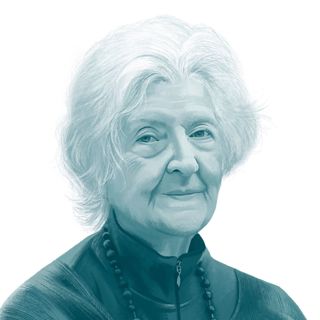
Sheila Hicks on Life as a Series of Portals

Sheila Hicks on Life as a Series of Portals

For our latest “site-specific” episode of Time Sensitive, Spencer meets Sheila Hicks inside her courtyard in Paris’s Saint-Germain-des-Prés neighborhood, where she has called home for more than 60 yea...

27 Mai 1h 4min
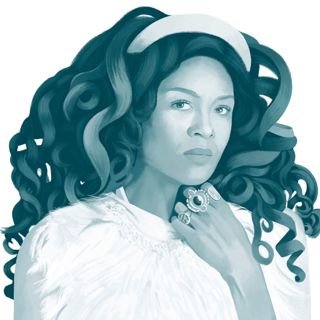
Valerie June on Joy as a Form of Resistance

Valerie June on Joy as a Form of Resistance

The singer-songwriter Valerie June has a gift for writing contemporary songs that feel timeless and as though they could also have existed at various points across the past century. Her expansive laye...

13 Mai 1h 13min

Populært innen Business og økonomi

stopp-verden
dine-penger-pengeradet
rss-penger-polser-og-politikk
e24-podden
rss-borsmorgen-okonominyhetene
rss-skravla-gar
pengepodden-2
rss-pa-konto
livet-pa-veien-med-jan-erik-larssen
rss-orjasater
tid-er-penger-en-podcast-med-peter-warren
utbytte
finansredaksjonen
lederpodden
morgenkaffen-med-finansavisen
liberal-halvtime
rss-impressions-2
rss-markedspuls-2
pengesnakk
okonomiamatorene