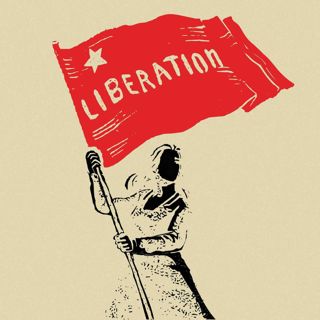
Antonio Gramsci: A communist revolutionary, organizer, and theorist
Liberation Audio13 Jan 2021

Antonio Gramsci: A communist revolutionary, organizer, and theorist

On January 1, 1916, just about 10 years before Mussolini’s fascist regime imprisoned him, Italian communist Antonio Gramsci published a short article in Avanti! (Forward!)–the Italian Socialist Party’s (PSI) daily newspaper–about why he “hates” New Year’s Day. Gramsci thought it was a forced celebration and said he “would like every hour of my life to be new.” Gramsci connected this desire with socialism, writing, “I await socialism for this reason too.” This short article gets circulated on the left every year, which is much less frequently than his key political contributions get thrown around. Indeed, Gramsci’s political writings have a long and contested life. Struggles over the legacy of Gramsci began before his body was cold. An original thinker, Gramsci made substantial contributions to Marxist theory–from inside the Marxist movement–including the concepts of hegemony and the organic intellectual. More than simply an theorist, then, Gramsci was an active participant in the class struggles of his time. As a member and crucial figure within first the PSI (which he joined in 1913) and, later, as a leader of the Communist Party of Italy (PCI), Gramsci helped spur the occupation of factories in Turin, founded the PCI at Livorno, and represented the Italian section of the Communist International at several of its key meetings in the 1920s. Capture by the fascist government of Mussolini put an end to his concrete involvement in the class struggle, but not to his theoretical contributions. The latter were especially concerning for the fascist government in the political showtrial, during which the state prosecutor said that, “For 20 years we must stop this brain from functioning.” Clearly the fascist prosecutors and judges understood that an idea can be a weapon for liberation as much as a rifle. What was eventually published as the Prison Notebooks, scribbled in the incredibly desperate conditions of a fascist prison cell, are a testament to Gramsci’s strength of will. On April 27, 1937, that strength of will gave out. Gramsci died in prison; his Prison Notebooks unpublished, unfinished, and incomplete. The incomplete nature of the Prison Notebooks represents a major problem for would-be scholars of Gramsci as well as revolutionaries looking to his work. As notebooks, they’re a compilation of essays–many of which are fragmentary–rather than a systematically developed line of thought. Moreover, Gramsci used deliberately difficult and non-Marxist terminology for the purpose of evading prison censors. All the troubles of translation and interpretation are exemplified in the confused application of Gramsci’s writing in practice. One of the great contradictions of Gramsci is that his thought has been consistently used to justify a rejection of revolutionary class struggle, despite having struggled in life so ferociously against reformist opportunism and ultra-left voluntarism as a long time member of the Communist Party. This article is not an attempt to wrestle with the long legacy of debates over interpretations of Gramsci–some of which are more academic and others of which have had serious political consequences–but rather to serve as an introduction to Gramsci’s life, historical context, and key ideas for a new emerging layer of “organic intellectuals.” We’ll focus in particular on Gramsci’s involvement in the revolutionary struggles of Italy in order to situate two of his key concepts: hegemony and the organic intellectual. We begin, then, with the the historical context that informed these concepts. Read the full article here: https://liberationschool.org/antonio-gramsci/

Denne episoden er hentet fra en åpen RSS-feed og er ikke publisert av Podme. Den kan derfor inneholde annonser.

Episoder(364)

Overproduction: The absurdity of suffering amidst surpluses

Overproduction: The absurdity of suffering amidst surpluses

A popular coal-miner’s riddle from the 1930s summarizes one of capitalism’s most visible and absurd contradictions. After a daughter asks her father why their home is so cold, he tells her they don’t ...

11 Jan 202517min

Thomas Sankara: Assessing the 3rd year of a revolutionary process

Thomas Sankara: Assessing the 3rd year of a revolutionary process

The eighth installment in Liberation School’s series of previously untranslated works by Thomas Sankara is published on the day Sankara was born in 1949. We would like to thank Bruno Jaffré and the ed...

3 Sep 202451min

The class struggle in every commodity: Use value and exchange value

The class struggle in every commodity: Use value and exchange value

Every year, Pew Research publishes a study on the U.S. population’s political priorities. Their 2024 report shows that, like the previous years, “no single issue stands out after the economy,” with al...

31 Jul 202415min

Capitalist contradictions and revolutionary struggle: An introduction

Capitalist contradictions and revolutionary struggle: An introduction

Hearing or reading about the “contradictions of capitalism” in an article or at a rally might be intimidating, like a foreign language or a term only a certain group can understand. While the contradi...

12 Apr 202419min

Capitalist urbanization, climate change, and the need for sponge cities

Capitalist urbanization, climate change, and the need for sponge cities

According to the United Nations Population Fund’s 2009 report, 2008 was the first time in history that over 50 percent of the world’s population resided in cities instead of rural areas. Because of th...

19 Des 202320min

Extradition of Alex Saab: U.S. takes effort to starve Venezuelans to new lows

Extradition of Alex Saab: U.S. takes effort to starve Venezuelans to new lows

Note: Following the original publication of this article, Alex Saab was extradited to Miami on October 16th 2021, and remains in prison awaiting an appeal. On March 18, The Cape Verde Supreme Court a...

18 Okt 20238min
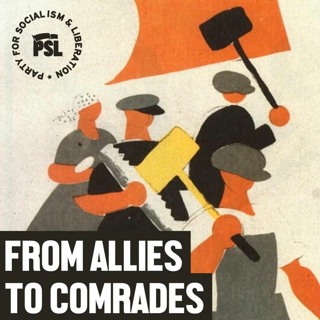
From allies to comrades

From allies to comrades

Despite its association with sovereign nations involved in wartime alliances, the term “ally” has become influential in activist circles on the US left. Attention to debates over what it means to be a...

16 Sep 202326min

Liu Liangmo: China’s anti-imperialist, anti-racist, Christian revolutionary (pt. 2)

Liu Liangmo: China’s anti-imperialist, anti-racist, Christian revolutionary (pt. 2)

Liu Liangmo’s story is as remarkable as it is unknown. An anti-imperialist, pro-Communist Christian, with a significant relationship to the Black Liberation Movement and the Indian Freedom Struggle, L...

26 Aug 202324min

Populært innen Politikk og nyheter

giver-og-gjengen-vg
aftenpodden
aftenpodden-usa
fotballpodden-2
forklart
popradet
stopp-verden
det-store-bildet
lydartikler-fra-aftenposten
rss-gukild-johaug
hanna-de-heldige
dine-penger-pengeradet
rss-ness
aftenbla-bla
e24-podden
rss-espen-lee-usensurert
rss-penger-polser-og-politikk
ta-dokumentar
nokon-ma-ga
grasoner-den-nye-kalde-krigen