69. Climate Action is a Team Sport with Uber's Dara Khosrowshahi

69. Climate Action is a Team Sport with Uber's Dara Khosrowshahi

It all started one cold night in Paris in December 2008. Two American friends visiting the city couldn’t get a taxi and this frustration inspired them to ask ‘what if’? What if it were possible to order a car ride with a simple tap on your mobile? Since both came from successful San Francisco tech backgrounds, it wasn’t surprising that this personal experience led to the creation of the company that is today the global tech on-demand transportation platform, Uber.

Now Uber is all grown up. It’s a publicly listed company, known for fuelling the gig economy – and has become embedded in our language and culture. The company operates in over 10,000 cities in 69 countries with a variety of services beyond personal rides including UberEats, cycle share schemes and more. Uber however has not stopped asking ‘what if’ and has chosen this crucial decade to set itself the challenge of integrating global climate targets with a seamless user experience.

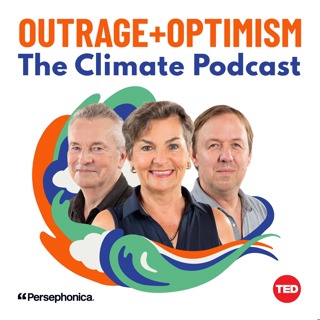
Outrage + Optimism hosts, Christiana Figueres, Tom Rivett-Carnac and Paul Dickinson talked to Uber’s CEO Dara Khosrowshahi about the company’s announcement this week of its commitment to meet the goal of net zero by 2040, a bold and necessary step to tackle the climate crisis. We are fascinated by the potential this has for changing the culture of the 5 million active drivers and for millions of Uber riders taking 18 million trips between them every day. To fuel the greener electrified system, app users will have the option to favour drivers of hybrid and electric cars through Uber Green, and in future, can select from different forms of mobility based on their priorities at any given moment – cost, time, or carbon. Uber says they will literally put the power on our fingertips to contribute to the greening of our cities. You can listen to the whole episode here.

Why does Uber’s announcement this week really matter to people who live in cities around the world?

The Paris Agreement, signed by 195 counties in 2015, calls for a unifying goal to reach net zero emissions by 2050. This is based on the global scientific consensus that doing so will allow us to stay below 1.5C of global warming, beyond which it becomes more economically and socially disruptive to live with the effects of climate change.

According to the EPA transportation accounts for 28.2% of the greenhouse gas emissions in the United States of America. Most of this comes from the emissions of cars, trucks, ships and other forms of transportation. Over 90% of the fuels used in transportation are from fossil fuels, mainly oil (or petroleum) sources. These not only cause damage to the environment, they cause the air pollution around the world that results in the premature deaths of 7 million people every year, according to the World Health Organisation. During the COVID-19 crisis, people with underlying respiratory health issues have been more likely to die when they contract the virus, so we need to converge the solutions to the climate change, inequality, health and economic crises.

Cities, where the vast majority of Uber rides take place, account for 70% of global carbon emissions and are home to more than half of all people on earth. As the world continues to urbanise, making cities sustainable is one of the biggest challenges – and opportunities – that we have. We will need resilient cities that support a good quality of life for all. By 2050 there will be 9 billion of us on the planet and 68% of us will live in cities. This means the frontlines of climate change are the cities of the world and moves like Uber’s will make cities more liveable and critically enable urban populations to survive and thrive in a new co-created urban economy.

By committing to net zero by 2040, Uber plans to play its part in tackling the most pressing issues facing humanity in this, the most decisive decade in human history. Dara Khosrowshahi’s letter explaining the company’s commitment is available to read here: https://www.uber.com/en-GB/newsroom/leadership/dara-khosrowshahi/

---

Our special musical guest, Emmanuel Jal:

Website | Music | Films

---

Keep up with Christiana here:

Instagram | Twitter | LinkedIn | Facebook

---

Tom Rivett-Carnac:

Instagram | Twitter | LinkedIn

Join @GlobalOptimism on social media!

Facebook | Twitter | Instagram | LinkedIn

---

Dont forget to hit SUBSCRIBE so you don't miss another episode of Outrage + Optimism!

Hosted on Acast. See acast.com/privacy for more information.

Denne episoden er hentet fra en åpen RSS-feed og er ikke publisert av Podme. Den kan derfor inneholde annonser.

Episoder(394)

Can the rules keep up?: Lawsuits, LLMs and the looming oil recession

Can the rules keep up?: Lawsuits, LLMs and the looming oil recession

An unprecedented government move to outrun the courts. A country racing to write AI into its constitution. And a global energy crisis that's already moved faster than any possible fix. Are our institu...

21 Mai 46min

The Jet Fuel Crisis: What’s next for aviation?

The Jet Fuel Crisis: What’s next for aviation?

Are flights across the world about to be grounded? Is a terrible war about to create an unlikely good news story for the climate? As conflict in the Middle East threatens the Strait of Hormuz, jet fue...

14 Mai 50min

David Attenborough at 100

David Attenborough at 100

Monarch butterflies crossing a continent. Peregrine falcons above Manhattan. A giant lemur most of the world had never heard of, until one man pointed a camera at it. For seventy years, Sir David Atte...

7 Mai 40min

“This is civilisation changing stuff”: Is AMOC the hardest climate story to tell?

“This is civilisation changing stuff”: Is AMOC the hardest climate story to tell?

Europe plunged into a deep freeze. Life as we know it upended. The 2004 film ‘The Day After Tomorrow’ gave a generation of terrified journalists an impossible task: how do you communicate the counter ...

30 Apr 45min

Beyond the Oil Crisis: What’s actually blocking the transition?

Beyond the Oil Crisis: What’s actually blocking the transition?

The Iran crisis continues to prove how dangerously dependent the global economy is on fossil fuels. But what will it actually take to move beyond them?In this episode, Christiana Figueres, Tom Rivett-...

23 Apr 43min

It’s In Our Blood: Communities vs Forever Chemicals

It’s In Our Blood: Communities vs Forever Chemicals

There are chemicals in your blood that weren't there fifty years ago. They are in the products you use, the water you drink, the food you eat - and for years, almost nobody was told the full truth abo...

16 Apr 42min

The Health Emergency Hiding in Rising Seas

The Health Emergency Hiding in Rising Seas

Sea-level rise is often spoken about in centimetres, forecasts and future scenarios. But what if we understood it as a health emergency that is already reshaping lives, harming bodies and minds, and d...

9 Apr 42min

Forecasting Disaster: A ‘super’ El Niño? And the case for early action

Forecasting Disaster: A ‘super’ El Niño? And the case for early action

As headlines warn of a possible ‘super El Niño’ later this year, we ask: how do we respond to a warning before it becomes a catastrophe? The last major El Niño brought record heat, crop failures, floo...

2 Apr 36min

Populært innen Politikk og nyheter

giver-og-gjengen-vg
aftenpodden
forklart
aftenpodden-usa
stopp-verden
popradet
fotballpodden-2
det-store-bildet
nokon-ma-ga
lydartikler-fra-aftenposten
rss-espen-lee-usensurert
rss-gukild-johaug
dine-penger-pengeradet
rss-ness
hanna-de-heldige
aftenbla-bla
rss-penger-polser-og-politikk
rss-dannet-uten-piano
rss-utenrikskomiteen-med-bogen-og-grasvik
frokostshowet-pa-p5