
6.6 - Norwegian Folk Music
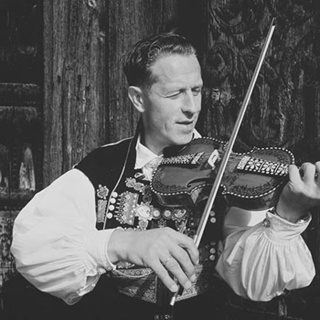
Learn Norwegian with professional teacher at Norwegian Community: https://learn.norwegiancommunity.com/link/rNSsCh Norwegian Community B1 level: https://learn.norwegiancommunity.com/link/rNSsCh?url=https%3A%2F%2Flearn.norwegiancommunity.com%2Fcourse%3Fcourseid%3Db1-komplett-kurs Norwegian courses: https://skapago.teachable.com/?affcode=26285_sxv09qeuNorwegian Textbook (Mysteriet om Nils): https://www.amazon.com/Mystery-Nils-Part-Norwegian-Beginners/dp/3945174007Email: Laernorsknaa@gmail.comTranscript: https://laernorsknaa.com/6-6-norwegian-folk-music/Support me here -->Patreon: https://www.patreon.com/laernorsknaaDonasjon (Paypal): Doner (paypal.com)For more content to learn Norwegian -->YouTube: https://www.youtube.com/channel/UCxdRJ5lW2QlUNRfff-ZoE-AAlle kulturer har sin folkemusikk. Folkemusikk er tradisjonell musikk fra et sted. I Norge er folkemusikk først dokumentert i litterære kilder fra norrøn tid. Det vil si at de første norske folkevisene som vi vet har eksistert er over 1000 år gamle. Den eldste norske folkevisa som har overlevd og som blei nedtegna kommer fra 1695. Den er altså over 300 år gammel. Likevel var det ikke før på 1800-tallet at sangene og folkevisene blei systematisk samlet og nedskrevet.Det finnes mange forskjellige former for folkemusikk. Det er altså ikke bare en sjanger av folkemusikk, men mange sjangre. For eksempel finnes det religiøse folkeviser, dansefolkeviser og bondeviser. Felles for alle sjangrene er at de tradisjonelt kommer fra norsk bondeliv. Norsk folkemusikk kommer altså fra norske bønder og det folk sang der i bondesamfunn. De vanligste instrumentene i norsk folkemusikk er hardingfele, altså en norsk variant av fiolin. Den eldste hardingfela som har overlevd kommer fra Hardanger på Vestlandet på 1600-tallet. Instrumentet ligner veldig på en fiolin, men har i tillegg til fire overstrenger, fire til fem underliggenderesonansstrenger. En streng er en tråd som man spiller på. Gitar er et annet instrument som også har strenger. På grunn av de ekstra strengene til hardingfela, så lager hardingfela litt annerledes lyd enn en fiolin. I tillegg til fela, så brukte man gjerne instrumentene langeleik, munnharpe og durspill.
19 Feb 202319min
6.5 - Trolls and Creatures from Norwegian folklore
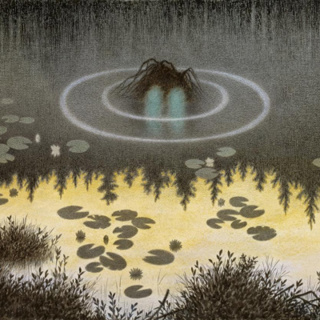
Learn Norwegian with professional teacher at Norwegian Community: https://learn.norwegiancommunity.com/link/rNSsCh Norwegian Community B1 level: https://learn.norwegiancommunity.com/link/rNSsCh?url=https%3A%2F%2Flearn.norwegiancommunity.com%2Fcourse%3Fcourseid%3Db1-komplett-kurs Norwegian courses: https://skapago.teachable.com/?affcode=26285_sxv09qeu Email: Laernorsknaa@gmail.com Transcript: https://laernorsknaa.com/6-5-trolls-and-creatures-from-norwegian-folklore/ Support me here --> Patreon: https://www.patreon.com/laernorsknaa Donasjon (Paypal): Doner (paypal.com) For more content to learn Norwegian --> YouTube: https://www.youtube.com/channel/UCxdRJ5lW2QlUNRfff-ZoE-A Folklore consists of legends and mythical stories told from generation to generation for a really long time. They have often been called, somewhat condescendingly, superstition, as the stories are not a part of an established religion. However, they have been used to create meaning from the nature and the world in which people have been living for centuries. In this episode, we will focus on five creatures from Norwegian folklore: trolls, the draug, the nøkken, hulders and tusser. A troll is a sort of giant which lives in mountains and forests. They are often described as big, ugly, terrifying and mean, and they are often the bad guys in the stories, for instance in many of the Askeladden fairy tales. Today, the troll has become a popular Scandinavian souvenir and can be found as small figurines in all souvenir shops in Norway. A rise of the troll can also be seen in popular culture, both in films and series. Trolljegeren, or The Troll Hunter, is one such example.
4 Feb 202312min
6.4 - Summer Sport in Norway
Email: Laernorsknaa@gmail.com Transcript: https://laernorsknaa.com/6-4-summer-sport-in-norway Support me here --> Patreon: https://www.patreon.com/laernorsknaa Donasjon (Paypal): Doner (paypal.com) For more content to learn Norwegian --> YouTube: https://www.youtube.com/channel/UCxdRJ5lW2QlUNRfff-ZoE-A Norway might be most known for snow, winter and cold, but many of the most popular sports are actually most suited for either a hall or during a nice, warm summer day. Looking at the 20 largest sports associations in Norway, 17 of them are best suited for summer or a temperate hall. That might be because many of the largest winter sports are united in the Ski Association, however, the Ski Association is only the third largest in Norway. Both the Football Association and the Handball Association are larger. The Football Association is the largest sports association in Norway with 375 000 members, which is over twice as large as the second largest one: the Handball Association with 139 000 members. Football in Norway is usually played on an artificial turf, as the climate most places is not suited for a grass field for most of the year. I myself have played football for over 13 years. Handball is the second largest sport and is also very popular in other European countries. We have a lot of sports halls, and when it’s cold and dark outside, it’s nice to go inside to a warm hall. Other large sports in Norway are gymnastics, track and field, swimming, cycling and various martial arts. Also, while Norway is mostly known for its achievements in winter sports, it also has some very good athletes in summer sports. Let’s look at the medals Norway won during the last Summer Olympics in Tokyo 2021. Norway won four golds, two silver, and two bronze, making us the 20th best nation in the world. Pretty good, considering that Norway is a small and cold country. Andreas Mol and Christian Sørum won gold in sand volleyball, Kristian Blummenfelt won gold in triatlon, Jakob Ingebrigtsen won the 1500m race, and maybe the most laudable achivments of them all: Karsten Warholm’s gold and world record in 400m hurdles. There are, as you can see, several really good athletes from Norway competing in summer sports as well.
5 Jun 202210min
6.3 - Winter Sports in Norway
Email: Laernorsknaa@gmail.com Transcript: https://laernorsknaa.com/6-3-winter-sports-in-norway Support me here --> Patreon: https://www.patreon.com/laernorsknaa Donasjon (Paypal): Doner (paypal.com) For more content to learn Norwegian --> YouTube: https://www.youtube.com/channel/UCxdRJ5lW2QlUNRfff-ZoE-A Norway is first and foremost known for its winter and snow. The geographical placement of the country makes it ideal for winter-sports. It is therefore no surprise that the country has done really well in the Winter Olympics, being the country with the most medals despite only having a population of five million people. In this episode, we will take a closer look at winter-sports in Norway. Firstly, I have to mention cross-country skiing. This might be unknown for many, as most people think of going down a hill when hearing “skiing”. However, in Norway, cross-country skiing is probably more popular. It is simply going up the hill with skis instead of going down the hill. Cross-country skiing is more about doing sports or enjoying nature, and during Easter, it is very normal for Norwegian families to travel to the mountains to enjoy some skiing. But, cross-country skiing is much harder than it looks. Technique and balance are both very important and it takes a lot of practice before being anywhere near mastering it. You can go cross-country skiing a lot of places in Norway and it is completely free to use the trails. For instance, Oslo and Trondheim both have really nice trails close by.
18 Apr 202212min
6.2 - Hiking Culture in Norway
Email: Laernorsknaa@gmail.com Transcript: https://laernorsknaa.com/6-2-hiking-culture-in-norway Support me here --> Patreon: https://www.patreon.com/laernorsknaa Donasjon (Paypal): Doner (paypal.com) For more content to learn Norwegian --> YouTube: https://www.youtube.com/channel/UCxdRJ5lW2QlUNRfff-ZoE-A In Norwegian, there is a saying that “when hiking, you are never angry”, or in Norwegian: “ut på tur, aldri sur”. This really summarizes Norwegian hiking culture. We love being in nature: hiking on mountain tops; walking in a forest; or taking a stroll by a lake. In Norway, we are raised in this hiking culture. But don’t worry if the thought of walking hours in the mountain don’t appeal to you; going on a “tur” can also be going for a short walk around the block. We often call it: “getting some fresh air”. Another great Norwegian saying that we use is “there is no bad weather, only bad clothes”. In Norway, we have to deal with quite a lot of harsh weather conditions. It can be very cold, wet and windy. However, this does not stop us from going out in nature. You simply have to put on enough clothes. And always bring some extra clothes when going out. Even though it might be sunny and warm when you start going, it tends to be considerably colder on top of the mountain. Therefore, always bring clothes that you can put on in case the weather changes or if it is cold at the summit. Hiking is also about having a good time, so bring some food and drinks. It is very normal to bring some coffee to enjoy at the top. Or how about the famous “hiking chocolate”. Kvikklunsj is a Norwegian chocolate that we often bring with us when hiking.
23 Feb 202217min
6.1 - Norwegian Dos and Don'ts
Email: Laernorsknaa@gmail.com Transcript: https://laernorsknaa.com/6-1-norwegian-dos-and-donts/ Support me here --> Patreon: https://www.patreon.com/laernorsknaa Donasjon (Paypal): Doner (paypal.com) For more content to learn Norwegian --> YouTube: https://www.youtube.com/channel/UCxdRJ5lW2QlUNRfff-ZoE-A Norwegians are not considered to be very polite. We seldom use phrases such as “excuse me”, “your are welcome” or “sorry”. Oftentimes, you will only hear a surprised “oi” if someone bumps into you on the street. Don’t be offended by this. In Norway, we simply don’t use these phrases as commonly as many other cultures. This also goes for many other things. For instance, it is not common to introduce other people to each other in Norway. It can be a bit awkward, but you are generally expected to introduce yourself. A common phrase in Norway is “the Norwegian arm”. It refers to stretching one’s arm to get something on the table. It is not considered to be impolite, even though you should not stretch too far. Many things considered impolite or rude in other cultures, are normal in Norway. One of the reasons for this might be the lack of hierarchical thinking in Norway. We generally consider everyone to be equal and address people in such a way too. You should not use titles when addressing people in Norway. “Mr.” or “Mrs.” are not used often nor are professional titles such as “professor” or “doctor”. We use the first name for people, even when addressing teachers or professors. Be aware that Norwegians also tend to do this in English, so don’t be offended if a Norwegian don’t use your preferred title. Also, you should generally not use titles when addressing people, even though they are your boss. Let’s go to some common questions in all countries: Do you haggle in Norway? And should you tip at cafes and restaurants? The answer to the prior is no, you generally don’t haggle in Norway. It is very uncommon, although you could try some places. However, be aware that you should be very polite when haggling and never overdo it or ask for too big discounts. It is very rude to haggle aggressively in Norway, so avoid this.
6 Jan 202214min
5.10 - Norwegian Christmas Food
Email: Laernorsknaa@gmail.com Transcript: https://laernorsknaa.com/5-10-norwegian-christmas-food Support me here --> Patreon: https://www.patreon.com/laernorsknaa Donasjon (Paypal): Doner (paypal.com) For more content to learn Norwegian --> YouTube: https://www.youtube.com/channel/UCxdRJ5lW2QlUNRfff-ZoE-A Norwegian Christmas food is very much bound by tradition, and two dishes dominate: Pork belly and Pinnekjøtt (literally: Stick meat). 88 % of Norwegians eat either Pinnekjøtt or pork belly on Christmas Eve, although some also eat lutefisk or Christmas cod. In this episode, we will look at Norwegian Christmas food, especially focusing on pork belly, pinnekjøtt and lutefisk. Pork belly is the most common dish to have on Christmas Eve and about 55 % of Norwegians eat it then. It is most commonly eaten in the eastern and middle parts of the country. The reason for this is that these areas are the traditional wheat areas of Norway, and therefore also the traditional swineherding regions. Nonetheless, pork belly is also eaten in other parts of the country, but less seldom on Christmas Eve. To make a really good pork belly, it is important that the temperature is just right and then you cook it for about two to three hours. It is important to turn the temperature up towards the end as you want the rind to become crispy. Pork belly is usually served with potatoes, sour cabbage, medister cakes and prunes or apples. On the western coast of Norway, Pinnekjøtt is more common. About 74% in the western part of the country eats Pinnekjøtt on Christmas Eve, compared to only 14% in the east. Pinnekjøtt is dried, salted and smoked mutton which is put in water the day before cooking it. It is usually damped rather than boiled. It is normally served with mashed rutabaga and potatoes. It is really old and has probably been eaten as a Christmas dish since the 16th century.
23 Des 202111min
5.9 - Taco and kebab
Thanks to Kari for lending her voice to the English parts! Email: Laernorsknaa@gmail.com Support me here --> Patreon: https://www.patreon.com/laernorsknaa Donasjon (Paypal): Doner (paypal.com) For more content to learn Norwegian --> YouTube: https://www.youtube.com/channel/UCxdRJ5lW2QlUNRfff-ZoE-A After World War II, people from different parts of the world started to come to Norway. This had an impact on Norwegian culture and food, as Norwegians were introduced to new food items and dishes. In this episode, we will focus on taco and kebab. Taco is a Mexican dish consisting of vegetables, sauce, beans and meat all wrapped up in a tortilla. It was first popularized in the US and industrialized by the fast-food chain Taco Bell in 1962. In Norway, Allert Middelthon, a grocer from Stavanger, started to import taco items for the American immigrants in the city. Most of the Americans worked in the oil sector and the 1960s saw the beginning of the Norwegian oil extraction. The summer Olympics in Mexico in 1968 contributed to the popularity of tacos in Norway, but it was still quite foreign to Norwegians. It was first between 1986 and 1994 that taco would become a common dish in Norway. In 1986, Mexico was the host of the World Cup in football (or soccer), and in 1994, Norway played a world cup game against Mexico. These events were both important for popularizing tacos in Norway, and today it has become an integral part of Norwegian food culture. 13 % of all Norwegians under the age of 40 eat tacos every single Friday. This phenomenon has created a new word in the Norwegian language: Friday tacos or “fredagstaco” in Norwegian. 84 % of all Norwegians under the age of 40 eat tacos at least once a month, clearly illustrating the importance of the dish in Norway. Another dish that has enjoyed great success in Norway is the kebab. Kebab is a dish that consists of salad and special kebab-meat which are wrapped in a wrap or a pita. It comes from Turkey and is popular all around the Middle East. It came to Norway via immigrants from the Middle East. The first store selling kebabs was founded in Oslo in 1957, but it did not enjoy much success. Frash Asmaro from northern Iraq is generally considered as the father of the kebab in Norway. He set up a kebab-store in Oslo in 1983. At this time, the kebab was already quite popular in continental Europe, but we were a bit more sceptic here up north. Nonetheless, the kebab became gradually more popular. Today, kebab stores can be seen all around the country, even in small towns. Actually, there is a lot of local patriotism linked to the question about where the best kebab in Norway can be found, illustrating how integrated it has become in Norwegian food culture.
5 Des 202111min