The Happy Few: Open Source AI (part one)

The Happy Few: Open Source AI (part one)

In the context of AI, what do we mean when we say ‘open source’? An AI model is not something you can straightforwardly open up like a piece of software; there are huge technical and social considerations to be made.

Is it risky to open-source highly capable foundation models? What guardrails do we need to think about when it comes to the proliferation of harmful content? And, can you really call it ‘open’ if the barrier for accessing compute is so high? Is model alignment really the only thing we have to protect us?

In this two-parter, Alix is joined by Mozilla president Mark Surman to discuss the benefits and drawbacks of open and closed models. Our guests are Alondra Nelson, Merouane Debbah, Audrey Tang, and Sayash Kapoor.

Listen to learn about the early years of the free software movement, the ecosystem lock-in of the closed-source environment, and what kinds of things are possible with a more open approach to AI.

Mark Surman has spent three decades building a better internet, from the advent of the web to the rise of artificial intelligence. As President of Mozilla, a global nonprofit backed technology company that does everything from making Firefox to advocating for a more open, equitable internet, Mark’s current focus is ensuring the various Mozilla organizations work in concert to make trustworthy AI a reality. Mark led the creation of Mozilla.ai (a commercial AI R+D lab) and Mozilla Ventures (an impact venture fund with a strong focus on AI). Before joining Mozilla, Mark spent 15 years leading organizations and projects that promoted the use of the internet and open source as tools for social and economic development.

More about our guests:

Audrey Tang, Cyber Ambassador of Taiwan, served as Taiwan’s 1st digital minister (2016-2024) and the world’s 1st nonbinary cabinet minister. Tang played a crucial role in shaping g0v (gov-zero), one of the most prominent civic tech movements worldwide. In 2014, Tang helped broadcast the demands of Sunflower Movement activists, and worked to resolve conflicts during a three-week occupation of Taiwan’s legislature. Tang became a reverse mentor to the minister in charge of digital participation, before assuming the role in 2016 after the government changed hands. Tang helped develop participatory democracy platforms such as vTaiwan and Join, bringing civic innovation into the public sector through initiatives like the Presidential Hackathon and Ideathon.

Alondra Nelson is s scholar of the intersections of science, technology, policy, and society, and the Harold F. Linder Professor at the Institute for Advanced Study, an independent research center in Princeton, New Jersey. Dr. Nelson was formerly deputy assistant to President Joe Biden and acting director of the White House Office of Science and Technology Policy (OSTP). In this role, she spearheaded the development of the Blueprint for an AI Bill of Rights, and was the first African American and first woman of color to lead US science and technology policy.

Sayash Kapoor is a Laurance S. Rockefeller Graduate Prize Fellow in the University Center for Human Values and a computer science Ph.D. candidate at Princeton University's Center for Information Technology Policy. He is a coauthor of AI Snake Oil, a book that provides a critical analysis of artificial intelligence, separating the hype from the true advances. His research examines the societal impacts of AI, with a focus on reproducibility, transparency, and accountability in AI systems. He was included in TIME Magazine’s inaugural list of the 100 most influential people in AI.

Mérouane Debbah is a researcher, educator and technology entrepreneur. He has founded several public and industrial research centers, start-ups and held executive positions in ICT companies. He is professor at Khalifa University in Abu Dhabi, and founding director of the Khalifa University 6G Research Center. He has been working at the interface of AI and telecommunication and pioneered in 2021 the development of NOOR, the first Arabic LLM.

Further reading & resources

Episoder(105)

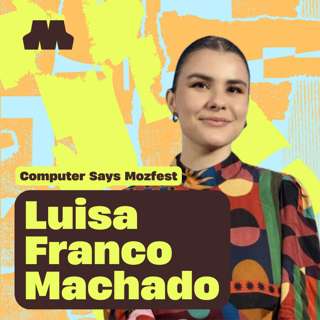
Luisa Franco Machado: Computer Says MozFest

Luisa Franco Machado: Computer Says MozFest

You can’t build a digital rights movement if you don’t know what you’re fighting for. Luisa says that we’re in a crisis of imagination, and that participation — the non-performative kind — is one big ...

16 Des 202521min
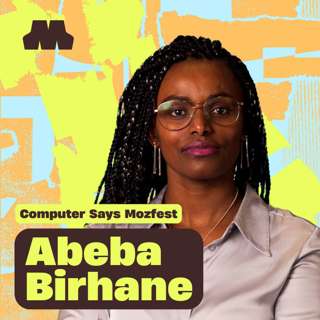
Abeba Birhane: Computer Says MozFest

Abeba Birhane: Computer Says MozFest

Earlier this year Abeba Birhane was asked to give a keynote at the AI for Good Summit for the UN — and at the eleventh hour they attempted to censor any mention of genocide in Palestine, and their Big...

15 Des 202517min
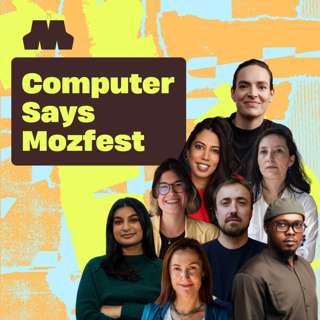
Computer Says MozFest 2025

Computer Says MozFest 2025

Mozilla Festival 2025. Barcelona. Three days in a bonanza of interesting people, ideas, and technology politics. These were our highlights!More like this: FAccT 2025 episodes one and twoThis is an ext...

12 Des 202553min
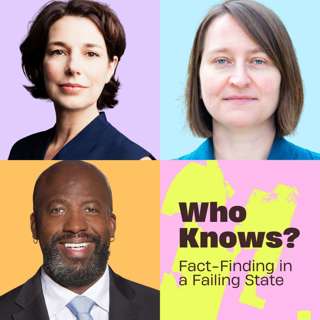
Who Knows? Fact-Finding in a Failing State w/ HRDAG and Data & Society

Who Knows? Fact-Finding in a Failing State w/ HRDAG and Data & Society

Everything is happening so fast. And a lot of it’s bad. What can research and science organizations do when issues are complex, fast-moving, and super important?More like this: Independent Researchers...

5 Des 202559min

Who Knows? Independent Researchers in a Platform Era w/ Brandi Geurkink

Who Knows? Independent Researchers in a Platform Era w/ Brandi Geurkink

Imagine doing tech research… but from outside the tech industry? What an idea…More like this: Nodestar: Turning Networks into Knowledge w/ Andrew TraskSo much of tech research happens within the tech ...

28 Nov 202548min

Tres Publique: Algorithms in the French Welfare State w/ Soizic Pénicaud

Tres Publique: Algorithms in the French Welfare State w/ Soizic Pénicaud

Governments around the world are using predictive systems to manage engagement with even the most vulnerable. Results are mixed.More like this: Algorithmically Cutting Benefits w/ Kevin De LibanLuckil...

21 Nov 202552min
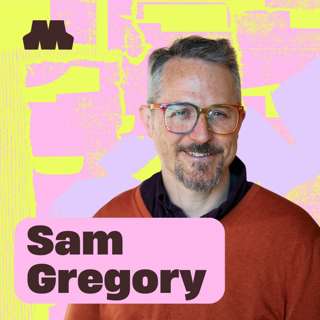
Straight to Video: From Rodney King to Sora w/ Sam Gregory

Straight to Video: From Rodney King to Sora w/ Sam Gregory

Seeing is believing. Right? But what happens when we lose trust in the reproductive media put in front of us?More like this: The Toxic Relationship Between AI and Journalism w/ Nic DawesWe talked to a...

14 Nov 20251h
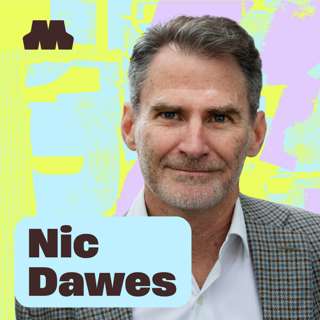
The Toxic Relationship Between AI & Journalism w/ Nic Dawes

The Toxic Relationship Between AI & Journalism w/ Nic Dawes

What happens when AI models try to fill the gaping hole in the media landscape where journalists should be?More like this: Reanimating Apartheid w/ Nic DawesThis week Alix is joined by Nic Dawes, who ...

7 Nov 202541min

Populært innen Samfunn

rss-spartsklubben
giver-og-gjengen-vg
aftenpodden
konspirasjonspodden
aftenpodden-usa
popradet
rss-nesten-hele-uka-med-lepperod
rss-henlagt-andy-larsgaard
lydartikler-fra-aftenposten
alt-fortalt
wolfgang-wee-uncut
grenselos
rss-dannet-uten-piano
min-barneoppdragelse
fladseth
frokostshowet-pa-p5
rss-dette-ma-aldri-skje-igjen
synnve-og-vanessa
rss-frekvens-med-anine-olsen
opptur-med-annette-og-ingeborg