
Cover Crops Research and Strategy
Soil Sense9 Feb 2021

Cover Crops Research and Strategy

We were able to capture some of the best information out there about soil health at the DIRT Workshop last December thanks to some fantastic speakers and some tremendous audience engagement.Today’s episode focuses on cover crops. You’ll hear from:

  • Dr. Hans Kandel, a South Dakota State University Professor and Extension Agronomist
  • Dr. Matt Ruark, a soil scientist from the University of Wisconsin at Madison
  • Dr. Dave Franzen, a professor and extension soil health specialist also at North Dakota State University

“There is not one cocktail or species that does best. It depends really on the wishes of the producer but there are many opportunities.” - Dr. Hans Kandel

Dr. Kandel prefers to think about using cover crops as a “mimicking of nature.” Multi-species growth is a natural occurrence in the prairie region so growing multiple species simultaneously is naturally supported by the ecosystem. He explains that different cover crops are better suited for different outcomes. If you are looking for something to be sustained throughout the winter then a winter hardy crop like winter rye, winter wheat or camelina may be the best fit. For added nitrogen, peas may work best. Another consideration may be susceptibility to potential disease transfer. Mixes of species have the potential of achieving multiple goals but they also add the concern that you may be watering down some specific benefits by adding more plants that will compete for the same resources. Ultimately the main priority for the producer helps inform the best cover crop and the best timing and method for seeding.

“What gets me the most excited about evaluating cover crops is trying to get the use of legumes in rotation because it does have that short term economic benefit of supplying some nitrogen.” - Dr. Matt Ruark

Dr. Ruark focused his discussion on the benefits of biomass with legumes and how to best manage their growth. “That’s the trick with legumes….for me the legumes are strictly a biomass game….The more biomass you have the more nitrogen release you have.” Of course sometimes that biomass can be overwhelming. Dr. Ruark suggests that you can either use excess biomass as a forage source, you can terminate early to reduce the amount of biomass produced or you can adjust your nitrogen fertilizer application. He does highlight that we are still at the “mercy of the weather patterns, especially in the spring” for growth of cover crops after harvest so control is never absolute.

“I think just being aware and knowing that you’ve got to manage the thing instead of just let it grow until you plant. You have to keep your eyes open and use some common sense when you have cover crops in the west.” - Dr. Dave Franzen


Connect with Soil Sense:

Soil Sense Podcast is hosted by Tim Hammerich of the Future of Agriculture Podcast.


Denne episoden er hentet fra en åpen RSS-feed og er ikke publisert av Podme. Den kan derfor inneholde annonser.

Episoder(150)

Advancing Regenerative Practices in Ukraine

Advancing Regenerative Practices in Ukraine

Fertile soil is something Ukraine has always been known for. But wind and water erosion are causing a soil loss of approximately 15 tons per hectare every year. Today we’re joined by Oleksandr, a farm...

11 Aug 202536min
Precision Agriculture For Soil Health In Argentina

Precision Agriculture For Soil Health In Argentina

Soil health on a large scale, can really be enhanced through data and digital tools. It’s pretty incredible to hear how that is being applied to farms like the one you’re going to hear from today in A...

30 Jul 202532min
The Pursuit of Regenerative Potatoes in Canada

The Pursuit of Regenerative Potatoes in Canada

Farmers and agronomists have a lot on their plate just to produce a profitable crop every year. So what happens when their buyers start requesting they also change practices to move in a more regenera...

15 Jul 202532min
Preventing Erosion and Boosting Fertility in China

Preventing Erosion and Boosting Fertility in China

In order for soil health to go from words and ideas to actions and outcomes, there needs to be support at the farm level - whether that’s a corn farmer in the U.S. or a peanut farmer in rural Northeas...

3 Jul 202532min
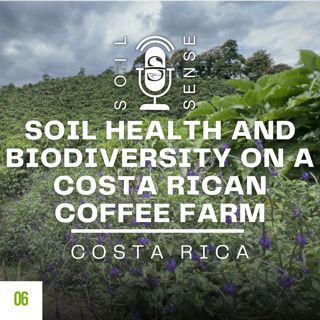
Soil Health and Biodiversity on a Costa Rican Coffee Farm

Soil Health and Biodiversity on a Costa Rican Coffee Farm

Costa Rica is home to an incredible amount of natural biodiversity. But it’s also an ideal spot to grow some of the world’s favorite crops, like coffee. How can farmers conserve biodiversity while sti...

17 Jun 202535min
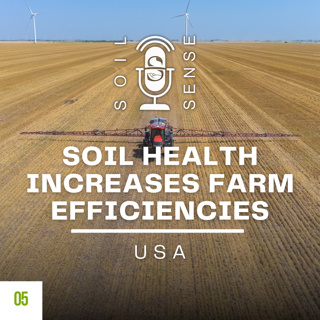
Soil Health Increases Farm Efficiencies in the USA

Soil Health Increases Farm Efficiencies in the USA

Oftentimes soil health practices may be thought of as “one more thing” to incorporate on the farm. But in this episode, producer Matt tells us that it would be very difficult for him to farm as much l...

3 Jun 202533min
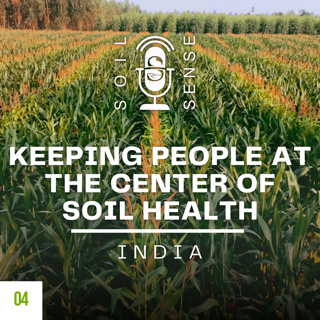
Keeping People at the Center of Soil Health in India

Keeping People at the Center of Soil Health in India

Despite a lot of exciting momentum behind regenerative agriculture, it remains necessary that that enthusiasm reaches farmers and leads to real outcomes. But how does that information get shared in a ...

20 Mai 202529min

Collaborating on Biodiversity and Technology in Germany

Collaborating on Biodiversity and Technology in Germany

For a long time, Europe has had very high standards for environmental sustainability and is really concerned about biodiversity. So how does a multi-generational family farm accommodate these interest...

5 Mai 202533min

Populært innen Vitenskap

fastlegen
tingenes-tilstand
romkapsel
abels-tarn
jss
liberal-halvtime
vett-og-vitenskap-med-gaute-einevoll
rekommandert
villmarksliv
dekodet-2
sinnsyn
fjellsportpodden
rss-overskuddsliv
rss-rekommandert
tomprat-med-gunnar-tjomlid
rss-inn-til-kjernen-med-sunniva-rose
kvinnehelsepodden
hva-er-greia-med
rss-lundqvist-podden
diagnose