Barley for Malting Premiums and Soil Health with Dr. Dave Franzen and Anthony Thilmony
Soil Sense24 Jan 2022

Barley for Malting Premiums and Soil Health with Dr. Dave Franzen and Anthony Thilmony

One of the things we’ve learned over the years of doing this podcast is that we love episodes that feature both a farmer and a researcher to really capture both the complexity and the practicality of farming and soil health. That’s exactly what we have today, specifically talking about barley, and the work being done to make barley a more desirable part of the rotation to build healthier soils.

Anthony Thilmony is a 4th Generation farmer in the Valley City, North Dakota area. He has a masters in Weed Science and has worked in both research and sales before returning to the farm full time. Joining Anthony is Dr. Dave Franzen, a Soil Scientist with North Dakota State University in Extension. Dave and Anthony talk about the advantages of barley, why it hasn’t won more acres in the past, and the research that’s being done to help farmers grow more marketable barley for malting.

“I think this is exciting because barley does have a fit with the soil conditions we have in this state. Especially as you go into this rolling territory where we have the variable soils. We have saltier soils and barley is a crop that is very agronomically acceptable, but we quit raising it because we got tired of the marketing side.” -Anthony Thilmony

For farmers like Anthony, barley used to be a common crop before corn started taking over acreage in the area. But Dave says barley still has a lot of advantages over other crops if some of the disadvantages can be mitigated, which is what his research is all about. This win-win between capitalizing on the soil health benefits of barley while still raising a quality crop that can make grade for malting premiums could allow more farmers to have their cake and eat it too.

“The overriding thing was the soil health benefits of a short season crop. And it certainly did that. We could grow a ton of dry matter or so after barley compared to a few hundred pounds in the corn and soybeans. So if you're wanting to draw down on the water in a system so that you don't get salts, you mitigate salts so that you can get in there a little bit earlier in the springtime, the barley is probably part of that.” -Dr. Dave Franzen

This Week on Soil Sense:

  • Meet Anthony Thilmony, a fourth generation North Dakota farmer, and Dr. Dave Franzen, a Soil Scientist with North Dakota State University in Extension
  • Discover the historical context and future potential for the use of the barley in North Dakota operations

Connect with Soil Sense

Soil Sense Podcast is hosted by Tim Hammerich of the Future of Agriculture Podcast.

Denne episoden er hentet fra en åpen RSS-feed og er ikke publisert av Podme. Den kan derfor inneholde annonser.

Episoder(150)

Advancing Regenerative Practices in Ukraine

Advancing Regenerative Practices in Ukraine

Fertile soil is something Ukraine has always been known for. But wind and water erosion are causing a soil loss of approximately 15 tons per hectare every year. Today we’re joined by Oleksandr, a farm...

11 Aug 202536min
Precision Agriculture For Soil Health In Argentina

Precision Agriculture For Soil Health In Argentina

Soil health on a large scale, can really be enhanced through data and digital tools. It’s pretty incredible to hear how that is being applied to farms like the one you’re going to hear from today in A...

30 Jul 202532min
The Pursuit of Regenerative Potatoes in Canada

The Pursuit of Regenerative Potatoes in Canada

Farmers and agronomists have a lot on their plate just to produce a profitable crop every year. So what happens when their buyers start requesting they also change practices to move in a more regenera...

15 Jul 202532min
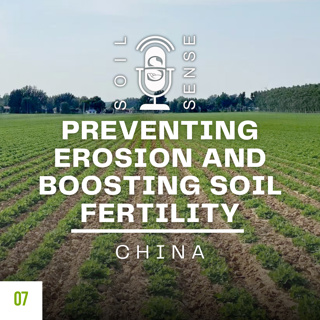
Preventing Erosion and Boosting Fertility in China

Preventing Erosion and Boosting Fertility in China

In order for soil health to go from words and ideas to actions and outcomes, there needs to be support at the farm level - whether that’s a corn farmer in the U.S. or a peanut farmer in rural Northeas...

3 Jul 202532min
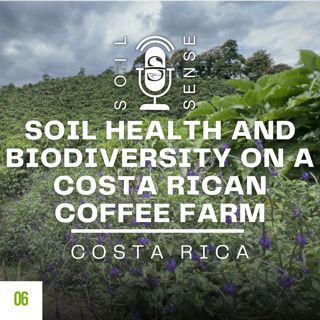
Soil Health and Biodiversity on a Costa Rican Coffee Farm

Soil Health and Biodiversity on a Costa Rican Coffee Farm

Costa Rica is home to an incredible amount of natural biodiversity. But it’s also an ideal spot to grow some of the world’s favorite crops, like coffee. How can farmers conserve biodiversity while sti...

17 Jun 202535min
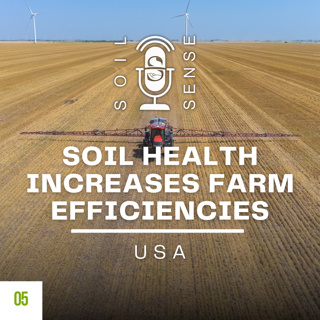
Soil Health Increases Farm Efficiencies in the USA

Soil Health Increases Farm Efficiencies in the USA

Oftentimes soil health practices may be thought of as “one more thing” to incorporate on the farm. But in this episode, producer Matt tells us that it would be very difficult for him to farm as much l...

3 Jun 202533min
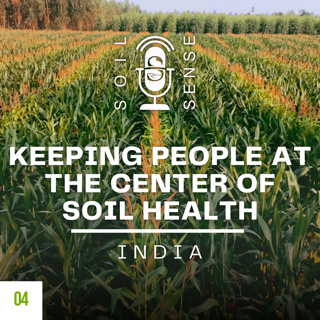
Keeping People at the Center of Soil Health in India

Keeping People at the Center of Soil Health in India

Despite a lot of exciting momentum behind regenerative agriculture, it remains necessary that that enthusiasm reaches farmers and leads to real outcomes. But how does that information get shared in a ...

20 Mai 202529min

Collaborating on Biodiversity and Technology in Germany

Collaborating on Biodiversity and Technology in Germany

For a long time, Europe has had very high standards for environmental sustainability and is really concerned about biodiversity. So how does a multi-generational family farm accommodate these interest...

5 Mai 202533min

Populært innen Vitenskap

fastlegen
tingenes-tilstand
romkapsel
abels-tarn
jss
liberal-halvtime
vett-og-vitenskap-med-gaute-einevoll
rekommandert
villmarksliv
dekodet-2
sinnsyn
fjellsportpodden
rss-overskuddsliv
rss-rekommandert
tomprat-med-gunnar-tjomlid
rss-inn-til-kjernen-med-sunniva-rose
kvinnehelsepodden
hva-er-greia-med
rss-lundqvist-podden
diagnose