Lachish Reliefs
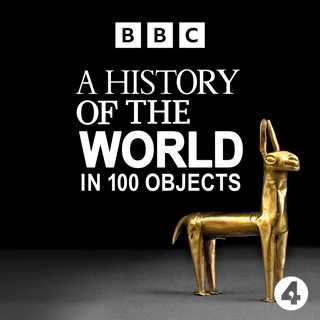
Neil MacGregor's history of the world told through objects from the British Museum in London arrives at the Palace of Sennacherib in Northern Iraq. Throughout this week, Neil MacGregor explains the ke...
15 Feb 201013min
Statue of Ramesses
A History of the World in 100 Objects has arrived in Egypt around 1250BC. At the heart of this programme is the British Museum's giant statue of the king Ramesses II, an inspiration to Shelly and a re...
12 Feb 201013min
Mold Gold Cape
Director of the British Museum Neil MacGregor retells the history of human development from the first stone axe to the credit card, using 100 selected objects from the Museum. Neil MacGregor continu...
11 Feb 201014min
Minoan Bull Leaper
Neil MacGregor's retelling of the history of humanity, using objects from the British Museum's own collection, arrives in Crete around 1700BC. The programme tells the story of man's fascination with b...
10 Feb 201014min
Rhind Mathematical Papyrus
In a week that explores man's early experiments with numbers, Neil MacGregor describes the British Museum's most famous mathematical papyrus. This shows how and why the ancient Egyptians were dealing ...
9 Feb 201013min
Flood tablet
A small tablet was found in modern Iraq and brought back to the British Museum. When it was translated, back in 1872, it turned out to be an account of a great flood that significantly pre-dated the f...
8 Feb 201013min
Early Writing Tablet
This week's programmes in the history of the world looks at the growing sophistication of humans around the globe, between 5000 and 2000 BC. Mesopotamia had created the royal city of Ur, the Indus val...
5 Feb 201013min
Jade Axe
This week's programmes in the history of the world look at the growing sophistication of modern humans around the globe between 5000 and 2000 BC. Mesopotamia had built the royal city of Ur, the Indus ...
4 Feb 201014min