The Sam Harris Debate

The Sam Harris Debate

There’s a lot of backstory to this podcast, most of which is covered in this piece. The short version is that Sam Harris, the host of the Waking Up podcast, and I have been going back and forth over an interview Harris did with The Bell Curve author Charles Murray about a year ago. In that interview, the two argued that African-Americans are, for a combination of genetic and environmental reasons, intrinsically and immutably less intelligent than white Americans, and Murray argued that the implications of this “forbidden knowledge” should shape social policy. In response, Vox published a piece by three respected academic specialists on genes and IQ who argued Murray and Harris got both the science and its implications very wrong. Harris felt slandered by the piece we published and publicly demanded I debate him. After failing to get Harris to debate the authors of the Vox piece instead, I agreed. Over email, he then revoked his invitation to debate me. Harris’s defenders published a few pieces, our authors published a second piece, and everyone moved on. That’s where things sat for months. Then, a few weeks ago, Harris reopened the discussion with me on Twitter, I published a piece on the subject in response, and he published all the private emails we’d sent each other along the way. As you’ll hear him say, that backfired, so he decided, at last, to debate me. Whew. So here we are. For all that, I think this discussion — which is also being released on Harris’ podcast — is worth listening to. Harris’s view is that the criticism he and Murray have received is a moral panic driven by identity politics and political correctness. My view is that these IQ tests are inseparable from both the past and present of racism in America, and to conduct this conversation without voices who are expert on that subject and who hail from the affected communities is to miss the point from the outset. So that’s where we begin. Where we go, I think, is worthwhile: these hypotheses about biological racial difference are now, and have alway been, used to advance clear political agendas — in Murray’s case, an end to programs meant to redress racial inequality, and in Harris’s case, a counterstrike against identitarian concerns he sees as a threat to his own career. Yes, identity politics are at play in this conversation, but that includes white identity politics. To Harris, and you’ll hear this explicitly, identity politics is something others do. To me, it’s something we all do, and that he and many others simply refuse to admit they’re doing. This is one of the advantages of being the majority group: your concerns get coded as concerns, it’s everyone else who is playing identity politics. Even if you’re not interested in the specifics of our debate, I think this discussion goes to some important questions in American life — questions that drive our culture and politics today. I hope you enjoy it. A few links mentioned in the discussion: My piece on this whole debate, which links all the relevant articles. Harris and Murray's original podcast Vox's original response piece The Haier piece Harris wanted us to publish defending him Our authors' response to various criticisms The emails between me and Harris Learn more about your ad choices. Visit podcastchoices.com/adchoices

Denne episoden er hentet fra en åpen RSS-feed og er ikke publisert av Podme. Den kan derfor inneholde annonser.

Episoder(765)

The importance of failure

The importance of failure

At the beginning of the new year, many of us make pledges to change ourselves. We want to work out more. Or read more. Or cook more. Within a few months, some of us will have succeeded but many of us ...

6 Jan 202546min

What to do with your sadness, pain, and grief

What to do with your sadness, pain, and grief

How can we find happiness? That's an old question. Since the beginning of philosophy people have been wondering what makes us happy and how to get more of it. But if you're a real person living in the...

23 Des 202456min

What do animals feel?

What do animals feel?

Can you ever really know what’s going on inside the mind of another creature? In some cases, like other humans, or dogs and cats, we might be able to guess with a bit of confidence. But what about oct...

16 Des 202448min

Are men okay?

Are men okay?

This week, host Sean Illing gets personal when he asks professor and podcast host Scott Galloway: What’s going on with men? There’s a growing body of evidence that men are falling behind in education,...

9 Des 202448min

How to feel alive

How to feel alive

The sheer feeling of aliveness. We all know what that is, even though it comes in many different forms. Maybe it’s going for a long run at night. Or free-climbing a mountain. Or an intense meditation ...

2 Des 202453min
The antidote to climate anxiety

The antidote to climate anxiety

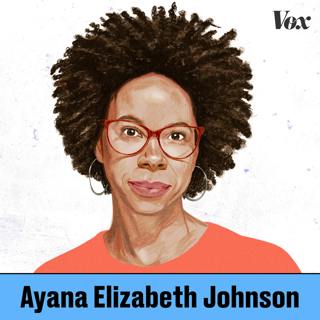
In this episode, host Sean Illing speaks with marine biologist Ayana Elizabeth Johnson about her book What If We Get It Right? Visions of Climate Futures. Johnson approaches climate change with inform...

25 Nov 202451min

America’s reactionary moment

America’s reactionary moment

What just happened? It’s been almost two weeks since the presidential election, and many Americans are still grappling with the result. The political reckoning will probably last for months, if not ye...

18 Nov 20241h 14min

Well this is awkward

Well this is awkward

Philosopher Alexandra Plakias says there are no awkward people, only awkward situations. In her book, Awkwardness: A Theory, Plakias explains the difference between embarrassment and awkwardness, how ...

11 Nov 202457min

Populært innen Politikk og nyheter

giver-og-gjengen-vg
aftenpodden
forklart
aftenpodden-usa
popradet
stopp-verden
fotballpodden-2
lydartikler-fra-aftenposten
det-store-bildet
nokon-ma-ga
rss-gukild-johaug
dine-penger-pengeradet
rss-ness
rss-espen-lee-usensurert
hanna-de-heldige
aftenbla-bla
grasoner-den-nye-kalde-krigen
e24-podden
rss-dannet-uten-piano
frokostshowet-pa-p5